In the early 1900s, the maharaja of Patiala ordered a fleet of custom Rolls-Royces, reportedly finished in ivory and gold with silver fittings. Legend has it that when a London dealer insulted him, he retaliated by buying several cars and using them as garbage-collection lorries back home. Rolls-Royce was said to be horrified. The maharaja, presumably, was delighted. Now, this anecdote is almost certainly apocryphal, because multiple versions of it exist, with different maharajas being the slighted parties — and there’s not a shred of evidence that any of the versions is true.
What this does illustrate is that in princely India, cars (and motorcycles) were not merely forms of transport. They were more like props in a highly elaborate play of power and pomp — theatre on wheels, if you will. The maharajas had their fleets of luxury cars customised to the nth degree for everything, from royal parades to hunting expeditions, and in each case, the idea was to evoke a sense of awe from their subjects.
You could say that the earliest decades of India’s motoring history were a kind of mechanical courtship. Imported Rolls-Royces, Bentleys, Packards, and Hispano-Suizas were diplomatic emissaries of the West’s industrial confidence. Indian royalty matched that energy with its own flourishes, such as mounting tiger heads as mascots, commissioning Louis Vuitton trunks for the boot, and hiring chauffeurs in liveried finery.
The dashboard of a 1950s’ Rolls-Royce was as regal as the car itself.
Then, as the sun set over the British empire, the spectacle lost its sheen. Independence brought a hard-fought freedom. It also ushered in austerity. Import restrictions and the call for self-reliance meant that the once-opulent garages of India emptied into memory. The 1950s and ’60s were decades of constraint. The nation’s roadways filled up with the squat, dependable silhouettes of Hindustan Ambassadors and Premier Padminis, cars that were not bought for desire but for necessity. If you wanted a car, you applied, waited a few years, and prayed that the gods of bureaucracy were smiling. Owning one of these ‘everyman’ cars was still a mark of privilege, though, and air-conditioning, if you had it, was enough to make your neighbours suspicious of your sources of income.
Post-Independence years brought austerity. The country’s roadways filled up with the Hindustan Ambassadors and Premier Padminis.
Exotic car sightings became quite rare, which made them legendary. A Packard in Delhi in the 1970s could cause a traffic jam just by existing. Hindi cinema did its bit to feed the fantasy, with actors cavorting onscreen in plush imported cars. A small but dedicated community of collectors also ensured that the flame didn’t go out entirely. In every corner of the country, they preserved their cars under tarpaulin, running them a few times a year to keep their hearts beating. Industrialists ‘arranged’ to bring in foreign sedans through diplomatic channels. In these acts of preservation lay the first whispers of modern luxury motoring, the idea that indulgence could be a quiet rebellion.
The floodgates were thrown open in 1991, with the liberalisation of the economy. Virtually overnight, the aspirational barometer of India changed. Imported goods returned, first hesitantly, then in a rush. Mercedes-Benz was the first luxury car brand to re-enter the Indian market, when it began assembling the E-Class in Pune in 1994. Others quickly followed — BMW, Audi, Jaguar Land Rover, Porsche. Film stars and cricketers became live advertisements for indulgence: Sachin Tendulkar in a Ferrari 360 Modena, MS Dhoni in a Hummer H2, Virat Kohli in practically every Audi available. The luxury car scene of the late 1990s and early 2000s was flush with new money and an old hunger. The cars themselves — Mercedes C-Classes, BMW 3-Series, Audi A6s — were more understated than the palatial Rolls-Royces of old, but they represented something just as intoxicating: The validation of success in a newly open economy. Owning one meant you had arrived, in a nation still learning what that meant. The first generation of Indian millionaires — software barons, exporters, stock market gurus — found in their cars a vocabulary for freedom.
Motorcycles, too, evolved. Harley-Davidson entered India with a promise of the open road — even if the open road often meant a stretch of tarmac between two toll booths. Ducati, Triumph, and BMW Motorrad followed, offering speed, style, and an aura of cosmopolitan cool. Suddenly, riders gathered for weekend breakfast runs and cross-country rides that mirrored the pilgrimage routes of the maharajas.
By the 2010s, the luxury automobile culture in India had matured. It was no longer just about the badge. The Indian buyer began asking questions once reserved for connoisseurs: What kind of leather is that? How does the air suspension feel over our roads? Can I specify the kind of stitching on the seats? A new kind of indulgence took root, one that valued craftsmanship, comfort, and individuality over outright ostentation. Brands were quick to respond, by offering a myriad of bespoke and personalisation options.
Luxury cars in India have always had to adapt to local realities, both cultural and infrastructural. The Mercedes-Benz E-Class Long Wheelbase exists because Indian (and Chinese) buyers prefer being driven rather than driving. SUVs outsell sedans, because they handle Indian roads better. Bikes, too, were localised. Harley-Davidson’s Street 750, built in India, quickly became its bestselling model here, for example. Clearly, the very definition of luxury was evolving. Where once it meant outright excess, it now began to mean experience. The liberalised generation was less attached to ownership and more drawn to access.
Today, the buyer has changed again. Old money still buys Bentleys and Rolls-Royces, but the real action is elsewhere, such as in Bengaluru’s co-working spaces, where young founders configure their Lamborghinis online between investor calls. The median age of Indian luxury car buyers has dropped to the mid to late thirties, and women are increasingly walking into Ducati and Triumph showrooms to buy their own bikes.
If the 1990s were about ownership, the 2020s are more holistic. Car companies organise racetrack days, where you can drive a Porsche 911 faster than your licence allows. Audi takes customers on drives to exotic destinations like Ladakh, and Ducati runs Dream Tours, pairing motorcycle tours with boutique resorts. Royal Enfield, once the most workmanlike of brands, has reinvented itself by offering journeys like the Himalayan Odyssey, which is part adventure, part rite of passage.
Electric mobility has brought its own paradox. Can silence be indulgent, and can sustainability co-exist with opulence? Brands like Porsche and Mercedes-Benz think so, with models like the Taycan and the EQS 580 4MATIC, both of which offer extreme performance, serene interiors, the hum of electric motors and zero emissions. Even motorcycles have begun to straddle this line. Ultraviolette, an Indian two-wheeler startup, builds performance electric bikes that look like something out of science fiction, while legacy brands experiment with hybrid systems. The future of indulgence is not horsepower alone; it’s conscience built into your car’s frame.
The road ahead may drive itself, quite literally. Driverless luxury promises to return motion to leisure, in a reimagining of the carriage era, except this time, the horse is an algorithm. Of course, in India’s hugely crowded and chaotic driving conditions, how efficiently these systems will work is anyone’s guess. The technology already exists, with cars like the BMW 7 Series being able to park itself, and a variety of advanced driver assistance systems (ADAS) trickling down into even mid-level cars. These features include technology that keeps your car in the correct lane, brakes automatically if it senses an impending collision, and detects if you’re feeling fatigued at the wheel, among many others. There is something almost cyclical about it all. The first luxury cars in India were driven by chauffeurs, while their owners reclined in upholstered comfort. A century later, we are building cars that will drive themselves, returning their occupants to that same detached bliss.
The future is looking at driverless cars. The technology exists, its efficiency will be tested on crowded Indian streets.
Still, in the end, what remains constant is the story, and the story of luxury cars and bikes in India mirrors the story of India itself. From maharajas to modest Ambassadors, from liberalisation’s Mercedes-Benz sedans to today’s Ferraris and Aston Martins, each era has defined indulgence in its own way. Luxury has, variously, been about power, scarcity, aspiration, experience, and now, mindful innovation and sustainability. Beneath it all lies a constant: The Indian instinct to indulge, to make a statement with wheels, whether that statement is “I own half of Patiala” or “I just closed Series A funding”.
Amid all this transformation, the memories of the past still linger. In Udaipur, old Rolls-Royces once used for tiger hunts now gleam in private collections, their polished chrome reflecting not nostalgia but continuity. In Mumbai, a vintage car restorer will spend months sourcing the correct lacquer for an old Jaguar. These acts of care link India’s first age of luxury to its current one, living proof that indulgence here has always been more about emotion than economics.
Pablo Chaterji is the executive editor at Motoring World, a Delhi Press publication and India’s pioneering automotive magazine (formerly Business Standard Motoring). He has been an automotive and lifestyle journalist and photographer for 22 years

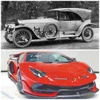 "Wheels of time: How India's love affair with luxury cars, bikes has evolved")


