Home / Technology / Tech News / Massive asteroid to fly past earth on Thanksgiving; all you need to know
Massive asteroid to fly past earth on Thanksgiving; all you need to know
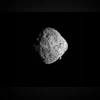
On November 26, roughly 100-meter-wide asteroid 2006 WB will safely fly by Earth at a distance of 2.3 lunar miles. A tiny asteroid called 2024 PT5 recently made a brief "mini moon" orbit around Earth
Massive asteroid to fly past earth. (Source: Nasa)
On November 26, asteroid 2006 WB, about the size of a large building, is predicted to fly past Earth. According to NASA, the Catalina Sky Survey discovered the asteroid, which has a diameter of around 100 meters, in November 2006. Although not exactly verified, radar scans at Arecibo soon after its discovery suggested a potential rotation period of roughly 8 hours.
Around 140 degrees of the sky will be covered by 2006 WB as it approaches Earth, coming within 0.0059 AU (2.3 lunar distances) of the planet, which is around 891,000 kms. It will brighten to about 13th magnitude during this time, enabling astronomers to perform vis-IR spectroscopy and collect lightcurves.
Massive asteroid to fly past earth: Experts Insights
The majority of the 40,000 near-Earth objects (NEOs), including this asteroid, are said to pose no risk to Earth. Recently, the brief visit of a 10-meter asteroid, dubbed earth’s “mini moon”, provided information about how Earth's gravity affects the behaviour of celestial bodies.
The exact size of the 2006 WB is not certain. It may be larger or smaller, with considerable error margins, according to NASA's NEO database. According to Nick Moskovitz, an astronomer and asteroid expert at Lowell Observatory, our knowledge of such asteroids is limited, not because they pose a growing threat, but also new NEOs are found often because of an improved technology. He focused on the abilities of contemporary telescopic surveys that scan the night sky, leading to the discovery of multiple new objects.
"The frequency of these discoveries has increased so much that it's hard to keep up. This is a testament to the enhanced capabilities of telescopic surveys," Moskovitz said.
Massive asteroid to fly past earth: Future prediction
With the 8-meter telescope at the Vera Rubin Observatory in Chile scheduled to begin operations next year, NEO tracking appears to have a bright future. Even greater lead time for asteroid detection will be provided by this facility, which is supported by the U.S. Department of Energy's Office of Science and the U.S. National Science Foundation.

 "Massive asteroid to fly past earth on Thanksgiving; all you need to know")

