Vivo has launched the
X200 FE in India at a starting price of Rs 54,999. Aimed at those who prefer compact smartphones without compromising on performance or features, the X200 FE brings flagship-level specifications to a smaller form factor.
Powered by the MediaTek Dimensity 9300+ processor, the Vivo X200 FE comes with up to 16GB RAM and 512GB internal storage. It boasts a standout camera setup, strong battery life, and fluid performance, all packed into a size that fits comfortably in one hand.
With this device, Vivo makes a strong case for compact smartphones that do not cut corners, especially in areas like photography and daily performance. The X200 FE marks a notable attempt to revive the once-thriving compact flagship category, often neglected by other Android brands in recent years. But is it truly a no-compromise smartphone? Let us find out:
Design
The Vivo X200 FE stands out with compact dimensions and premium construction. Moving from a smartphone with a large 6.72-inch screen to the Vivo X200 FE with a 6.31-inch screen, the difference is apparent right away. At first, the shift in size was noticeable, but as I continued using it, I found that this was the perfect size. It fits perfectly in my hand, fits in my pocket, and yet leaves ample space to store other things. The compact size makes it apt for single-handed use. Additionally, it exudes a clean, minimalist, and premium feel, just the way most people like.
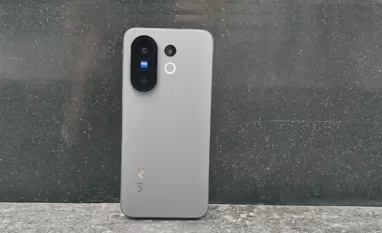
Coming to design on the back, the Vivo X200 FE features a double camera module placed vertically on the left, supported by a ring-light flash (also known as Aura light flash) and an ultra-wide camera sensor just beside it, placed in a vertical line. The camera module sports the Zeiss branding, and the Vivo branding rests vertically on the bottom left corner.
The back panel features a matte-glass finish, made of Metallic Sand AG material (metal-glass combination), that is both resistant to fingerprints and aids in-hand feel. The side frame features power and volume buttons on the right, a SIM tray, a USB Type-C port, and a speaker grille on the bottom. The left and top frame sport a spotless look except for a pair of thin stripes, giving it an iPhone-like feel.
The build is sturdy. At last, since the camera module is raised and placed on one side, the phone will wobble when used on a flat surface. Keeping that aside, I do not have much to complain about the Vivo X200 FE’s design. It is a compact phone that hits the spot right.
Display and Audio
The Vivo X200 FE sports a 6.31-inch AMOLED flat screen with 1.5K resolution and a 120Hz refresh rate. It is flanked by narrow bezels to maximise the display footprint without compromising the phone’s overall dimensions. The display offers a peak brightness of 5,000 nits, making it bright enough for outdoor use. The display packs a punch-hole camera on the top.
The colour reproduction of the display on Vivo X200 FE seemed close to accurate, with the brighter shades of colour being reproduced well. Even the reproduction of the deeper blacks seemed apt to me. Yes, there is some room for improvement when it comes to the blacks, but still, it does a good job. The 120Hz refresh rate makes the animation smooth and snappy. The blue-light reduction technology does reduce the strain on the eyes in long usage. Schott Xensation Core protects the display, but it is prone to getting scratches if you are used to keeping your phone and keys in the same pocket.
As for audio, the Vivo X200 FE does justice. Be it multimedia or gaming, the audio output did not disappoint me even for a second. I was able to hear in-game footsteps clearly. While watching movies or web series, the loudness of the output did not make me feel like I needed an external speaker or even earphones, for that matter, to get a clearer sound. Despite being such a compact phone, the audio hits the spot right.
Performance
The Vivo X200 FE is powered by a MediaTek Dimensity 9300+ chipset, paired with up to 16GB LPDDR5X RAM and up to 512GB UFS 3.1 storage. The device boots on Android 15-based Funtouch OS 15 out of the box and brings a range of on-device artificial intelligence tools. The device does come with some bloatware, but most of the pre-loaded apps are removable. If I talk about raw performance, then the Vivo X200 FE exceeded my expectations.
While multitasking with multiple apps simultaneously, including Google Chrome, Camera, Gallery, YouTube, Instagram, Netflix, Spotify, LinkedIn, Mortal Kombat, BGMI, Candy Crush, Settings, and more, Vivo X200 FE’s performance did not disappoint. It was snappy and smooth. The opening, closing, and running of apps were quick and up to the mark. I didn’t notice any lag or any frame drops while playing BGMI.
However, the maximum refresh rate that the phone managed in games was around 60Hz, despite cranking up all settings. Heating is another thing, though. While charging or playing games on Ultra Game Mode, the device will heat up for sure. If you are planning to engage in long gaming sessions on the Ultra Game Mode, then maybe also plan a few breaks in between to let the device cool down.
Apart from the heating issue and the bloatware, I did not find anything wrong with the performance of the Vivo X200 FE.
AI Tools
The Vivo X200 FE packs a suite of on-device AI tools, including smart call assistant, real-time transcription, Vivo DocMaster, Gemini’s Circle to Search, live text, and AI screen translation.
- Smart call assistant: The AI Call Translation feature transcribes and translates speech in real time, both visually and audibly, which can be useful during multilingual conversations. There’s also an automatic summary tool that pulls out key points and action items from calls, so you don’t have to re-listen to the entire conversation. It works well largely however, it is not 100 per cent reliable when the conversation is in Hindi.
- Real-time transcription and intelligent summary: The real-time transcription feature turns speech into text as it happens, which can be helpful for keeping notes during calls or meetings. Transcribed text can also be translated into different languages, making it easier to follow cross-language conversations. There’s an automatic summary function as well, which highlights the main points from a discussion so you don’t have to go through the full transcript.
- Vivo DocMaster: Doc Master has been handy for managing documents in different formats—whether it’s a Word file, a PDF, or a presentation. It also comes with useful AI tools that I’ve used to quickly summarise lengthy documents, rephrase sections, or convert files into other formats, all backed by Google Cloud’s language models. It’s especially useful when working across multiple languages.
- Gemini Circle to Search: Draw a circle on the screen around something that you need more information on, and Google will provide additional information about it to you.
- Live text: This feature runs entirely on the device, so it works offline and keeps everything local—helpful for privacy and data security. I’ve used it to quickly pull text from images in my photo gallery. Just tapping on an image is enough to extract the text right away, no need for any extra steps.
- AI screen translation: On the Vivo X200 FE, I found the AI Screen Translation feature useful for quickly translating text directly on the screen—whether it’s from a website, app, or video. I just swipe open the sidebar, tap on Screen Translation, and it gives me the translated text without needing to leave the app I’m in. It does require an internet connection, though.
Camera
Camera is a standout aspect of the Vivo X200 FE. The rear camera module is headlined by a 50MP (Sony IMX921) wide-angle sensor with optical image stabilisation, complemented by an 8MP ultra-wide-angle sensor and a 50MP (Sony IMX882) telephoto sensor.
When used in well-lit conditions outdoors, the colour reproduction in the photos and the detailing are impressive. The edge-detection works well even in harsh conditions, and it does not smoothen the texture of your skin, which is a good thing. It really captures the moment and presents it to users as a very close reflection of reality. The AI does process the image, but largely it balances the light to give a vibrant output and refines the image to carry more detail. The support for multiple focal lengths in portrait shots further enhances the usability of the camera. It can capture close-up shots as well as objects that are placed a bit far from you, without compromising on the detailing.
Where the Vivo X200 FE really steps up is with its 50MP periscope telephoto lens, the Sony IMX882, a sensor typically reserved for more premium devices. Having this on a compact phone adds to its imaging versatility. Optical zoom goes up to 3x, but even beyond that, detail retention remains surprisingly good up to around 10x.
Portrait shots benefit greatly from the ability to switch between multiple focal lengths, with the camera offering options like 23mm, 35mm, 50mm, 85mm, and 100mm equivalents. This flexibility makes a difference, whether you want a dramatic close-up or a wider frame with more background, the camera adapts to your intent. In my usage, the bokeh effect felt refined and natural, with good subject separation and minimal edge blurring, even in trickier lighting conditions. For those who enjoy a bit of artistic flair, there’s also the ZEISS Style Bokeh feature, which subtly mimics the rendering of classic cinema lenses. It doesn’t feel like a gimmick, the results are often pleasingly soft in the background while keeping the subject sharp and expressive.
One of my favourite modes to shoot with was Street Photography. It leans into a more candid aesthetic — allowing imperfections like grain and motion blur to come through — which can add a sense of realism and character to shots. It’s a nice counterpoint to the overly processed look many smartphone cameras default to, especially in auto mode.
There is one thing that I did not like, though. The 8MP ultra-wide camera does its job, but it does not excel like the other sensors. It fails to retain as much detailing as its siblings do in the camera module. It does produce vibrant and punchy images, but with the lack of details, this sensor fails to become a reliable one.
The 50MP front camera does a good job of retaining details while also preserving the reality in pictures. It won’t attempt to smoothen the corners of your face and will not turn you into an anime character. It retains the imperfections in our skin texture, which makes us human. There is a range of modes to experiment with the selfie camera too, akin to what we have seen in the rear camera.
As for the videography part, the rear camera is able to capture videos in up to 4K quality at 60 frames per second. The front camera is able to capture videos at 4K quality at 60 frames per second. The Vivo X200 FE surely stands out as a great option for photographers who want to capture moments. But when it comes to videography, it struggles to match the bar. It would be safe to say that the Vivo X200 FE is more suited for photography rather than videography.
Overall, the Vivo X200 FE’s camera setup goes beyond expectations for its segment. It’s not just versatile on paper, but genuinely delivers across a range of everyday shooting situations. The responsiveness, flexibility, and image quality combine to make it a standout choice for anyone who cares about mobile photography.
Battery and Charging
Battery life on the Vivo X200 FE holds up impressively well in everyday use. With a large 6,500mAh cell packed into its compact frame, the phone easily crosses a day and a half on light to moderate usage. This includes casual gaming, multitasking between Chrome, YouTube, Gallery, and Camera app, along with a few episodes of a web show, all without leaving you scrambling for the charger at night.
Even with slightly heavier usage, the phone comfortably lasts a full day. However, if you’re pushing it with intense gaming sessions on Ultra Game Mode, expect the battery to drain faster, typically lasting around 6 to 8 hours depending on the title and settings. This mode also noticeably accelerates battery consumption, which is something to keep in mind if you’re a power user.
As for charging, the 90W FlashCharge support means the phone goes from 0 to 100 per cent in about 70 minutes. The charger comes bundled in the box, which is good to see. However, the device does tend to heat up during charging — not enough to alarm, but it’s noticeable. There’s no wireless charging support, which might disappoint some users considering the segment the phone aims to compete in.
Verdict
The Vivo X200 FE positions itself as a strong mid-premium offering that blends flagship-like performance, solid camera hardware, and practical AI features into a compact form factor. Backed by the MediaTek Dimensity 9300+ chipset, the phone handles everyday tasks and gaming well, though it does heat up under pressure. Its minimalist design, excellent battery life, and impressive main and telephoto cameras help it stand out in a crowded segment.
While the lack of wireless charging and some limitations with the ultra-wide camera may leave room for improvement, these trade-offs don’t significantly detract from the overall experience. The real-time AI tools and thoughtful software additions feel genuinely useful rather than just another checklist.
If you’re looking for a smartphone that balances size, style, camera performance, and day-to-day usability with just the right touch of smart features, the Vivo X200 FE gets most of it right.
Vivo X200 FE: Unboxing

 "Vivo X200 FE review: No compromise compact smartphone with standout cameras")


 Connect with us on WhatsApp