3 min read Last Updated : Feb 17 2025 | 1:14 PM IST
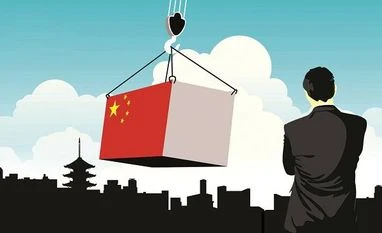
Western tech companies are increasingly seeking to reduce their dependence on China for production and supply chains. This shift is driven by rising geopolitical tensions and policy changes introduced during US President Donald Trump’s administration, prompting businesses to explore alternative manufacturing hubs.
For years, companies followed a ‘China Plus 1’ strategy, which meant continuing their operations in China while diversifying supply chains to other countries. However, this approach has now evolved into a broader ‘Anything But China’ (ABC) approach, with tech giants actively reducing their dependency on Chinese suppliers and looking for alternatives across the globe, a report by The Wall Street Journal stated.
US-China tech rivalry
The semiconductor industry, central to the US-China technological rivalry, exemplifies this shift. The US has implemented stringent export controls, limiting China’s access to advanced chip technologies. Consequently, companies like Nvidia and Marvell Technology are expanding operations in countries such as Vietnam and Malaysia to mitigate risks associated with Chinese manufacturing.
President Trump’s recent imposition of 10 per cent tariffs on all Chinese imports, with threats of further increases, has intensified the urgency for companies to diversify their supply chains. Recipients of funding from the $53 billion US CHIPS Act, designed to boost domestic semiconductor production, are now prohibited from expanding manufacturing in China for the next decade.
This realignment presents significant opportunities for countries in Southeast Asia and South America. Malaysia, for instance, has seen substantial investments from chipmakers such as Intel, Infineon Technologies, and Micron Technology, bolstering its position in the global semiconductor supply chain.
FBI on the ‘China threat’
The US Federal Bureau of Investigation (FBI) has pointed to the growing threat posed by China’s economic and espionage activities, emphasising the long-term risks to US information, intellectual property, and economic security. According to the FBI, China’s government has employed tactics to influence US lawmakers and businesses, aiming to tilt global policies in favour of Beijing.
Last month, dozens of Chinese companies and two Singapore-based entities were added to the US Commerce Department’s Entity List. Companies on this list are barred from receiving US technology and goods without a special license, which is rarely granted. Notable Chinese companies such as gaming giant Tencent and battery-maker CATL have also been blacklisted. Both have defended themselves, stating they have no ties to the Chinese military as claimed by US authorities.
Challenges in the ABC approach
However, despite the growing trend of diversification, shifting away from China is not without challenges. The country’s infrastructure, cost efficiencies, and skilled labour force have made it a dominant force in global manufacturing. Experts argue that moving away from China could increase costs by as much as 15 per cent, as companies face higher production and logistical costs in alternative locations.
Moreover, the complexity of the tech supply chain, valued at over a trillion dollars, is another hurdle. As companies seek to shift their manufacturing bases, the sophistication and interdependence of global supply chains will only grow, making it increasingly difficult to create new production lines outside of China.

 "Western tech firms adopt 'Anything but China' approach amid global tensions")


