Home / World News / As the world warms up, extreme rain is becoming even more extreme
As the world warms up, extreme rain is becoming even more extreme
Warm air holds more moisture than cool air, and as temperatures rise, storms can produce bigger downpours
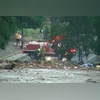
First responders survey rising flood waters of the Guadalupe River after flash flooding in Kerr County, Texas, U.S. July 4, 2025 in a still image from video. Photo: Reuters
4 min read Last Updated : Jul 06 2025 | 11:26 PM IST
Raymond Zhong
Colossal bursts of rain like the ones that caused the deadly flooding in Texas are becoming more frequent and intense around the globe as the burning of fossil fuels heats the planet, scientists say.
Warm air holds more moisture than cool air, and as temperatures rise, storms can produce bigger downpours. When met on the ground with outdated infrastructure or inadequate warning systems, the results can be catastrophic.
These were the ingredients for tragedy in Texas, a state that is well acquainted with weather extremes of all kinds: high heat and deep cold, deluges and droughts, tornadoes and hurricanes, hail and snow. Indeed, the hill country, the part of the state where the Guadalupe river swelled on Friday, is sometimes called “flash flood alley” for how at risk it is to seemingly out-of-nowhere surges of water.
Humid air blows into the area from two main sources, the Gulf of Mexico and the tropical Pacific Ocean. When this air collides with cool air drifting down across the Great Plains, severe storms can erupt. The hilly terrain and steep canyons quickly funnel the rain into river valleys, transforming lazy streams into roaring cascades.
In parts of Texas that were flooded on Friday, the quantities of rain that poured down in a six-hour stretch were so great that they had less than a tenth of 1 percent chance of falling there in any given year, according to data analysed by Russ Schumacher, a professor of atmospheric science at Colorado State University.
The Guadalupe river rose from three feet to 34 feet in about 90 minutes, according to data from a river gauge near the town of Comfort, Texas. The volume of water exploded from 95 cubic feet per second to 166,000 cubic feet per second.
And the warming climate is creating the conditions in Texas for more of these sharp, deadly deluges.
In the eastern part of the state, the number of days per year with at least two inches of rain or snow has increased by 20 percent since 1900, according to the most recent National Climate Assessment, the federal government’s flagship report on how global warming is affecting the United States. Across Texas, the intensity of extreme rain could increase another 10 percent by 2036, according to a report last year by John Nielsen-Gammon, the Texas state climatologist.
To understand patterns of heavy rain at a more local level, communities and officials rely on data from the National Oceanic and Atmospheric Administration. The agency has for decades published nationwide estimates of the probabilities of various precipitation events — that is, a certain number of inches falling in a particular location over a given amount of time, from five minutes to 24 hours to 60 days.
Engineers use NOAA’s estimates
to design storm drains and culverts. City planners use them to guide development and regulations in flood-prone areas.
NOAA’s next updates to the estimates are scheduled to be released starting next year. For the first time, they are expected to include projections of how extreme precipitation will evolve as the climate changes, in order to help officials plan further ahead.
But in recent months, the Trump administration has cut staff at the agency and at the National Weather Service, which sits within NOAA. The administration has also dismissed the hundreds of experts who had been compiling the next edition of the National Climate Assessment, which was scheduled to come out in 2028. And it is proposing deep cuts to NOAA’s 2026 budget, including eliminating the office of Oceanic and Atmospheric Research, which conducts and coordinates climate research.

 "As the world warms up, extreme rain is becoming even more extreme")

