After significant public unrest in Bangladesh, Prime Minister Sheikh Hasina resigned on August 5 and fled the country, seeking asylum in India. She arrived in Agartala and was flown to New Delhi on the same day.
In a televised address, Bangladesh Army Chief Waker-uz-Zaman announced that the military would form an interim government with the assistance of political leaders.
Meanwhile, Bangladeshi local news sources state that Hasina and her sister, Sheikh Rehana, left the country amid violent student protests in Dhaka, defying a nationwide curfew imposed earlier today.
India’s history of granting asylum to political leaders
Historically, India has provided asylum to leaders, such as the Dalai Lama, who was granted asylum on March 30, 1959, under Prime Minister Jawaharlal Nehru. Nehru publicly supported this decision on April 4, 1959, citing India's security, friendly relations with China, and sympathy for Tibetans.
Sheikh Hasina previously spent six years in exile in Delhi under an assumed identity following the 1975 assassination of her father, Sheikh Mujibur Rahman, and other family members. This period saw Bangladesh under military rule, leading to significant political turmoil.
What is asylum and why is it needed?
The United Nations Human Rights Council (UNHRC) defines asylum as a protection granted to individuals who flee their country due to fear of persecution, which can include harm or threats. Asylum can also be sought by those who have previously experienced persecution in their home country.
Asylum seekers, also known as migrants or refugees, are defined by the United Nations Convention Relating to the Status of Refugees as individuals who, due to a well-founded fear of persecution based on race, religion, nationality, social group membership, or political opinion, are outside their country of nationality and unable or unwilling to seek its protection.
This definition also applies to stateless persons unable or unwilling to return to their country of former habitual residence due to fear of persecution.
Some notable asylum cases around the world
Iceland granted asylum to former chess champion Bobby Fischer, who was wanted in the US for violating international sanctions by playing a chess match in Yugoslavia.
US whistleblower Edward Snowden received permanent residency rights in Russia in 2020 after fleeing the US in 2013 following his leaks about US National Security Agency surveillance operations.
WikiLeaks founder Julian Assange sought asylum in the Ecuadorian embassy in London in 2012 to avoid extradition to Sweden on allegations he claimed were a ploy to extradite him to the US.
Former Peruvian President Alan García sought asylum in the Uruguayan embassy in Lima, and former Macedonian Prime Minister Nicola Gruevski applied for asylum in Hungary to avoid imprisonment on corruption charges.
Global asylum statistics
At the end of 2021, approximately 89.3 million people were forcibly displaced worldwide, with 27.1 million refugees and 53.2 million internally displaced within their home countries. According to refugeecouncil.org.uk, 72 per cent of refugees live in countries neighbouring their place of origin, often in developing nations. In 2021, the majority of refugees came from Syria (6.8 million), Venezuela (4.6 million), Afghanistan (2.7 million), South Sudan (2.4 million), and Myanmar (1.2 million).
International law grants anyone the right to apply for asylum in any country that has signed the 1951 Refugee Convention, allowing them to remain there while their claim is assessed. The 1951 Convention acknowledges that fleeing persecution may require irregular means and guarantees the right to apply for asylum, having saved millions of lives since its inception. No country has withdrawn from the Convention.

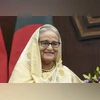 "Bangladesh: From Sheikh Hasina to Assange, when celebrities sought asylum")


