By David Pierson and Berry Wang
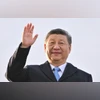
If China’s top leader, Xi Jinping, wrote a book titled “The Art of Dealing With Trump,” it would most likely call for exploiting the American president’s greatest weaknesses to exert maximal pressure, and then using the time gained to strengthen one’s position.
That appears to be the strategy Beijing has adopted since President Trump ramped up tariffs on Chinese goods in April in a bid to get China to import more American goods and export fewer of its own. Rather than yield, China has leaned on a trump card, its control of critical minerals — which the United States depends on — while steering the focus to protracted talks instead of concrete results.
Meetings like the ones that just concluded in London and that took place last month in Geneva, analysts say, keep the United States mired in negotiations over vague procedural steps — such as, in London, setting a “framework” for future talks. That allows China to avoid addressing the thornier disputes such as Washington’s accusations that China subsidizes industries unfairly, dumps goods overseas, and limits foreign companies’ ability to do business in China.
“I think China is very comfortable with this cycle of economic skirmishing with the United States followed by episodes of diplomacy that merely return to the status quo ante,” said Jonathan Czin, a fellow at the Brookings Institution who previously worked in the Central Intelligence Agency analyzing Chinese politics.
“This cat-and-mouse game keeps the United States from making any headway toward addressing any of the underlying US concerns about China’s unfair nonmarket policies,” Czin added.
China has a long history of frustrating the United States in economic dialogues that often lead nowhere. Such engagement, critics say, allows Beijing to deflect pressure from the United States while continuing to build up its economy and manufacturing prowess as it sees fit.
Rare earths are a case in point. China dominates the world’s supply of such minerals and the magnets made from them that are used in cars, airplanes, robots and semiconductors. In retaliation for the Trump administration’s tariffs, Beijing halted shipments. And even as the two countries negotiated a resumption of such exports, China was cracking down on the smuggling of rare earths out of the country to further tighten its grip.
“We can see the increasing measures China has been taking behind the scenes to get a firm central hold on strategic materials exports,” said Kirsten Asdal, a former intelligence adviser at the US Department of Defense who now heads a China-focused consultancy firm, Asdal Advisory.
That way, “Beijing can tighten or loosen with great precision and responsiveness to political conditions, signs it’s being readied to be used as repeated leverage for a long time to come,” she added.
It is unclear what exactly the two countries agreed to after the talks in London, which were described as tense.
Trump said in a post on his social media page on Wednesday, in all uppercase, that “full magnets, and any necessary rare earths, will be supplied, up front, by China.”
But China has not said explicitly that shipments of rare earths are flowing back to the United States as before. Asked about it during a news briefing on Thursday, He Yadong, a spokesman for the Ministry of Commerce, said only that China had “approved a certain number of compliant applications” for rare earths shipments, and would continue to “strengthen” such approvals.
China is probably being ambiguous to maintain the threat of export restrictions as leverage, said Wang Yuesheng, director of the Institute of International Economics of Peking University.
It is “not a complete loosening, but also not a complete ban like before,” he said. “This intermediate state allows China to be relatively more proactive” if the United States “suppresses China.”
Xi’s strategy is not without risk, even with his advantage over rare earths. Trump, as unpredictable as he is, could decide to resort to tariffs again or impose other punitive measures against Beijing if he grows frustrated with negotiations or determines Chinese exports of rare earths are still being delayed.
China’s economy is not as strong as it was in the first trade war. Exports, China’s chief economic engine, have slowed and tariffs on Chinese goods of 55 percent, the rate Trump has cited, would still hurt. The country’s property market is still digging out of a crisis. And one of the country’s most promising industries, electric vehicles, has been hit by overcapacity and a punishing price war.
In a potential sign that the government is concerned about the toll China’s sluggish economy is having on ordinary citizens, it announced guidelines on Monday aimed at “addressing the people’s urgent, difficult and pressing needs” in accessing education, elder and child care services and social insurance, though it offered few specifics.
Still, Xi is betting he can outlast Trump in an extended trade war, because Trump is vulnerable to public discontent in the United States, Chinese analysts say.
“Domestic politics is the soft underbelly” of the United States, said Shen Dingli, a scholar of international relations in Shanghai.
Please rewrite the given headline based upon the news story given below. Make Sure it is in 65-75 characters, it is in UK English and all lowercase. Give SEO keywords for the same and separate them using commas.

 "China delays trade progress and wields rare earths to outwit Trump")


