Home / World News / China, Japan agree to talks on security issues as they seek to mend ties
China, Japan agree to talks on security issues as they seek to mend ties
Iwaya's one-day trip came just before US President-elect Donald Trump takes office in January and the uncertainty his presidency is expected to bring to America's global relations
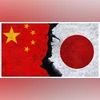
China-Japan relations are at a critical period of improvement and development. | Image: Shutterstock
China and Japan agreed on Wednesday to set up talks on often contentious security issues as they seek to improve a relationship driven in recent years by a range of issues, from territorial disputes to the discharge of water from Japan's tsunami-wrecked nuclear power plant.
Japanese Foreign Minister Takeshi Iwaya, on his first trip to China since assuming the post in October, sounded positive after meetings with Chinese Premier Li Qiang and Foreign Minister Wang Yi, saying the talks were very candid" and wide-ranging.
I feel we were able to build a personal relationship that would lead to the future," he told reporters in the Chinese capital.
Wang agreed to visit Japan next year for a high-level economic dialogue including cooperation on the environment, energy conservation and health and nursing care. Japan announced an easing of visa requirements for Chinese visitors, following China's recent decision to allow Japanese to enter without a visa.
The two countries also have major differences. Iwaya raised Japan's concerns about China's military activity near a group of uninhabited islands that both countries claim, as well as China's territorial disputes with other countries in the South China Sea.
Efforts to improve ties are in their early stages following a commitment to do so made by Chinese President Xi Jinping and Japanese Prime Minister Shigeru Ishiba at a meeting last month during the Asia-Pacific Economic Cooperation summit in Peru.
Currently China-Japan relations are at a critical period of improvement and development, Li said at the start of his meeting with Iwaya. China is willing to work together with Japan to move toward the important direction proposed by the leaders of the two countries.
Iwaya's one-day trip came just before US President-elect Donald Trump takes office in January and the uncertainty his presidency is expected to bring to America's global relations.
Trump has threatened to hike tariffs on Chinese goods, reigniting a trade war he unleashed in his first administration. It's unclear how he will impact the US-Japan alliance, which President Joe Biden has sought to buttress during the last four years as part of his strategy to confront a rising China.
Japan has revamped its approach to defence in response to Chinese actions in recent years, boosting military spending and shifting away from a principle of self-defence.
Earlier this year, Japan protested when a Chinese military plane flew into Japan's airspace, while in the summer, a Chinese survey ship sailed into Japanese territorial waters.
Wang agreed to Iwaya's proposal for a Japan-China security dialogue, which would try to improve communication over some of these issues.
Iwaya called for an early lifting of a ban on Japanese seafood imports that China imposed after a Japanese utility began discharging treated but still radioactive water from the former nuclear power plant in Fukushima.
The two sides agreed to keep working on the issue, and also resume talks on Japanese beef and rice exports to China.
Japan's easing of visa requirements included allowing group tours to stay for 30 days, up from 15, and increasing the validity of multiple-entry tourist visas from five to 10 years.
Both sides hope that people-to-people exchanges can help improve relations.
In that context, Iwaya asked China to improve security for his country's citizens, following recent attacks on Japanese school children, and also raised the detention of several Japanese businesspeople on spy charges. Both are making some Japanese hesitant to travel or work in China, he said.

 "China, Japan agree to talks on security issues as they seek to mend ties")

