Chinese scientists have reportedly developed a new software tool to keep time on the moon, marking a key step as space agencies prepare for more frequent and complex lunar missions. The system is meant to help spacecraft and future astronauts navigate and land more accurately by accounting for how time passes differently on the moon than on Earth, the South China Morning Post reported.
Why the moon needs its own clock
Time does not move at the same speed everywhere. Because the moon has weaker gravity, clocks there run slightly faster than clocks on Earth -- by about 56 millionths of a second each day. This effect, explained by Albert Einstein’s theory of general relativity, may seem small, but it builds up over time.
As a result, using Earth time for lunar missions can slowly introduce errors, making it unreliable for long-term operations on the moon.
Model built to bridge Earth and lunar time
To solve this problem, researchers from the Purple Mountain Observatory in Nanjing created a model that factors in both the moon’s lower gravity and its movement through space. This allows events on the moon to be accurately aligned with timekeeping systems used on Earth, the news report said.
According to a paper published in the December issue of Astronomy and Astrophysics, the method stays accurate to within a few tens of nanoseconds even when projected over 1,000 years.
Software designed for practical use
The team also turned the model into user-friendly software. This lets users compare lunar time and Earth time in a single step, rather than working through complex calculations.
The researchers said the aim was to make lunar timekeeping practical and accessible as missions to the moon become more common.
The news report quoted Jonathan McDowell, a Harvard astronomer and space historian, as saying that lunar timekeeping is now a real engineering requirement, not just a theoretical issue. Even differences as small as a microsecond can become important in navigation systems, affecting calculations over periods as short as a minute, he said.
If future missions want to use a GPS-like system on the Moon, especially for accurate landings, scientists will need a way to manage this difference, as such technology is likely to be needed within the next few years, he said.
From rare missions to constant activity
In the past, time differences between Earth and the moon were not a major concern. Lunar missions were few and far between, and engineers could rely on Earth time, applying corrections only when needed.
That approach is becoming harder to maintain. With more spacecraft -- and eventually humans -- expected to operate on and around the moon at the same time, using mission-by-mission fixes would quickly become impractical.
Recognising this challenge, the International Astronomical Union in 2024 adopted a broad framework calling for the moon to have its own time reference.
Building on this idea, the Chinese team focused on turning the concept into a tool engineers could actually use. They relied on precise data about the moon’s motion to track how the time gap between Earth and lunar clocks changes over time, the news report said.
LTE440 system
The researchers packaged their work into a software system called LTE440, short for Lunar Time Ephemeris. It automates the comparison between lunar and Earth time, removing the need for complex manual calculations.
The team noted that LTE440 is an early step and will need further development to support real-time navigation and future networks of lunar clocks as activity on the moon increases.

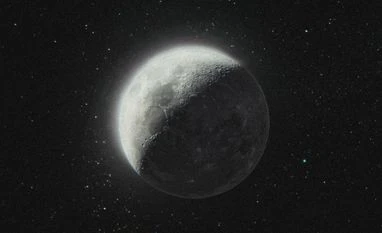 "Moon gets its own clock: China develops first software for lunar time")


 Connect with us on WhatsApp