
China puts Japanese companies on export control lists as tensions rise
Targeted companies include Mitsubishi Heavy Industries subsidiaries in shipbuilding and aircraft engines, plus divisions of Kawasaki Heavy Industries and Fujitsu
 "China puts Japanese companies on export control lists as tensions rise")
WebinarsNew
Deep DiveNew
Explore Business Standard
Targeted companies include Mitsubishi Heavy Industries subsidiaries in shipbuilding and aircraft engines, plus divisions of Kawasaki Heavy Industries and Fujitsu
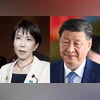
China on Tuesday put 20 Japanese companies on an export control list and 20 others on a watchlist, as tensions continue over the Japanese leader's previous comments on Taiwan, the self-governed island Beijing claims as its own.
Chinese exporters will be banned from selling dual-use goods, which can be used both for civilian and military purposes, to 20 Japanese companies, according to a statement by China's Commerce Ministry.
Companies targeted include multiple subsidiaries of Mitsubishi Heavy Industries involved in shipbuilding and the production of aircraft engines and maritime machinery, as well as divisions of Kawasaki Heavy Industries and Fujitsu, among others.
Foreign organisations or individuals are also banned from providing dual-use items originating in China to the 20 entities, the ministry said.
"All ongoing related activities must cease immediately," its statement read.
A separate list includes 20 Japanese companies for which Chinese exporters are required to submit individual export license applications with risk assessment reports and written pledges that the dual-use items would not be used by Japan's military.
Companies on the latter list include Subaru Corporation, Mitsubishi Materials Corporation and Institute of Science Tokyo, among others.
The Chinese Commerce Ministry said the measures, aiming to curb Japan's remilitarisation and nuclear ambitions, "are entirely legitimate, reasonable, and legal." The measures "are only aimed at a small number of Japanese entities, and the relevant measures only target dual-use items," it added. "They will not affect normal economic and trade exchanges between China and Japan, and honest and law-abiding Japanese entities have absolutely nothing to worry about." The move comes amid continued tensions between China and Japan over earlier comments by Japanese Prime Minister Sanae Takaichi, who in November implied Japan could militarily intervene in a potential Chinese attack on Taiwan.
Beijing regards Taiwan as its own breakaway province, to be annexed by force if necessary, and bristles at any comments by foreign governments showing support for Taiwan's sovereignty.
Takaichi's party secured a landslide victory in parliamentary elections earlier this month, which will allow her to double down on a significant conservative shift in Japan's security, immigration and other policies.
(Only the headline and picture of this report may have been reworked by the Business Standard staff; the rest of the content is auto-generated from a syndicated feed.)
First Published: Feb 24 2026 | 12:26 PM IST

