China sets record by sending 41 satellites to space by Long March 2D rocket
The number of Jilin-1 satellites has now increased to 108, completing China's first commercial constellation of more than 100 remote-sensing satellites
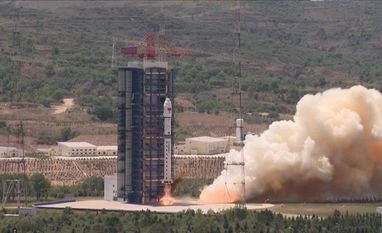
BS Web Team New Delhi China broke its previous record for sending the most satellites into orbit in a single mission on Thursday when it launched the Long March 2D rocket with 41 satellites, a report by state-run Xinhua news agency said.
According to the report, the rocket launched from the Taiyuan Satellite Launch Centre in Shanxi province at 1:30 pm (local time).
It comes just a few weeks after China launched a three-person crew for its orbiting space station in an effort to put astronauts on the moon before the end of the decade.
It was the 476th flight mission of the Long March rocket series.
The satellites will primarily provide commercial remote sensing services and technology verification. The majority of these satellites (36 in total) are from the Jilin-1 series, China's first self-developed commercial remote-sensing satellite system.
China's first commercial constellation
After Thursday's launch, the number of Jilin-1 satellites has increased to 108, completing China's first commercial constellation of more than 100 remote sensing satellites, said the report.
China launched the first Jilin-1 satellite, weighing 420 kilograms, in 2015. However, the country claims to have reduced the weight to only 22 kilograms in the last eight years.
US spy satellites to counter China threats
China's quick progress in the space industry has sparked extraterrestrial competition with western countries, particularly the United States.
Earlier this month, Bloomberg reported that the US Space Force is getting ready to launch its own constellation of satellites to monitor Chinese or Russian spacecraft that may be able to harm or disable orbiting objects.
The project, code-named "Silent Barker," will involve placing satellites in geosynchronous orbit, or an altitude of about 22,000 miles (35,400 kilometres) above the Earth, it said.
China is also constructing relay satellites that, by 2030, will serve as a communication link between lunar and extraterrestrial missions and ground operations on Earth. Chinese officials hope to send astronauts to the moon by 2030.

 "China sets record by sending 41 satellites to space by Long March 2D rocket")


