Home / World News / French Prez Macron supports experimenting with uniforms in some schools
French Prez Macron supports experimenting with uniforms in some schools
Macron said he is in favour of experimenting" with uniforms in order to inform public debate, speaking in a live interview on online media HugoDecrypte, broadcasted on Youtube and TikTok
He said another experimental option could be for children to wear similar outfits, such as a pair of jeans, a T-shirt and a jacket.
French President Emmanuel Macron opened the door Monday to experimenting in some public schools with uniforms or a dress code amid debate in France over a ban in classrooms on long robes worn mainly by Muslims.
The ban on robes known as abayas for girls and women and khamis for boys and men went into effect Monday.
Macron said he is in favour of experimenting" with uniforms in order to inform public debate, speaking in a live interview on online media HugoDecrypte, broadcasted on Youtube and TikTok.
He said another experimental option could be for children to wear similar outfits, such as a pair of jeans, a T-shirt and a jacket.
We certainly can have things that are more acceptable to teenagers (than uniforms), Macron said. It may seem a little less strict from a disciplinary point of view.
The centrist president's comments come after some conservative and far-right politicians have voiced support for requiring uniforms in public schools.
Macron provided no detail about the start and location of the experiment. Some private schools already require students to wear uniforms.
Macron reaffirmed that authorities would be intractable in enforcing the new rule about long robes in public schools, which were seen as a challenge to France's secularist values.
School is secular and that means there's no room for religious signs," he said. "We must talk, we must explain (the measure). But I think it's very important because school must remain a neutral place.
The new rule has prompted criticism across the country, with some arguing that the loose, body-covering garments did not constitute an ostentatious display of religion and should not be banned from classrooms.
The framework for the ban is a 2004 law aimed at preserving secularism in French public schools. The law prohibits Muslim headscarves but also bans large Christian crosses, Jewish kippas and the large turbans worn by Sikhs.
It passed after months of furor and marathon parliamentary debates. Some Muslims claimed it stigmatized them. The law does not apply to university students.
(Only the headline and picture of this report may have been reworked by the Business Standard staff; the rest of the content is auto-generated from a syndicated feed.)

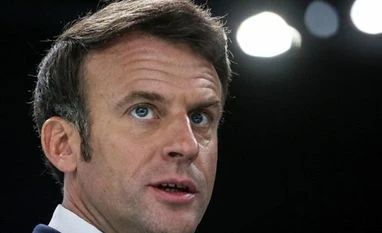 "French Prez Macron supports experimenting with uniforms in some schools")


 Connect with us on WhatsApp