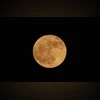
full moon of 2025 Date and Time: Skywatchers are in for a treat this week as the final full moon of 2025, dubbed the ‘Cold Moon’, rises on December 5. A number of livestreams will broadcast the event in real time if the weather or city skylines block your view. This week marks the arrival of the year's final supermoon, bringing 2025 to a close with one more spectacular celestial event.
Also known as the “Moon before Yule”, December’s full moon takes its name from the sharp fall in temperatures across the Northern Hemisphere, making it a traditional symbol of winter’s arrival and the final chance to witness a supermoon this year.
Where to watch the Cold Moon online?
• Virtual Telescope Project
• The Virtual Telescope Project broadcast date- December 4
• Broadcast time- at 3 PM EST
• Live- Telescopic views from Manciano, Italy.
Griffith Observatory (Los Angeles)
• Livestream date- December 5, 2025
• Livestream time- 8:27 PM EST.
December Supermoon 2025: Peak timing and visibility tips
The Almanac predicts that the December supermoon will reach its peak light on Thursday, December 4, at 6:14 p.m. ET. Although it will be visible throughout the evening, spectators typically get the best sense of its size right after moonrise.
A telescope or binoculars will provide surface detail; however, they are not necessary. Conditions on the ground, like low light pollution, a clear line of sight, and consistent weather, are more important for visibility. According to Time magazine, flat fields, roofs, or any location without intense building glare typically function well.
Full Moons in 2026: Complete list of dates
• January 3, 2026
• February 1, 2026
• March 3, 2026
• April 1, 2026
• May 1, 2026
• May 31, 2026
• June 29, 2026
• July 29, 2026
• August 27, 2026
• September 26, 2026
• October 26, 2026
• November 24, 2026
• December 23, 2026.
Full Moons 2026: Complete list of moon’s ‘names’
• Wolf Moon — January 3, 2026 (supermoon)
• Snow Moon — February 1, 2026
• Worm Moon — March 3, 2026
• Pink Moon — April 1, 2026
• Flower Moon — May 1, 2026
• Strawberry Moon — June 29, 2026
• Buck Moon — July 29, 2026
• Sturgeon Moon — August 27, 2026
• Corn Moon (Harvest Moon) — September 26, 2026
• Hunter’s Moon — October 26, 2026
• Beaver Moon — November 24, 2026 (supermoon)
• Cold Moon — December 23, 2026 (supermoon).
What do the 'Cold Moon' and 'Supermoon' refer to?
The full moon in December has long been associated with the term "Cold Moon," which refers to the abrupt drop in temperature during this season. The Almanac identifies it as one of the traditional monthly full-moon names, each carrying some seasonal or cultural clue. The term "December" literally means "the cold lands first, then the moon."
On the other hand, this week’s full moon is also a ‘Supermoon’. NASA states that a supermoon happens when the moon reaches a 'perigee', the point in its orbit where it swings closest to Earth. When that happens at the same time as a full moon, the lunar disc looks somewhat bigger, slightly brighter. The difference is significant enough that it sticks out to the naked eye.
According to NASA, a supermoon might appear around 14% bigger and 30% brighter at the closest approach than the year's darkest full moon. These kinds of incidents typically occur three or four times a year. After October and November, this is the third consecutive one.

 "December's 'Cold Moon': When to watch 2025's final supermoon this week")

