Home / World News / Indonesia's military expanding power, raising authoritarian fears
Indonesia's military expanding power, raising authoritarian fears
Groundwork was laid in March, when lawmakers approved changes to the 2004 Indonesian Military Law, which broadened the government's ability to appoint serving military officers to civilian positions
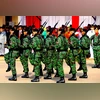
Indonesia has embarked on its most comprehensive military restructuring in decades, the biggest since Suharto’s time. Image: Wikimedia Commons
By Karishma Vaswani The Indonesian army was a formidable force during the former dictator Suharto’s regime, helping to keep a vast archipelago under his brutal control. Now that President Prabowo Subianto is in power, the military is becoming more pervasive in public life once more. This risks bringing back an authoritarian past citizens have worked hard to escape.
The most recent concerns were sparked by an unusual full-page advertisement in Kompas, the nation’s largest daily, taken out last week by the Ministry of Defense. The lengthy essay described the army’s expanded remit in non-defense programs, from Prabowo’s free school lunch initiative and village cooperatives, to plans to create 500 new battalions supporting healthcare and agriculture.
Titled No Longer Just the Military: Indonesia’s People’s Defense, the ad underscored how the ministry’s policies have shifted since the president took office in October. This wasn’t just a public relations exercise. It was an attempt to normalise the presence of soldiers and generals in everyday life, potentially giving them the kind of influence they had during the Suharto era. The dual function practice — known as dwifungsi — gave the armed forces an outsized role in politics and governance.
A revival of this model is dangerous. Suharto’s autocratic era entrenched a culture of impunity, and enabled gross human rights violations and corruption. The Reformasi movement of 1998, which led to the end of his rule, was designed to remove the army from public life. Elevating it to a more prominent place in Indonesian society today risks cementing the idea that Prabowo’s rule is simply a modern version of his former father-in-law’s.
Prabowo’s own history is also problematic. A one-time special forces commandant, he was accused of abuses in Timor-Leste and of abducting pro-democracy activists — allegations he’s consistently denied. A rejuvenation of the military’s power will reinforce his image as a leader who cannot rule without the assistance of the army.
Since taking office, he’s overseen a broad expansion of the armed force’s role in governance. He brought his cabinet on a four-day military-style retreat, and deployed soldiers to deliver his flagship school lunch programme. These moves appear to be part of a much grander strategy. Indonesia has embarked on its most comprehensive military restructuring in decades, the biggest since Suharto’s time.
The reorganisation includes expanding regional military commands from the current 15 to 21, with an eventual goal of one in almost all 38 provinces. There are also plans to form 100 territorial development battalions by 2025, with a longer-term target of deploying these units in every district across the country within five years, notes Made Supriatma, a visiting fellow in the Indonesia Studies Program with the Singapore-based ISEAS–Yusof Ishak Institute. These units are designed to embed soldiers in districts across the archipelago, working in areas such as agriculture, infrastructure and health.
The soft power goals of these initiatives are hard to miss. This is not simply about the ability to deploy soldiers around the archipelago in the case of natural disasters, or other crises. It’s also about reinforcing the historic connection between the armed forces and Indonesian society.
The groundwork was laid in March, when lawmakers approved changes to the 2004 Indonesian Military Law, which broadened the government’s ability to appoint serving military officers to civilian positions. Since then, Prabowo has named retired general Djamari Chaniago as coordinating minister for political and security affairs, giving him authority over both the military and police.
Defense Minister Sjafrie Sjamsoeddin, an ally of Prabowo since their army days, is chairing the defense council. He also leads a task force overseeing forest concessions — sectors often tied to powerful interests from palm oil to mining — in another worrying signal of the blurring of civilian-military life.
During the Suharto era, these practices were common. The armed forces exercised economic power through control of both formal and informal businesses, as Princeton University notes, but because of the murkiness of the system, there was no clear data about the extent of its economic holdings. In 2007, the government estimated that military foundations and cooperatives controlled businesses with gross assets of $350 million, but that figure was likely to have been much higher.
Younger Indonesians, who helped elect Prabowo in a landslide win last year, don’t know what it’s like to grow up in a military dictatorship, although recent protests have highlighted the youth feel like the odds are currently stacked against them.
Agitating on the streets may not be ideal, but it has proved effective before: Prabowo was forced to drop newly introduced housing perks for parliamentarians after nationwide demonstrations showed the power of the people. Still, they should realize the army’s expanding role could be used to police a restive population.
Indonesia is a young democracy, less than 30 years old. But protecting this system of governance is often harder than winning it. The nation’s future depends on resisting the mistakes of the past.
(Disclaimer: This is a Bloomberg Opinion piece, and these are the personal opinions of the writer. They do not reflect the views of www.business-standard.com or the Business Standard newspaper)

 "Indonesia's military expanding power, raising authoritarian fears")


