Japanese industrial robot maker Fanuc announced on Monday that it is teaming up with Nvidia to develop AI-powered factory robots capable of responding to spoken commands, Nikkei Asia reported. The move marks a major shift for Fanuc as it enters the field of “physical AI”, where machines analyse real-time data and adjust their actions instantly.
Fanuc and Nvidia plan to build physical AI systems equipped with Nvidia computers. These upgraded robots are expected to understand verbal instructions and operate safely around people, avoiding accidental collisions. To speed up deployment, the robots will be trained inside Nvidia’s virtual factory. Once the training phase is complete, the systems can be smoothly rolled out to real manufacturing sites.
The companies also said the new robots will support ROS 2, an open-source robotics platform. This will make it easier for engineers to build, test and deploy applications. The machines can be controlled using Python, a widely used programming language in AI development.
Fanuc moves toward physical AI
Fanuc currently controls nearly 20 per cent of the global industrial robot market and has shipped more than 1 million units so far. But this is the first time the company has publicly committed to physical AI.
Traditional factory robots require designated installation spaces and technicians to program every movement in detail. These machines perform repetitive tasks effectively but are difficult to install and maintain. A shortage of skilled workers has also held back wider adoption, the news report said.
According to the International Federation of Robotics, 4.66 million industrial robots were in operation worldwide last year, with annual shipments of around 500,000-550,000 units. Most are multi-jointed robotic arms.
However, AI is expected to change this landscape quickly. Physical AI systems can understand surroundings, identify objects and make decisions, opening the door to far more complex automation.
The global race to build advanced robots is accelerating. Startups in the US and China are creating humanoid robots, while Tesla is preparing a phased rollout of its humanoid robot Optimus in its factories.
Industry forecasts suggest that up to 1 billion robots could be operating in factories and warehouses by 2050. This growth is pushing established players like Fanuc to evolve rapidly, the news report said.
In October, SoftBank Group announced plans to acquire the robotics business of Swiss engineering giant ABB for $5.37 billion. SoftBank Chairman and CEO Masayoshi Son said, “We will unite world-class technology and talent under our shared vision to fuse Artificial Super Intelligence and robotics -- driving a groundbreaking evolution that will propel humanity forward.”
Yaskawa Electric, another Japanese robotics leader, plans to manufacture AI-enabled robots in the US. These robots will include Nvidia GPUs and are expected to handle more advanced tasks, such as tunnelling and picking vegetables.
Nvidia CEO Jensen Huang has encouraged employees to use AI as much as possible, Business Insider reported. Responding to concerns that some managers were advising staff to limit AI use, Huang said, “My understanding is Nvidia has some managers who are telling their people to use less AI... Are you insane?”
He said that any task that can be done by AI should be done by AI and reassured employees that their jobs are safe. Nvidia, unlike many tech companies, has been hiring aggressively.
Other firms, including Apple and HP, have recently announced job cuts. Apple is restructuring its global sales division, while HP said it plans to reduce 4,000-6,000 roles worldwide by FY28 as it uses AI to streamline operations.

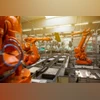 "Nvidia, Japan's Fanuc team up for major 'physical AI' leap in robotics")


 Connect with us on WhatsApp