
Japan's ruling party opens leadership race to choose Ishiba's successor
Five candidates are vying for the Liberal Democratic Party's top job ahead of a highly unpredictable vote in early October
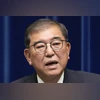 "Japan's ruling party opens leadership race to choose Ishiba's successor")
Explore Business Standard
Five candidates are vying for the Liberal Democratic Party's top job ahead of a highly unpredictable vote in early October
Outgoing Japanese Prime Minister Shigeru Ishiba 's ruling party opened official campaigning Monday to find his replacement who can restore political stability and voter support for the beleaguered Liberal Democrats.
Five candidates are vying for the Liberal Democratic Party's top job ahead of a highly unpredictable vote in early October. The race has a slogan: Change, LDP.
The winner must act quickly to address rising prices if the party is to have any chance of winning back support following devastating losses to both the LDP and its junior partner Komeito in the past year that deprived their coalition of a majority in either house of parliament.
Its new leader is still likely to be prime minister because the LDP remains the No. 1 party, while opposition groups are too splintered to form a coalition.
Whoever becomes the LDP leader must also gain cooperation from main opposition parties or risk facing constant no-confidence motions and a cycle of short-lived leadership.
Vote for LDP parliamentarians and members The Oct. 4 vote is not open to the general public. It is limited to 295 LDP parliamentarians and 1 million dues-paying grassroots party members. That's less than 1 per cent of Japan's eligible voters.
A candidate who secures a majority becomes a party leader. If nobody wins a majority, there will be a runoff between the top two candidates in the first round.
To be elected as prime minister, the new party leader will need votes from some opposition lawmakers in a parliamentary leadership vote, to be held within days.
5 serving and former ministers in the race All five candidates are incumbent and former Cabinet ministers. They call themselves moderate conservatives as they emphasize their willingness to work with opposition groups. Agriculture Minister Shinjiro Koizumi and former economic security minister Sanae Takaichi are considered the top contenders.
Here's a rundown of the candidates: Shinjiro Koizumi, 44: The son of a popular former prime minister, Junichiro Koizumi, makes his second bid after running against Ishiba last year when he campaigned to reform the scandal-laden party. As agriculture minister for Ishiba, Koizumi released an emergency rice stockpile to lower prices and stabilize supply. Koizumi vowed to rebuild his party and listen to the people's voices more closely to address their concerns, such as rising prices, growing foreign population and public safety. If elected, he will be Japan's youngest leader since Hirobumi Ito, who in 1885 became the first Japanese premier at 44.
Sanae Takaichi, 64 : A protge of former prime minister Shinzo Abe, Takaichi lost to Ishiba last year in the runoff. A wartime history revisionist and China hawk, she regularly visits Yasukuni Shrine seen by Beijing and Seoul as a symbol of militarism. She supports more public spending and investment for growth and a strong military. She backs paternalistic family values and opposes a female emperor, as well as a revision to civil law to allow an option of keeping separate surnames for married couples a change sought by rights groups so that women aren't pressured into abandoning their names.
Yoshimasa Hayashi, 64 : Chief Cabinet secretary of Ishiba's government, Hayashi is a moderate who promises steady wage increases, a strong economy and defense. He has served in a number of other key Cabinet posts, including foreign, defense and education ministers. The Harvard-educated politician is fluent in English. He sings and plays the guitar and piano in a pop band Gi!ns, which he formed with three fellow parliamentarians to make politics approachable.
Toshimitsu Motegi, 69 : Another Harvard graduate, Motegi has served in key posts including foreign and trade ministers and is known as a tough trade negotiator during U.S. President Donald Trump's first term. Motegi said the Japan-U.S. alliance is key to his country's diplomacy and that deepening the relationship of trust with Trump is essential.
Takayuki Kobayashi, 50 : A former economic security minister who promises strong growth, defense and national unity, Kobayashi is ultra-conservative and may split votes with Takaichi. Nicknamed Koba-Hawk, he promises a tougher restrictions on foreign workers and says Japan's defense spending target of 2% of GDP is insufficient.
A first female prime minister? If elected, Takaichi, an ex-newscaster whose role model is former British Prime Minister Margaret Thatcher, will be Japan's first female prime minister. The country ranks near the bottom internationally for gender equality, especially in politics.
Some experts worry that the hardline conservative would set back women's advancement. Others say her revisionist views of Japan's wartime history may complicate ties with Beijing and Seoul.
In a policy speech on Friday, Takaichi said she wants good ties with China, as an important neighbor and that her harsh comments about China are mostly related to economics. She did not say she would visit Yasukuni if she became prime minister, but stressed her gratitude for those who sacrificed their lives for the country and are enshrined at Yasukuni.
Cooperation with opposition is key Cooperation with opposition parties is vital as Japan faces a tense security environment and Trump is now expected to demand greater defense spending, experts say. While still uncertain, cooperation between the ruling coalition and key opposition focusing on security is possible and could contribute to political stability.
The new LDP leader and prime minister will need help from either or both of the center-right opposition groups, the Japan Innovation Party, or Ishin, and the Democratic Party for the People, with which the LDP has collaborated on budget bills.
Koizumi has approached Ishin and in August visited Osaka Expo, where he was escorted by party leader and Osaka Gov. Hirofumi Yoshimura. Hayashi reportedly met with a senior Ishin lawmaker over dinner recently, while Motegi announced his willingness to form a coalition with the two parties.
(Only the headline and picture of this report may have been reworked by the Business Standard staff; the rest of the content is auto-generated from a syndicated feed.)
First Published: Sep 22 2025 | 8:04 AM IST


