Home / World News / NASA's Roman telescope to unlock 100,000 cosmic explosions in major survey
NASA's Roman telescope to unlock 100,000 cosmic explosions in major survey
From dying stars to feeding black holes, the Roman Space Telescope's upcoming survey is set to unlock the secrets of dark energy and the universe's most powerful blasts
3 min read Last Updated : Jul 16 2025 | 1:03 PM IST
NASA’s soon-to-launch Nancy Grace Roman Space Telescope is gearing up for a cosmic fireworks show unlike any other. According to a new study, one of its most ambitious sky surveys could uncover over 100,000 cosmic explosions — from brilliant supernovae to ravenous black holes — offering science enthusiasts and astrophysicists a potential treasure trove of discoveries.
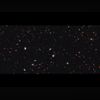
At the heart of this celestial hunt lies the High-Latitude Time-Domain Survey, an ambitious program that will observe the same vast patch of sky every five days over two years. These repeated scans will be stitched into detailed time-lapse “movies” of the universe, capturing dynamic events as they unfold across billions of light-years.
“Whether you want to explore dark energy, dying stars, galactic powerhouses, or entirely new cosmic phenomena, this survey will be a gold mine,” said Benjamin Rose, assistant professor at Baylor University and lead author of the new study published in The Astrophysical Journal.
Why it matters: a window into dark energy and ancient stars
Among the most sought-after events are Type Ia supernovae — thermonuclear explosions of white dwarfs in binary systems. These stellar blasts shine with near-uniform brightness, making them perfect “standard candles” to measure vast cosmic distances. Roman is expected to spot 27,000 of them, more than 10 times the total found by all previous surveys combined.
Crucially, Roman’s deep gaze will peer farther into the universe, and further back in time, than ever before. It could detect supernovae from over 11.5 billion years ago, potentially setting a new record for the farthest-known Type Ia explosion.
Such data is critical in refining our understanding of dark energy, the mysterious force that’s accelerating the universe’s expansion. Evidence suggests that dark energy might have evolved over time, and Roman could help confirm this by mapping how the universe expanded across different epochs.
“Filling these data gaps could also fill in gaps in our understanding of dark energy,” said Rose. “Roman will explore cosmic history in ways other telescopes can’t.”
Not just supernovae: a cosmic jackpot
While Type Ia supernovae are the stars of the show for cosmologists, Roman will also observe about 60,000 core-collapse supernovae — explosions of massive stars that burn through their fuel and collapse. It may also detect feeding black holes, luminous kilonovae from neutron star mergers, and perhaps signatures of the universe’s first stars, believed to self-destruct without leaving any trace.
Distinguishing between these various cosmic explosions is a challenge. But scientists plan to use machine learning algorithms, trained on Roman’s massive dataset, to sort through the incoming flood of data.
“Roman is going to collect a lot of cosmic ‘bycatch’—phenomena that might be irrelevant to some but gold for others,” said Rebekah Hounsell, co-author of the study and research scientist at NASA’s Goddard Space Flight Center.
With science operations expected to begin in 2027, Roman is poised to deliver a new era of time-domain astronomy—watching the cosmos in motion, and catching its most spectacular moments in the act.

 "NASA's Roman telescope to unlock 100,000 cosmic explosions in major survey")

