Home / World News / New French government looks to fix 2025 budget while avoiding collapse
New French government looks to fix 2025 budget while avoiding collapse
The government, put together by newly named Prime Minister Francois Bayrou, includes members of the outgoing conservative-dominated team and new figures from centrist or left-leaning backgrounds
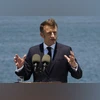
French President Emmanuel Macron has vowed to remain in office until his term ends in 2027. | File Photo
French President Emmanuel Macron's office announced a new government Monday, after the previous Cabinet collapsed in a historic vote prompted by fighting over the country's budget.
The government, put together by newly named Prime Minister Francois Bayrou, includes members of the outgoing conservative-dominated team and new figures from centrist or left-leaning backgrounds.
Coming up with a 2025 budget will be the most urgent order of business. The new government enters office after months of political deadlock and crisis and pressure from financial markets to reduce France's colossal debt.
Macron has vowed to remain in office until his term ends in 2027, but has struggled to govern since snap elections in the summer left no single party with a majority in the National Assembly. Since his appointment 10 days ago, Bayrou has held talks with political leaders from various parties in search of the right balance for the new government.
Some critics on Monday were angry at Bayrou for consulting with Marine Le Pen's far-right party, and some argue the government looks too much like the old one to win lawmakers' trust.
Former Prime Minister Michel Barnier resigned this month following a no-confidence vote prompted by budget disputes in the National Assembly, leaving France without a functioning government. Le Pen played a key role in Barnier's downfall by joining her National Rally party's forces with the left to pass the no-confidence motion.
Bayrou will need support from moderate legislators on the right and left to keep his government alive.
Banker Eric Lombard will be finance minister, a crucial post when France is working to fulfil its promises to European Union partners to reduce its deficit, estimated to reach 6 per cent of its gross domestic product this year. Lombard briefly worked as an adviser to a Socialist finance minister in the 1990s.
Bayrou has said he supports tax hikes championed by his predecessor, but it's not clear how the new government can find the right calculation for a budget that satisfies a majority of lawmakers angry over spending cuts.
Hard-right Bruno Retailleau stays on as interior minister, with responsibility for France's security and migration policy. Sebastien Lecornu, who has been at the forefront of France's military support for Ukraine, remains defence minister, while Foreign Minister Jean-Noel Barrot, who has travelled extensively in the Mideast in recent weeks, also retains his post.
Among new faces are two former prime ministers. Manuel Valls will be minister for overseas affairs, and Elisabeth Borne takes the education ministry.

 "New French government looks to fix 2025 budget while avoiding collapse")


 Connect with us on WhatsApp