Since achieving independence in 1947, Pakistan's military leadership has seen a very close engagement with the political, economic, and foreign relations of the country. Army chiefs have not only led coups and managed wars, but they have also shaped and controlled the frameworks within which states operate. The evolution of power has transitioned through two key titles, Commander-in-Chief (1947-1972) and Chief of Army Staff (COAS) from 1972 onwards.
This long arc of military dominance reached a new milestone on Wednesday (June 18), when General Asim Munir, Pakistan’s current army chief, held a direct meeting with US President
Donald Trump at the White House. This was the first time a sitting Pakistani Chief of Army Staff, who was not a politician or ruling under martial law, was formally received at such a high diplomatic level, which indicates the global weight of the military organisation.
Over the years, each army chief stamps a different mark as the organisation transformed with coups, wars, diplomacy to commercialising itself. Here is an overview of how subsequent military leaders have shaped the civil-military relationship in Pakistan and extended the army’s role in statecraft.
Field Marshal Muhammad Ayub Khan (1951–1958)
This legacy began with Field Marshal Muhammad Ayub Khan when he served as the Commander-in-Chief from 1951 to 1958 as the United States increased its military aid to Pakistan. A series of events led Ayub Khan to seize power in a military coup in 1958, cloaked as a necessary response to civilian mismanagement.
He set up an operational "developmental dictatorship," consolidating economic and administrative power and dividing profits with military elites through the Fauji Foundation and massive parcels of land. His rule ended with a negotiated settlement that reestablished its international martial image when the 1965 war with India came to an end. His rule established a future pattern: seize power, entrench economically, and command diplomacy.
General Muhammad Musa Khan (1958-1966)
Following him, General Muhammad Musa Khan (1958-1966), a symbolic figure installed by Ayub, extended the same centralised authority and military privileges without initiating a new coup. He remained involved during the 1965 war and supported the Ayub-era political-economic framework.
General Agha Muhammad Yahya Khan (1966-1971)
General Agha Muhammad Yahya Khan (1966-1971) assumed power after Ayub’s resignation, imposing martial law to address a growing crisis in East Pakistan. He disbanded the parliament and cracked down on dissent, centralising authority in West Pakistan.
His tenure ended in catastrophe during the 1971 Bangladesh Liberation War, as Pakistan faced military defeat and diplomatic isolation, ultimately leading to the creation of Pakistan. This marked a big rupture in the myth of Pakistan’s military invincibility and exposed the limitations of authoritarian rule.
Lt. Gen. Gul Hassan Khan (Dec 1971-Mar 1972)
Lt. Gen. Gul Hassan Khan briefly served from December 1971 to March 1972 during a transitional phase. His role was largely ceremonial, presiding over a caretaker military command during national disintegration.
General Tikka Khan (1972-1976)
In the post-1971 period, General Tikka Khan (1972-1976) was appointed COAS under Prime Minister Zulfikar Ali Bhutto. He initiated military restructuring and oversaw violent campaigns in Balochistan. While supporting Bhutto’s nationalisation efforts, he ensured the military retained its institutional privileges. Diplomatically, he repositioned the military after the 1971 setback, marking the army’s re-entry as a core power broker in civilian governance.
General Zia??'ul??'Haq (1976-1988)
General Zia??'ul??'Haq (1976-1988) executed a coup in 1977, Operation Fair Play, after fuelling political unrest. He imposed martial law, institutionalised Islamisation, and expanded military economic interests through the Defence Housing Authority, Fauji Foundation, and other welfare corporations.
His foreign policy pivoted around alignment with the United States during the Soviet-Afghan War. While remaining neutral during the Iran-Iraq conflict, Zia actively supported Afghan Mujahideen. His rule left a legacy of ideological, political, and commercial militarisation.
Weak generals in turbulent times
After Zia’s death in 1988, General Mirza Aslam Beg (1988-1991) facilitated a return to electoral democracy but ensured the National Security Council (NSC) retained supervisory authority. He maintained behind-the-scenes influence over fragile civilian administrations.
General Asif Nawaz Janjua (1991-1993), selected on the basis of seniority, died unexpectedly in office. His brief tenure did not register any significant political or economic shift.
General Abdul Waheed Kakar (1993-1996) took charge amid political unrest. He influenced the dismissal and restructuring of governments and continued to utilise the NSC as a policy advisory instrument.
General Jehangir Karamat (1996-1998) assumed command under constitutional norms but was forced to resign after advocating parliamentary oversight of the NSC, an action that exposed military discomfort with civilian checks.
General Pervez Musharraf (1998-2007)
In 1998, General Pervez Musharraf seized power after the Kargil War in a coup against the Nawaz Sharif government, citing administrative failures. His regime restructured the Constitution, liberalised the economy, and significantly expanded military-led business ventures.
Under Musharraf, Pakistan allied with the United States during the post-9/11 global war on terror and maintained strong ties with China and Gulf states. His controversial Kargil campaign attracted international condemnation and resulted in retreat under US pressure. Musharraf’s leadership institutionalised the military’s supremacy in politics and global diplomacy.
The post-Musharraf era
General Ashfaq Parvez Kayani (2007-2013), a Musharraf appointee, led during the post-coup normalisation period. Though he projected a reduced public military footprint, his tenure ensured continued control of the NSC and Inter-Services Intelligence (ISI).
Appointed in 2013 by Kayani, General Raheel Sharif (2013-2016) prioritised counter-terror operations, particularly Operation Zarb??'e??'Azb, and expanded the army’s role in infrastructure under the China-Pakistan Economic Corridor (CPEC). He largely avoided political entanglement while engaging internationally to secure infrastructure investment.
General Qamar Javed Bajwa (2016-2022) assumed command over senior contenders and received two extensions from Parliament. His tenure deepened military involvement in electoral processes, most notably engineering the rise of the Pakistan Tehreek-e-Insaf (PTI) and orchestrating the 2022 regime change. Under him, the military strengthened its economic stakes in CPEC and intensified diplomatic alignment while tightening domestic political control.
Field Marshal General Asim Munir (2022-present)
General Asim Munir, the current Chief of Army Staff (COAS), assumed office in November 2022 amid political upheaval. In May 2025, he was elevated to the rank of Field Marshal, only the second in Pakistan’s history after Ayub Khan. Munir’s tenure has seen the reintroduction of military courts to prosecute civilian dissenters and a major expansion of “milbus” (military-business) interests across mining, agriculture, and infrastructure.
His leadership was tested during the April-May 2025 conflict with India, triggered by the Pahalgam terror attack. India responded with Operation Sindoor, targeting Pakistani military installations. Pakistan retaliated with Operation Bunyan??'um??'Marsoos. A ceasefire was reached on May 10. Munir emerged as a national hero, with a dramatic increase in public approval.
On June 18, he attended a high-profile White House lunch hosted by U.S. President Donald Trump, where discussions focused on regional stability, Iran, and Indo-Pak relations. Munir has since broadened military diplomacy, finalising jet deals with China, strengthening ties with Gulf nations, and elevating Pakistan’s engagement in the United Nations Security Council and the International Monetary Fund.
So far, his legacy is marked by unprecedented consolidation of military power in both state and commercial spheres. However, critics warn of an authoritarian drift and an increasingly militarised political landscape.
Over the course of seven decades, Pakistan’s army chiefs have followed a familiar blueprint: seize control through coups or exploit crises, institutionalise their authority via the NSC and influence over the judiciary and bureaucracy, monetise power through sprawling military business empires and justify their hold through war and diplomacy.

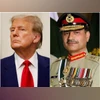 "As Munir meets Trump, a look at the past legacy of Pak's military chiefs")


