Home / World News / Parasocial becomes Cambridge Dictionary's Word of the Year for 2025
Parasocial becomes Cambridge Dictionary's Word of the Year for 2025
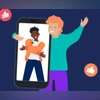
Parasocial became the Word of the Year because people are talking about one-sided relationships more than ever, especially with celebrities and even AI chatbots
Parasocial was added to the Cambridge Dictionary in 2023 after lexicographers noticed it appearing in news articles and on social media. Photo: Cambridge Dictionary
'Parasocial' was selected as the Cambridge Dictionary's Word of the Year for 2025 amid an increased spike in searches for this word, the dictionary announced on Tuesday. It also noted that the word's popularity helped it transition from an academic term to one used by ordinary people in their social media posts in 2025.
Cambridge Dictionary Chief Editor Colin McIntosh said, "Parasocial stood out in 2025 for several reasons. Public interest in the term increased massively this year, as we can see from our data: the number of searches for it in the Cambridge Dictionary, as well as on Google, spiked on several occasions. And it also captures the zeitgeist of 2025, as the public’s fascination with celebrities and their lifestyles continues to reach new heights."
Parasocial was added to the Cambridge Dictionary in 2023 after lexicographers noticed it appearing in news articles and on social media.
What does parasocial mean?
Parasocial is an adjective which means involving or relating to a connection that someone feels between themselves and a famous person they do not know, a character in a book, film, TV series, or an artificial intelligence (AI) character. It also became one of only two adjectives that have been crowned Word of the Year; the first being paranoid in 2016.
It was chosen as the Word of the Year because people are talking about one-sided relationships more than ever, especially with celebrities and even AI chatbots, the website noted.
Searches spike for Parasocial
Social media, influencer culture, and the rise of AI companions have made these relationships more common. Searches for the word spiked after debates about how influencers use parasocial bonds and concerns about how AI chatbots might affect children and mental health. The Cambridge Dictionary even updated its definition to include relationships with AI.
Other shortlists for 2025
Apart from parasocial, two other words were shortlisted by the Cambridge Dictionary: pseudonymization and memeify.
While pseudonymization refers to a process in which information that relates to a particular person is changed to a number or name that has no meaning so that it is impossible to understand, memeify simply means turning an event, image, or person into a meme.
According to the website, searches for pseudonymization spiked in May. However, it could not be traced to a specific event or any particular trend. Memeify, on the other hand, highlights how memes, in the tradition of satire, are a mode of both entertainment and communication, blurring the lines between joke and journalism to reframe politics, identity, crises, and culture.
Glazing, vibey on watchlist
To be a candidate for the Word of the Year, a term has to be a part of the Cambridge Dictionary. These are some words that are on the watchlist:
Glazing: Excessive use of praise or flattery, especially by artificial intelligence (AI) chatbots, in a way that seems insincere and artificial. It is sometimes seen as a way of compensating for weak input from an AI.
Bias: It is the object of a fan’s devotion to a singer, band, or other media star. It is used especially by fans of the South Korean music genre K-pop.
Vibey: Describes a place that has a good vibe. For example, the place is vibey, has a great buzz, and is perfect for people-watching.
Breathwork: It is a technique that involves the conscious control of your breathing and is intended to produce physical and mental benefits.
Doom spending: It is the activity of spending money that you do not have to make yourself feel better. People sometimes engage in it when they feel anxious and uncertain about the future.
Previous winners
These are the last five years' winners of the Cambridge Dictionary Word of the Year:

 "Parasocial becomes Cambridge Dictionary's Word of the Year for 2025")


