Home / World News / President Donald Trump's punishing tariffs stun US' automaker allies
President Donald Trump's punishing tariffs stun US' automaker allies
Mexico, Japan, and South Korea, along with Canada, account for about 75 per cent of US vehicle imports
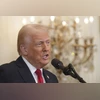
President Donald Trump speaks at a reception celebrating Women's History Month in the East Room of the White House, Wednesday, March 26, 2025, in Washington. (Photo: PTI)
4 min read Last Updated : Mar 27 2025 | 11:20 PM IST
By River Akira Davis, Emiliano Rodríguez Mega & Ian Austen
Mexico deployed thousands of National Guard troops to the border to deter migrants from reaching the United States (US). South Korea said it would invest $21 billion in expanding US manufacturing. Japanese officials descended on Washington, offering to invest $1 trillion in the US and buy more American natural gas.
None of that was enough to prevent one of those countries’ biggest tariff concerns from becoming a reality on Wednesday, when President Trump declared that automobiles and car parts imported to the US would face a 25 percent tariff starting on April 3.
Mexico, Japan, and South Korea, along with Canada, account for about 75 per cent of US vehicle imports. Beyond direct exports, Japanese and South Korean automakers also manufacture many of the vehicles in Mexico and Canada that ultimately land in the American market, leaving them particularly exposed to the tariffs.
The tariffs will also hit Europe, particularly Germany, whose three largest carmakers make up nearly three-quarters of the European Union’s automotive exports to the US. In the near term, Trump’s new tariffs are expected to scramble foreign automakers’ production operations and drag on their earnings.
For Japan and South Korea, automobiles are the top export to the US. Mexico, in addition to cars, produces tens of billions of dollars worth of automobile parts each year that are exported to its northern neighbor. In Canada, auto manufacturing and auto parts are the country’s second-biggest export by value. Last year, European automakers’ shipments across the Atlantic were worth more than $40 billion.
For countries heavily affected by Trump’s tariffs, economists warned that the new taxes on cars could significantly curb economic growth this year. In the longer term, the tariffs could prompt a carving out of domestic production in countries where the industrial base is heavily reliant on automakers and their supply chains.
In recent years, Japanese and South Korean automakers, as well as European brands — which account for 18 percent of US car imports — have become increasingly reliant on the American market. That is in part because of stagnant demand in their home countries, but also because they are facing heightened competition from local competitors in the world’s biggest car market, China. This dynamic helps to explain why some of the countries fought intensely to try to secure exemptions from the tariffs.
Japanese officials and lobbyists have argued their case in Washington, highlighting substantial Japanese investment in the US and warning that tariffs would raise prices for American consumers. In a meeting with last month, Japanese Prime Minister Shigeru Ishiba said Japan would aim to increase investment in the United States to about $1 trillion by buying more products like American liquefied natural gas.
In Mexico, officials deployed about 10,000 National Guard troops to the US-Mexico border in response to Trump’s persistent condemnation of illegal migration to the US. They also handed over to the US dozens of top cartel operatives and worked to crack down on fentanyl production.
Hyundai in South Korea said earlier this week it would invest $21 billion in expanding US manufacturing. After Trump praised the announcement as a sign that his policies were working to create more American jobs, many in the industry were looking to see if Hyundai’s pledge would sway the president’s tariff calculus.
Peter Navarro, the senior counselor to the president on trade and manufacturing, singled out Japan, South Korea and Germany, when speaking to reporters on Wednesday. Those countries, he said, had undermined the ability of US companies to sell their cars overseas.
For now, companies and officials are left to consider their options and come up with new plans. A number of car companies in Asia have been trying to accelerate shipments to the US before the tariffs Trump was threatening would take effect. Those automakers are also beginning preparations to ramp up production to the extent they can at the manufacturing plants they operate inside the US.

 "President Donald Trump's punishing tariffs stun US' automaker allies")

