
Putin says Russia has no intention of putting nuclear weapons in space
'We haven't deployed any nuclear weapons in space'
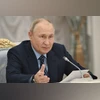 "Putin says Russia has no intention of putting nuclear weapons in space")
Explore Business Standard
'We haven't deployed any nuclear weapons in space'
Russian President Vladimir Putin declared on Tuesday that Moscow has no intention of deploying nuclear weapons in space, claiming that the country has only developed space capabilities similar to those of the US.
Putin's statement follows the White House confirmation last week that Russia has obtained a troubling anti-satellite weapon capability, although such a weapon is not operational yet. White House national security spokesman John Kirby said it would violate the international Outer Space Treaty, but declined to comment on whether the weapon is nuclear-capable.
The treaty signed by more than 130 countries, including Russia, prohibits the deployment of nuclear weapons or any other kinds of weapons of mass destruction in orbit or the stationing of weapons in outer space in any other manner. The White House said it would look to engage the Russians directly on the concerns.
Our position is quite clear and transparent: we have always been and remain categorically opposed to the deployment of nuclear weapons in space, Putin said. Just the opposite, we are urging everyone to adhere to all the agreements that exist in this sphere.
Speaking during a meeting with his defence minister, Sergei Shoigu, Putin noted that Russia has only developed space capabilities that other nations, including the US have.
"And they know it, he added.
We haven't deployed any nuclear weapons in space or any elements of them to use against satellites or to create fields where satellites can't work efficiently, Shoigu said.
Shoigu alleged that the White House could have made the allegations of a new Russian space capability in order to force Congress to support aid for Ukraine and also encourage Moscow to reenter nuclear arms control talks that Russia has suspended amid the tensions with the US over Ukraine.
Putin didn't rule out possible future contacts with the US, but reaffirmed his view that Washington's push for Russia's defeat in Ukraine makes them impossible for now.
The US and the West, for one thing, are calling for Russia's strategic defeat, while, on the other hand, they would like to have a dialogue on strategic stability, pretending that those things aren't connected," he said. It won't work.
(Only the headline and picture of this report may have been reworked by the Business Standard staff; the rest of the content is auto-generated from a syndicated feed.)
First Published: Feb 21 2024 | 12:16 AM IST


