By Min Jeong Lee, Mackenzie Hawkins & Anto Antony
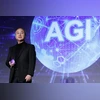
SoftBank Group founder Masayoshi Son is seeking to team up with Taiwan Semiconductor Manufacturing to realise what could be his biggest bet yet — a trillion-dollar industrial complex in Arizona to build robots and artificial intelligence.
Son envisions a version of the vast manufacturing hub of China’s Shenzhen that would bring back high-tech manufacturing to the US, according to people familiar with the billionaire’s thinking. The park may comprise production lines for AI-powered industrial robots, they said, asking not to be named as the plan remains private.
SoftBank officials are keen to have the Taiwanese maker of Nvidia’s advanced AI chips play a prominent role in the project, although it’s not clear what part Son sees for TSMC, which already plans to invest $165 billion in the US and has started mass production at its first Arizona factory. Nor is it clear that TSMC would be interested. A person familiar with the chipmaker’s thinking said that SoftBank’s project has no bearing on TSMC’s plans in Phoenix.
Codenamed “Project Crystal Land,” the Arizona complex represents the 67-year-old SoftBank chief’s most ambitious attempt in a career that’s spanned numerous bet-the-house bids, thousands-fold-returns and billions of dollars in losses. Son, who’s often expressed disappointment in his own legacy, has repeatedly said he means to do everything he can to hurry AI development.
SoftBank officials have spoken with federal and state government officials to discuss possible tax breaks for companies building factories or otherwise investing in the industrial park, including talks with US Secretary of Commerce Howard Lutnick, the people said.
The Japanese billionaire is also personally sounding out interest among an array of tech companies, they said. The project has been floated to executives at South Korea’s Samsung Electronics, they said.
Shares of SoftBank rose 2.7 per cent Friday. TSMC’s stock price rose 1.9 per cent, while Samsung’s gained 0.5 per cent.
Representatives of SoftBank, TSMC and Samsung declined to comment. A Commerce Department spokesperson did not immediately respond to a request for comment.
SoftBank’s attempts to get businesses investing in a US industrial park follow signs that its campaign alongside ChatGPT maker OpenAI to raise hundreds of billions of dollars for US data centers is moving slower than initially expected. Crystal Land would need to address crucial details, such as whether there’s demand and funding on par with its grandiose scale, to become reality.
Son has pulled together a list of SoftBank Vision Fund portfolio companies that might take part in the Arizona manufacturing hub, the people said. SoftBank-backed startups working on robotics and automation technologies — such as Agile Robots SE — may set up production facilities at the industrial complex, they said.
The plans are preliminary and feasibility hinges on support from the Trump administration and state officials.
While the cost of the project as envisioned by Son may require as much as $1 trillion to execute — a sum previously reported by the Nikkei — the actual scale depends on interest from big technology companies. If successful, Son has floated building multiple cutting-edge industrial parks across the US.
SoftBank is exploring the Arizona project as it also moves forward on plans to invest as much as $30 billion into OpenAI and plans a $6.5 billion acquisition of Ampere Computing LLC. It’s also seeding money into the Stargate venture with OpenAI, Oracle Corp. and Abu Dhabi’s MGX, although it aims to get the bulk of the money for building data centers around the world from outside investors.
Those outlays come as SoftBank’s cash stood at ¥3.4 trillion ($23 billion) at the end of March. The Tokyo-based company has since tapped its T-Mobile US Inc. stake, selling roughly a quarter of what it held in March to raise $4.8 billion this month. SoftBank also has net assets valued at ¥25.7 trillion, of which chip designer Arm Holdings Plc makes the single largest portion, allowing it to borrow billions more as needed.
SoftBank’s exploring project financing for Stargate data centers, a model that could be adapted to a big endeavor like Crystal Land. Common for large-scale infrastructure like oil or gas pipelines, the project finance template would allow the tech investor to raise funding on a project-by-project basis and require less money upfront.
Son’s restless search for growth has resulted in projects that proceed in fits and starts, making it difficult to gauge how committed he is to any one venture. The billionaire is often goaded by the desire to boost SoftBank’s stock price and repay retail investors who’ve held onto the company’s shares from before the dot-com boom and bust, people close to the SoftBank chief have said. Many investors have waited for decades for the stock to regain dot-com bubble levels — something it’s flirted with only a few times since 2020.
Masayoshi Son’s ambition to set up a trillion-dollar industrial complex in Arizona to build robots and AI could signal additional, aggressive investments, even after SoftBank announced deals exceeding $40 billion in OpenAI, Stargate and Ampere Computing. The plans are preliminary, but could require investments in startups to fund facilities at the industrial complex. SoftBank might need to monetize mature assets, as it did in a recent $4.8 billion sale of a stake in T-Mobile, to invest in riskier, unlisted firms.
If Son’s primary motivation is to clear the way for AI, it may be more cost-efficient to encourage partnerships that link manufacturing expertise with that of AI engineers and specialists in fields from medicine to robotics, and incubating smaller companies, according to Melissa Otto, head of research at Visible Alpha.
But pouring cash into data centers may help lower the cost of developing AI applications and spur broader adoption, she said. “He’s a long-term thinker, and he takes risks,” Otto said. “It’s just too early to tell.”

 "SoftBank pitches $1 trillion AI, robotics hub in US to TSMC, Trump team")


