
Syrian Christians mark change with tears as UN envoy asks to end sanctions
They are promising us that government will be formed soon and, God willing, things will become better because we got rid of the tyrant, said one worshiper, Jihad Raffoul
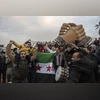 "Syrian Christians mark change with tears as UN envoy asks to end sanctions")
WebinarsNew
Deep DiveNew
Explore Business Standard
They are promising us that government will be formed soon and, God willing, things will become better because we got rid of the tyrant, said one worshiper, Jihad Raffoul
In churches across long-stifled Syria, Christians marked the first Sunday services since the sudden collapse of Bashar Assad's regime in an air of transformation. Some were in tears, while others clasped their hands in prayer.
They are promising us that government will be formed soon and, God willing, things will become better because we got rid of the tyrant, said one worshiper, Jihad Raffoul.
Today, our prayers are for a new page in Syria's future, said another, Suzan Barakat.
To help those efforts, the UN envoy for Syria called for a quick end to Western sanctions as the rebel alliance that ousted Assad and sent him into exile in Russia a week ago considers the way forward, along with regional and global powers.
Syria has been under deeply isolating sanctions by the United States, the European Union and others for years as a result of Assad's brutal response to what began as peaceful anti-government protests in 2011 and spiralled into civil war.
In another sign of yearning for normalcy, schools in Damascus reopened Sunday for the first time since Assad's ouster. At the Nahla Zaidan school in the Mezzah neighbourhood, teachers hoisted the three-starred revolutionary flag.
God willing, there will be more development, more security and more construction in this beloved country, said Maysoun Al-Ali, the school director.
But other challenges complicate rebuilding. The new transitional leadership has not laid out a clear vision of how the country will be governed, and the main group behind the offensive remains designated as a terrorist organization by the US, which nevertheless has begun making direct contact with it.
The UN envoy to Syria, Geir Pedersen, told reporters in Damascus that the rebels' stunningly fast offensive should be followed by a rapid international response.
We can hopefully see a quick end to the sanctions so that we can see really a rallying around building of Syria, he said.
The interim government was set up by former opposition forces led by the Islamic militant group Hayat Tahrir al-Sham, or HTS. Officials in Washington have indicated that the Biden administration is considering removing the group's terror designation.
The interim government is set to rule until March. Arab foreign ministers have called for UN-supervised elections based on a new constitution.
We need to get the political process underway that is inclusive of all Syrians, Pedersen said. He also called for justice and accountability for crimes committed during the war, as some families continued to search for the tens of thousands of people that Assad's government had placed in prisons and detention facilities.
An emergency meeting this weekend with foreign ministers from the US, Arab League and Turkey and top officials from the European Union and United Nations agreed that the new government in Syria should prevent terror groups from taking hold and secure and destroy any remaining Assad-era chemical weapons.
The meeting also urged all parties to cease hostilities in Syria.
Israeli Prime Minister Benjamin Netanyahu said in a video statement released Sunday that we have no interest in conflict with Syria" and Israel's policy will follow "the emerging reality on the ground". He described Israeli military actions in the past week, including hundreds of airstrikes, as aimed at thwarting potential threats.
For his part, HTS leader Ahmad al-Sharaa on Saturday said they don't intend to enter any conflict "because there is general exhaustion in Syria.
Al-Sharaa and Syria's other new leaders also have been urged to respect the rights of minorities and women.
Many Syrian Christians, who made up 10% of the population before Syria's civil war, either fled the country or supported Assad out of fear of Islamist insurgents. Last Sunday's church services were cancelled.
We were scared of the events taking place, said Ibrahim Shahin, a Catholic church supervisor.
But this Sunday, doors reopened and bells rang out.
Now we see that for the minorities, on the contrary, they are showing us more respect, and they are taking care of us, said Agop Bardakijian, a Christian resident of Aleppo at a bustling cafe. Children posed for photos in front of Christmas trees.
Residents had been warned of slaughter as the rebels closed in, but nothing like that has happened, said another Aleppo resident who gave his name as Raed, adding, The revolution should have happened long ago.
There were some signs of disorder. A rebel force was deployed to a village in southeastern Damascus to stop looters who swarmed a residential complex housing former military personnel and set some apartments on fire. The rebels fired at the crowd to drive them away and detained about a dozen people. Looting in the capital has been limited.
(Only the headline and picture of this report may have been reworked by the Business Standard staff; the rest of the content is auto-generated from a syndicated feed.)
First Published: Dec 16 2024 | 7:37 AM IST

