
UN urges immediate aid distribution as supply trucks enter Gaza after weeks
The blockade, which began on March 2, followed Israel's on-ground military operations "Gideon's Chariots" in the region launched on May 17, aimed at "conquering" Gaza
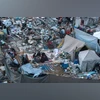 "UN urges immediate aid distribution as supply trucks enter Gaza after weeks")
Explore Business Standard

Associate Sponsors
Co-sponsor
The blockade, which began on March 2, followed Israel's on-ground military operations "Gideon's Chariots" in the region launched on May 17, aimed at "conquering" Gaza
The United Nations (UN) on Tuesday (local time) stated that while the first trucks carrying food and other supplies had entered Gaza after an 11-week blockade, the aid is yet to be distributed due to logistical challenges imposed by Israel's on-ground military operations.
During a briefing, Stephane Dujarric, Spokesperson for the UN Secretary-General, emphasised the urgent need to distribute these supplies, calling the current influx "a drop in the ocean" given the massive humanitarian crisis in the region.
He highlighted that the deprivation in Gaza exacerbating the humanitarian crisis was driven by ongoing bombardments, blockade, and recurrent displacement.
"Turning to the situation in the Gaza Strip, the first trucks of vital baby food are now inside Gaza after 11 weeks of total blockade, and it is urgent that we get that assistance distributed. We need much, much more to cross," Dujarric stated.
"This is a drop in the ocean of what's required to address the massive scale of humanitarian needs. The deprivation we are seeing in Gaza is the result of ongoing bombardments, blockade, and recurrent displacement," he added.
According to Dujarric, the Office for the Coordination of Humanitarian Affairs (OCHA) on Tuesday detailed that the UN sent flour, medicines, nutrition supplies, and other essentials through the Israeli fence into the Palestinian side of the Kerem Shalom crossing, with baby formula and other nutrition supplies being sent on Monday.
He noted that Israeli requirements to offload and reload supplies separately after securing access have delayed distribution, with UN teams waiting hours for clearance to collect the items.
"The Office for the Coordination of Humanitarian Affairs (OCHA) says that today, the UN is sending flour, medicines, nutrition supplies and other basics through the Israeli fence into the Palestinian side of Kerem Shalom. Yesterday, we managed to get in baby formula and other nutrition supplies... Today, our team waited several hours for the Israeli green light to access Kerem Shalom and collect the nutrition supplies. Just to make it clear, while more supplies have come into the Gaza Strip, we have not been able to secure the arrival of those supplies into our warehouses and delivery points," the UN official clarified.
Earlier today, the UN was granted approval by Israel to send an additional 93 aid trucks into the Gaza Strip, as reported by Times of Israel, citing a spokesperson from the UN's humanitarian office and Israeli officials.
Compounding the crisis, Dujarric further stated that water and sanitation services across Gaza were severely disrupted due to fuel shortages, with no fuel currently available in northern Gaza and with only half the required weekly supply received last week, leading to nearly depleted reserves and reduced operating hours for water wells, with complete shutdowns imminent. He stated that in southern Gaza, water utilities have received no fuel, despite needing 1,40,000 litres weekly to maintain operations.
"The partners providing water and sanitation services report that their operations continue to be severely disrupted across the Strip due to the ongoing fuel shortages. In the northern part of Gaza, no fuel is currently available, and only half of the required weekly supply was received last week. As a result, fuel reserves are nearly depleted. Operating hours for water wells have been further reduced, and complete shutdowns are imminent. In southern Gaza, water utilities have not received any fuel, although 140,000 litres per week are needed to maintain operations," the Spokesperson added.
The blockade, which began on March 2, followed Israel's on-ground military operations "Gideon's Chariots" in the region launched on May 17, aimed at "conquering" Gaza, retaining the territory; moving the Palestinian civilian population toward the south of the Strip; attacking Hamas; and preventing the terror group from taking control of humanitarian aid supplies.
Earlier on Monday, acting on the recommendations from the IDF, Israeli Prime Minister Benjamin Netanyahu and his cabinet agreed to allow a "basic quantity" of food after the blockade in Gaza that has brought Palestinians to the edge of famine, as reported by Euronews.
Meanwhile, the UK, France, and Canada jointly condemned Israel's expanded military operations in Gaza.
The European leaders criticised the "intolerable" human suffering in Gaza, Israel's restrictions on humanitarian aid, and settlement expansions in the West Bank, threatening further action, including sanctions, if Israel does not halt its offensive.
(Only the headline and picture of this report may have been reworked by the Business Standard staff; the rest of the content is auto-generated from a syndicated feed.)
First Published: May 21 2025 | 6:46 AM IST


