
US eliminated top threat to humanity with strikes on Iran: Israeli envoy
Warning of the global consequences of inaction, the envoy added, A nuclear Iran would have been a death sentence
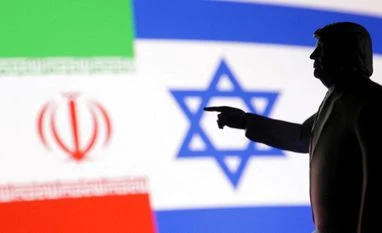 "US eliminated top threat to humanity with strikes on Iran: Israeli envoy")
Explore Business Standard

Associate Sponsors
Co-sponsor
Warning of the global consequences of inaction, the envoy added, A nuclear Iran would have been a death sentence
Israel's Permanent Representative to the United Nations, Danny Danon, hailed the recent US strikes on Iran's nuclear sites as a critical move to eliminate what he called the "greatest existential threat to humanity," during an emergency special session of the UN the Security Council held at Headquarters in New York on Sunday (local time).
Addressing the session, convened under the agenda item "threats to international peace and security," Danon staunchly defended the US-led Operation Midnight Hammer, stating, "The United States has eliminated the greatest existential threat to humanity--and yet, some nations still dare to condemn it. I asked members of the Security Council: Where were you when Iran enriched uranium beyond civilian use? Where were you when Iran openly plotted our destruction? You were silent, you were afraid, you were bystanders."
Danon accused Iran of using its negotiations with the US on a nuclear peace deal as a "camouflage" and "delay tactic" to advance its missile and uranium enrichment programmes. "Iran used the negotiating table as camouflage, a delay tactic, a way to buy time while building missiles and enriching uranium... We gave it every possible off-ramp; Iran would not move, so it had to be moved," he said.
Warning of the global consequences of inaction, the envoy added, "A nuclear Iran would have been a death sentence, just as much for you as it would have been for us." The remarks came amid the escalating conflict in the region following the US-led Operation Midnight Hammer, which targeted Iran's three key nuclear sites in Fordow, Natanz, and Isfahan.
Earlier on Sunday, the Israel Defence Forces (IDF) stated that approximately 20 Israeli Air Force (IAF) fighter jets conducted intelligence-based strikes using over 30 munitions on sites across Hamedan and Tehran in Iran.
In a post on X, the IDF stated that the targets included missile storage and launch infrastructure, radar and satellite systems used for aerial intelligence, and a surface-to-air missile launcher near Tehran.
It noted that the strikes were part of an ongoing effort to "degrade the Iranian regime's military capabilities and secure aerial superiority to protect Israeli civilians."
"Approx. 20 IAF fighter jets conducted intelligence-based strikes using over 30 munitions on sites across Kermanshah, Hamedan and Tehran. Targets included: Missile storage & launch infrastructure. Radar and satellite systems used for aerial intel. A surface-to-air missile launcher near Tehran. These strikes are part of our ongoing effort to degrade the Iranian regimes military capabilities and secure aerial superiority to protect Israeli civilians," the IDF stated.
(Only the headline and picture of this report may have been reworked by the Business Standard staff; the rest of the content is auto-generated from a syndicated feed.)
First Published: Jun 23 2025 | 7:38 AM IST

