
Zelensky, IAEA chief discuss security risks to Zaporizhzhia nuke plant
Ukrainian President Zelensky met visiting IAEA Director-General Rafael Grossi to discuss security risks to the ZNPP in the wake of the Kakhovka dam breach last week
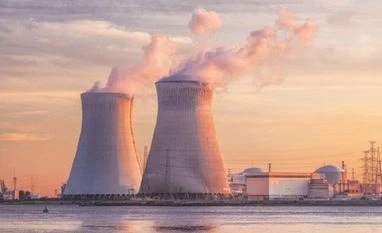 "Zelensky, IAEA chief discuss security risks to Zaporizhzhia nuke plant")
Explore Business Standard
Ukrainian President Zelensky met visiting IAEA Director-General Rafael Grossi to discuss security risks to the ZNPP in the wake of the Kakhovka dam breach last week
Ukrainian President Volodymyr Zelensky met visiting International Atomic Energy Agency (IAEA) Director-General Rafael Grossi to discuss security risks to the Zaporizhzhia nuclear power plant (ZNPP) in the wake of the Kakhovka dam breach last week.
During the talks on Tuesday , Zelensky said that the security risks to the plant have significantly increased due to the destruction of the dam and the Kakhovka hydroelectric power plant, reports Xinhua news agency.
The ZNPP, which has been controlled by Russian forces since March 2022, is located some 140 km northeast of the Kakhovka plant.
Zelensky welcomed the presence of the IAEA's inspectors at the ZNPP and Grossi's intention to personally visit the plant to assess the situation on the ground.
Zelensky and Grossi also discussed specific steps aimed at reducing the risks and preventing incidents at the ZNPP.
The Ukrainian President supported Grossi's proposal to send IAEA experts to Ukraine to assess the consequences of the Kakhovka incident, saying that Ukraine would provide them with all needed assistance.
Grossi tweeted that after the conversation with Zelensky, he will travel to the ZNPP to assess the situation after the Kakhovka dam flooding.
The breaching of the dam on June 6 have led to mass evacuations as water levels downstream rapidly increased.
Massive flooding also killed nine people in the town of Oleshky.
Officials have said that 30 towns and villages along the river have been flooded and nearly 2,000 homes have been submerged in the city of Kherson -- the region's capital controlled by Ukraine.
Of the 30 flooded towns and villages, 20 are controlled by Ukraine and 10 are occupied by Russia.
Kiev and Moscow have traded accusations over the dam's destruction, without providing concrete proof that the other is culpable.
It is not yet clear whether the dam was deliberately attacked or whether the breach was the result of structural failure.
--IANS
ksk/
(Only the headline and picture of this report may have been reworked by the Business Standard staff; the rest of the content is auto-generated from a syndicated feed.)
First Published: Jun 14 2023 | 2:52 PM IST


