


Indira Gandhi and the remaking of India's democratic institutions
Srinath Raghavan is less interested in the spectacle of the Emergency than in the decisions that preceded it and endured long after
 "book review")
premium
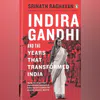
Indira Gandhi and the Years that Transformed India
5 min read Last Updated : Feb 26 2026 | 11:08 PM IST
Listen to This Article
Indira Gandhi and the Years that Transformed India
By Srinath Raghavan
Published by Penguin Allen Lane
384 pages ₹899
India’s constitutional architects were also the students of power’s worst instincts. They had watched empires, witnessed fascism. They understood the perils of unchecked authority. So, they distributed it—across an executive, a legislature, a judiciary—each designed to frustrate the ambitions of the other two. It was a republic built on institutional distrust, which is another way of saying it was built on wisdom.
But democracies take centuries to build and months to die. After India’s victory in the 1971 war, the Prime Minister was more than just a Prime Minister. She was compared to Durga, the martial goddess of the Hindu pantheon, and to Shakti, the spiritual embodiment of power. The Economist, capturing the mood of the times, crowned her the “Empress of India”. Not many years later, the chief minister of Haryana would suggest “get rid of all this election nonsense. If you ask me just make our sister President for life and there’s no need to do anything else.”
As the saying goes, power corrupts, and absolute power corrupts absolutely. This is the story of a woman who sought absolute power, absolutely.
The Emergency has always been the easiest place to start and stop with Indira Gandhi. Two years of suspended democracy, over a hundred thousand imprisoned — it is, as spectacles go, impossible to look away from. Srinath Raghavan’s Indira Gandhi and the Years that Transformed India is less interested in the spectacle of the Emergency than in the making of it — the decisions that preceded those two years and outlasted them. To understand the Emergency, you must first understand the woman nobody took seriously.
Indira Gandhi entered politics dismissed and patronised, a woman in a room full of men who had already decided her function, banking on her inexperience, her dependence on the legitimacy of her father’s name. In a culture that had never created space for female authority without attaching conditions to it, every obstacle she encountered, whether the Syndicate’s manipulation, the judiciary’s resistance, the Opposition’s protests, or her own party’s recurring “betrayals,” yielded the same response: Route around it, rally against it, concentrate power, leave nothing to others.
As Mr Raghavan writes, “Indira Gandhi’s subsequent metamorphosis into the most powerful politician of her age was entirely unforeseen by her patrons and detractors alike. No one took her seriously until it was too late. Through her years in political life — she ruled India for all but three of the next eighteen — she was at once the most adulated and execrated public figure in the land.”
Understanding Indira and her political career is key to understanding the rise of presidential-style rule over a parliamentary one in modern India — the cult of the irreplaceable leader, the blind loyalty, the Opposition recast as enemy, and criticisms termed “anti-national.” She “would claim—even to officials close to her—that opposition leaders were being covertly funded from overseas.” Mr Raghavan is careful never to draw the contemporary parallel himself — he is a historian, not a polemicist—but he is candid about his aims: “I have sought to write a history that supplies the antidote to every generation’s illusion that its own problems are uniquely oppressive.”
The Emergency was a symptom of the disease called Caesarism — a structural mutation where the leader’s direct bond with “the people” displaces every institution standing between them, be it the party, Cabinet, judiciary, or Parliament. Each of these, in Indira’s hands, was either subordinated or routed around. The Congress became an extension of her will rather than its source. The Cabinet was downgraded into a ceremonial body. The judiciary, when it obstructed, was confronted and packed. Elections became plebiscites on the person herself.
The republic, to its credit, resisted. The people, given the chance, voted her out; the “dramatic humbling of India’s most powerful politician tremendously boosted the importance of elections in the public mind”. But the Janata Party, assembled from every faction that had opposed her, that improbable coalition of grievances, promptly squandered the power it had inherited. “Forged in the white heat of the Emergency, it proved brittle in the cooler climate of power,” Mr Raghavan notes. “In politics as in courtship, the pursuit of gratification without commitment can only lead to short-lived affairs.”
Indira returned. Her legacy — a leader above institutions — would become a nation’s habit. In 1976, with the Emergency at its peak, Congress president D K Barooah gave the most complete summary of the era in six words: “India is Indira, and Indira is India.” Though it was sycophancy at its most abject, in hindsight, the history of modern India and the history of Indira Gandhi are inseparable. The country whose democratic institutions, still young and still forming, became so thoroughly shaped by a single person that the two were, for a time, genuinely indistinguishable.
Indira Gandhi is long gone. But the India she made remains. Mr Raghavan’s biography charts the making of that India — its habits, its centralised governance, its plebiscitary elections, its monarchist vocabulary, its hunger for the irreplaceable leader. It’s a story that continues, refined with each successive iteration. We, the readers, are its inheritors, too.
The reviewer is a journalist, writer, and editor fascinated by the stories that shape our world. Instagram/X: aroomofwords