


Johansson's 'Narratives' draws attention to the myths around women at work
The introduction gives the impression that this is a West-focused book, but that impression is quickly dispelled as you turn to chapter one, which begins with Indian woman narrating her experience
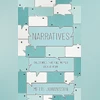 "Narratives: The Stories That Hold Women Back at Work")
premium
Narratives: The Stories That Hold Women Back at Work
6 min read Last Updated : Mar 07 2025 | 10:39 PM IST
Listen to This Article
Narratives: The Stories That Hold Women Back at Work
Author: Mette Johansson
Publisher: Penguin
Pages: 238 + XV
Price: ₹499
It will be a good day when we don’t need the kind of book that is being reviewed in this space today. To settle for less, it would be a good day if both the author and the reviewer of such a book were a man. Unfortunately, today is not that day. And hence the need to write, read and talk about books such as this one.
Narratives: Stories That Hold Women Back at Work draws attention to the myths around women at work, which are so commonplace that they run across industries and organisations irrespective of the country one talks about. Each chapter, laden with personal anecdotes and backed by data, tackles a specific myth, such as: “Women are too emotional”; “women can’t work together”; “women are indecisive”; “women speak too much”; “women are too bossy”; “we can’t find women to fill leadership positions”; and so on.
The author, Mette Johansson, is an insider who has been in leadership roles at multinationals, has lived in 10 countries outside her birthplace, Denmark, and now runs a training consultancy that works with some of the world’s biggest corporations. So her approach is that of a person who has been at the receiving end of the biases but is now in a position to look at workplaces from the outside, and besides flagging the issues, offer constructive inputs that can help change the narratives.
The introduction gives the impression that this is a West-focused book, but that impression is quickly dispelled as you turn to chapter one, which begins with an Indian woman narrating her experience. Raised to be subservient and married at 20, she later chooses to work in sales. Throughout her career, she is repeatedly asked: “Why are you so emotional?” — to which her argument is that “emotions are core to selling”, though remarks such as these leave her feeling guilty about expressing them. Such remarks also make a woman seem less competent and her argument as being less legitimate.
This has repercussions, for which Johansson presents data. For instance, drawing from the Reykjavík Index for Leadership, a measure of how society perceives women and men on their suitability for leadership, she writes: “Only 47 per cent of the people in the G20 are ‘very comfortable’ with having a woman as head of government.”
Johansson doesn’t simply point to the problem. She also assesses how it would play out if applied to a man. Take the case of emotions. Both men and women express emotions. Men, one may argue, don’t cry, “but they may slam the table”. That is to say that men demonstrate their anger more frequently at work than women do. What if a woman were to express her anger, too? The yardstick by which she’d be judged wouldn’t be the same. So, it’s really a catch-22 situation: “Damned if they do and damned if they don’t” — penalised for asserting themselves, but ignored for not.
The book covers women in finance, tech, HR, science, and so on; it traverses companies across countries (India, Pakistan, Singapore, Japan, Sweden, Australia), sometimes delving into their policies to understand the little steps that might be working towards creating gender-neutral, gender-agnostic workplaces.
It does not ignore the cultural nuances, or the diverse mix of ethnicities, gender, and race that might be at play. For example, research shows that Black women may not be penalised as heavily as White or Asian women for aggressive behaviour. To her credit, Johansson clarifies at the onset that she has focused specifically on women, while acknowledging that there are more than two genders. While she relies heavily on interviews, research, and data, she does not hold back on opinion and interpretation.
A corporate trainer and business coach, the author offers pointers to counter the myths, including how a woman could respond when confronted with such gender-related bias. For instance, on the “Queen Bee” syndrome, coined about half a century ago to argue that women can’t work together and that they treat other women in their team worse than men, she writes about how women are showing that they are great collaborators, and ways in which women, as also organisations, can tackle such a narrative.
For the argument that women speak too much, she pulls out research — something she does often in the book — to demonstrate that both genders speak about 16,000 words per day. In professional settings, though, men tend to not only dominate the conversation but also interrupt their female colleagues more often. A stark example of two Uber board members, a man and a woman, at an all-hands staff meeting drives this point home. When the woman leader says data indicates it’s much more likely that when there is one woman on the board, it will draw a second woman to the board, her male colleague interrupts: “I’ll tell you what it shows, is that there’s much more talking likely to be on the board.”
Each of these chapters can be turned into a sensitisation workshop for organisations.
The second part of the book is dedicated to changing the narrative. Ten communication skills, with examples and alternatives, are offered to make the arguments more convincing. So universal are these skills that they can be applied to everyday situations — whether at home, with family and friends, or at work. An example: “What’s your communication approach — boxing or dancing?” Boxing is a confrontational approach, something one senses in questions that begin with a “why”, which is a bit more accusatory than one that begins with a “what”. “Why do you think so?” versus “What makes you think so?”.
Narratives packs in quite a bit. It is, however, not the first book to shine the spotlight on the obvious, subtle, intended or unintended biases that women have to navigate at the workplace. As things stand today, it will not be the last.
Topics : women Women at work BOOK REVIEW