


Covid-19 likely to bring a sharper focus on health care in upcoming Budget
CII has also called for tax incentives for new health care projects and import duty relief for lifesaving equipment.
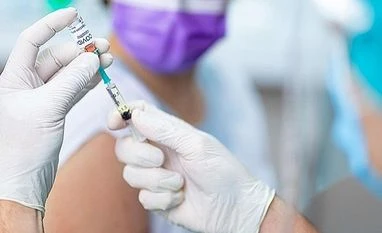 "Covid-19 likely to bring a sharper focus on health care in upcoming Budget")
premium
Those who can afford to pay for vaccines may have to shell out money.


The pandemic is expected to bring a sharper focus on health care in the upcoming Budget (2021-22) from a meagre spend of 0.3 per cent of the gross domestic product (GDP). This could be driven by the rollout of the coronavirus vaccine in the country — the biggest such exercise in the world.
Together with states, the share of public health expenditure remained stagnant at around 1.15 per cent of GDP over the years. The National Health Policy of 2017 envisioned this expenditure at 2.5 per cent of GDP by 2025. However, the Centre’s share remained around 0.3 per cent of GDP over the years. Even if the health expenditure remains the same, as was estimated in the Budget, during this fiscal year, it would be the highest in terms of its share in GDP at 0.35 per cent. This is because the economy is officially projected to shrink 7.7 per cent during the year.
However, the expenditure would be higher than this since the Centre enhanced expenditure on Covid-related expenses under Atmanirbhar Bharat. According to ministry estimates, it has allocated Rs 15,000 crore under this head.
The national expert group on vaccines, led by V K Paul, member, NITI Aayog, had compared India’s total spend on health care, at about 1.15 per cent of GDP, to European countries that keep over eight per cent of total GDP towards this sector. Paul said competing priorities have kept spend on the sector low and this required an immediate correction, especially in light of Covid-19.
Meanwhile, those who can afford to pay for vaccines may have to shell out money. In the first phase, vaccines would be given free to primary and frontline workers. After that phase is over, the government will decide who to give vaccines free to once it is available over the counter, a senior finance ministry official said. “The process of inoculation to frontline workers and senior citizens would take four-six months. Initially, the existing health care channel would be used for frontline workers. At a later stage, other government distribution networks could be used for better reach,” said the official privy to the discussion.
Together with states, the share of public health expenditure remained stagnant at around 1.15 per cent of GDP over the years. The National Health Policy of 2017 envisioned this expenditure at 2.5 per cent of GDP by 2025. However, the Centre’s share remained around 0.3 per cent of GDP over the years. Even if the health expenditure remains the same, as was estimated in the Budget, during this fiscal year, it would be the highest in terms of its share in GDP at 0.35 per cent. This is because the economy is officially projected to shrink 7.7 per cent during the year.
However, the expenditure would be higher than this since the Centre enhanced expenditure on Covid-related expenses under Atmanirbhar Bharat. According to ministry estimates, it has allocated Rs 15,000 crore under this head.
The national expert group on vaccines, led by V K Paul, member, NITI Aayog, had compared India’s total spend on health care, at about 1.15 per cent of GDP, to European countries that keep over eight per cent of total GDP towards this sector. Paul said competing priorities have kept spend on the sector low and this required an immediate correction, especially in light of Covid-19.
Meanwhile, those who can afford to pay for vaccines may have to shell out money. In the first phase, vaccines would be given free to primary and frontline workers. After that phase is over, the government will decide who to give vaccines free to once it is available over the counter, a senior finance ministry official said. “The process of inoculation to frontline workers and senior citizens would take four-six months. Initially, the existing health care channel would be used for frontline workers. At a later stage, other government distribution networks could be used for better reach,” said the official privy to the discussion.
Topics : Coronavirus healthcare Budget 2021 Health Ministry