


Zero tax, TDS exemptions, TCS removal: How Budget 2025 affects your income
Take a look at the changes announced in Budget 2025 that will reduce your monetary burden
 "Nirmala Sitharaman Budget")
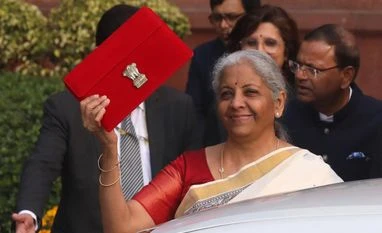
Union Finance Minister Nirmala Sitharaman (Photo: PTI)
Listen to This Article
The government on Saturday introduced sweeping tax reforms in its Union Budget 2025, providing major relief to the middle class. Finance Minister Nirmala Sitharaman announced that individuals earning up to Rs 12 lakh annually under the new tax regime will not pay any income tax. Salaried taxpayers will also benefit from a standard deduction of Rs 75,000, effectively increasing the exemption limit to Rs 12.75 lakh.
“The new structure will substantially reduce the taxes of the middle class and leave more money in their hands, boosting household consumption, savings and investment,” said Sitharaman.
The move will benefit over 10 million Indian citizens.
But that's not all. Take a look at the changes announced in Budget 2025 that will reduce your monetary burden:
Income tax changes
Also Read

 "Tourists")
 "Nirmala Sitharaman, Union Finance Minister")
 "Archaeological Survey of India, ASI")
 "Stylist Prasad Bidapa")
 "Telugu poet and playwright Gurajada Apparao")
The revised tax slabs under the new regime are as follows:
Rs 0 – 4 lakh: Nil
Rs 4 – 8 lakh: 5%
Rs 8 – 12 lakh: 10%
Rs 12 – 16 lakh: 15%
Rs 16 – 20 lakh: 20%
Rs 20 – 24 lakh: 25%
Above Rs 24 lakh: 30%
The changes are expected to benefit more than 10 million taxpayers, offering much-needed financial relief at a time of rising costs. The middle class, often seen as the backbone of India's economic growth, has been at the centre of these reforms, ensuring they have more disposable income.
Income tax rebate
Sitharaman raised the limit of income tax rebate from Rs 7 lakh to Rs 12 lakh, which means that if an individual has an income of up to Rs 12 lakh, she will have zero tax liability.
Does that mean that those earning Rs 15 lakh will have to pay tax on only Rs 3 lakh? No, the rebate is only applicable for those earning up to Rs 12 lakh. If your taxable income is even a rupee more than Rs 12 lakh, you will have to pay taxes as per the slab rates under the new tax regime. Earlier, those earning up to Rs 12 lakh paid a tax of Rs 80,000 under the new tax regime.
Standard deduction has been raised to Rs 75,000.
Krishan Mishra, CEO of FPSB India, called the budget one of the most balanced and growth-oriented in recent times. “The tax exemption limit raised to Rs 12 lakh ensures higher disposable income, directly benefiting household consumption, savings, and financial planning,” he said.
The National Pension System (NPS) Vatsalya Scheme was officially launched on September 18, 2024. While Budget 2025 did not revise income tax slabs and rates under the old tax regime, it has extended the tax deduction benefit of Rs 50,000 under the old tax regime to NPS Vatsalya scheme
Mishra pointed out that the NPS Vatsalaya tax benefits would encourage structured retirement planning. “By leaving more money in people's hands, the budget takes a crucial step toward boosting domestic consumption and investment, both key drivers of economic growth,” he added.
Note: NPS Vatsalya is a dedicated pension plan designed for minor children in India, allowing parents or guardians to open an NPS account on their behalf and contribute regularly towards their future financial security until they turn 18 years old; essentially, it's a way to start saving for a child's retirement from a young age by inculcating a savings habit early on.
TDS adjustments
To simplify tax compliance, the government has proposed changes to tax deducted at source (TDS):
Interest income: The TDS exemption limit on interest for senior citizens has doubled from Rs 50,000 to Rs 1 lakh. For others, the exemption limit has increased to Rs 50,000 when the payer is a bank, co-operative society, or post office, and to Rs 10,000 in other cases.
Rental income: The annual TDS threshold on rent payments has been raised from Rs 2.4 lakh to Rs 6 lakh, reducing the number of transactions liable for TDS and benefiting small taxpayers.
Aman Gupta, director of RPS Group, said the rationalisation of TDS and TCS requirements reflects a move towards a better-organised tax administration. “The increase in thresholds for different transactions is a step towards easing compliance. The extension of the return lodgment period to four years also offers more flexibility,” he said.
TCS modifications
The budget also brings changes to tax collected at source (TCS):
Foreign remittances: The threshold for TCS on remittances under the Reserve Bank of India's Liberalised Remittance Scheme has increased from Rs 7 lakh to Rs 10 lakh.
Education loans: TCS has been removed on remittances for education purposes when funded by a loan from a specified financial institution.
“The removal of TCS for education loans under Rs 10 lakh shows the government’s commitment to promoting education,” said Gaurav Singh Parmar, associate director at Fincorpit Consulting.
Union Budget lifts restrictions on claiming two properties as self-occupied
The Budget proposed to lift restrictions on claiming two properties as self-occupied (SOP). It highlighted an amendment to Section 23(2) of the Income Tax Act, which previously allowed owners to claim a property’s annual value as nil only if they occupied it for personal residence or could not occupy it due to employment, business, or profession elsewhere. This provision often led to confusion, with taxpayers questioned by the IT department about whether their reasons for not occupying the property were valid.
Taxpayers will now be able to claim the annual value of two self-occupied properties as “nil,” without having to fulfill any conditions.
This change, which is set to take effect from April 1, 2025, will apply to the assessment year 2025-26 and is aimed at making it easier for individuals with multiple homes to determine their tax liabilities on house properties.
Wider impact on taxpayers
The budget measures aim to ease financial burdens and simplify tax compliance. Priyank Shah, co-founder and CEO of The Financialist, described the changes as “a big win for the salaried class and middle-income groups.”
“One of the biggest highlights is that there will be no income tax on earnings up to Rs 12 lakh, plus an additional standard deduction of Rs 75,000. This means individuals can earn up to Rs 12.75 lakh without paying a single rupee in income tax,” Shah said.
For senior citizens, the higher tax deduction limit of Rs 1 lakh offers additional relief. Shah also noted that the government’s focus on simplifying tax filing aims to make the system more user-friendly and reduce disputes. “The new tax bill coming in next week will further improve the ease of doing business and ensure a taxpayer-friendly approach,” he said.
The changes extend beyond individual taxpayers. The decision to allow 100% foreign direct investment (FDI) in the insurance sector is expected to bring global best practices into the Indian market, increasing insurance penetration and expanding financial protection for more citizens.
“Encouraging skilling and entrepreneurship across sectors is a strategic move to enhance employability and foster self-reliance, strengthening India's workforce and driving economic expansion,” Mishra said.
The government has also focused on making tax filing simpler by cutting down unnecessary procedures. With the extension of the return lodgment period to four years, taxpayers have more time to correct errors and file returns without penalties.
Shah stressed that “these Budget changes reduce unnecessary hassles and disputes while improving the overall ease of doing business.”
Mishra highlighted that “providing tax certainty for IFSC treasury centres and AIFs creates a more stable and predictable environment for institutional investors, fostering long-term capital inflows.”
He added that financial education initiatives would ensure individuals make informed decisions about saving, investing, and long-term financial planning. “With a growing economy and a financially aware population, India is well on track to achieve ‘Viksit Bharat’ much ahead of 2047,” Mishra said.
Prime Minister Narendra Modi, now in his third term, has been under increasing pressure to address middle-class concerns, particularly on job creation and economic stability. Many economists had urged his government to introduce tax cuts and expand employment initiatives to tackle rising unemployment.
According to the Centre for Monitoring the Indian Economy (CMIE), youth unemployment stood at 7.5% in January 2025, reflecting the challenge of generating enough jobs in a country with a population of over 1.4 billion people.
More From This Section
 "The Economic Survey for 2023-24, tabled in Parliament on Monday, asked the private sector to contribute to the creation of approximately eight million jobs annually until 2036. It also cautioned companies against being overly reliant on capital-inten")
 "corporate bond")
 "Tax")
 "Microfinance, mutual fund")
 "Ahead of the first offshore mineral auctions, the central government has introduced royalty rates for construction sand, polymetallic nodules, and overburden or waste—key minerals to be extracted through offshore mining. The royalty rate for dolomite")
Topics : Budget 2025
Don't miss the most important news and views of the day. Get them on our Telegram channel
First Published: Feb 01 2025 | 6:28 PM IST