


With FTA, India's exports to EU can double in 5 years, says Goyal
India's exports to the EU could double to $150 billion within five years of the FTA, says Piyush Goyal, stressing balanced market access while protecting sensitive sectors
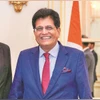 "Commerce and Industry Minister Piyush Goyal")
premium
Piyush Goyal, Union minister of Commerce and Industry
12 min read Last Updated : Jan 31 2026 | 12:32 AM IST
Listen to This Article
India’s exports to the European Union (EU) could double within five years of a free-trade agreement taking effect, with bilateral goods trade projected to reach $150 billion. Commerce and Industry Minister Piyush Goyal, in an interview with Shreya Nandi in New Delhi, said India was now negotiating trade deals from a position of confidence, pursuing ambitious market access while protecting sensitive sectors such as dairy and agriculture. Goyal also outlined plans to operationalise carbon verifiers to help domestic steel and aluminium exporters comply with the bloc’s Carbon Border Adjustment Mechanism (CBAM). Edited excerpts:
What are the broad principles and goals that you had set with respect to the India-EU FTA?
First of all, India today negotiates from a position of strength, with self-confidence in our own ability to compete with developed countries — where there is fair play and fair trade.
Therefore, we have two fundamental principles. First, we recognise that it has to be an equal, win-win agreement for both parties. Within that, we must secure a fair, equitable and balanced agreement in which our stakeholders get significant benefits, jobs are created in India, and new opportunities are provided for our MSMEs, farmers, fishermen and those engaged in animal husbandry. Our youth get the spirit of inquiry. More people should gain access to high-quality education and jobs, and become innovators and startup founders. That is one leg on which we conduct the negotiations.
The other leg is to ensure that we protect sensitive sectors such as dairy, poultry, cereals and GM crops.
With the twin offensive and defensive interests, we work actively to create very robust, long-term agreements. We crystal-gaze into the future to make sure we get good agreements that are sustainable in the long run and which, in the long run, will help India become a developed nation.
What goals have you set for yourself in terms of exports to the EU or investments from the bloc?
It's very early to lay any specific timelines and targets. We can quite easily see our exports doubling in the next five years to the EU after this agreement comes into effect -- in goods, $150 billion. Even in services, I see tremendous potential, with 144 sub-sectors being opened up in this agreement.
What's the time frame you're looking at in terms of implementing the deal?
Within calendar year 2026
What were the odds and the difficulties that you faced while negotiating the ‘mother of all deals’?
I think that the Congress and the UPA (United Progressive Alliance) always looked at negotiations with a very negative and weak mindset. They were able to do agreements with Asean countries, where we are actually competitors and where we are suffering. Our manufacturers are suffering from unfair competition. They made an effort to do an agreement with China. They threw India under the bus by entering into negotiations under the Regional Comprehensive Economic Partnership (RCEP), which effectively was nothing but an FTA with China. We already had an FTA with Asean, Japan and South Korea. Australia was on the verge of being finished. At that point in time, we hardly had $300 million of bilateral trade with New Zealand. So what was RCEP? RCEP was an India-China FTA. The Congress forced India to get into that. They didn't do any stakeholder consultation.
God forbid, if we had not come into government in 2014 and Prime Minister (Narendra) Modi’s strong leadership to stand up and say we will not join RCEP, we would today have become a country that was totally dependent on imports and at the mercy of non-market economies and countries where there’s no fair trade.
I think what Mr Modi has brought to the table is a confidence that was never seen before. A confidence to engage with the developed world, to do partnerships which are good for the country, which open the doors to our labour-intensive sector in a big way, creating crores of jobs in India, and at the same time, the ability to negotiate fair deals where we protect dairy, our farmers, fishermen and animal husbandry.
So it has been a great journey. It has obviously been difficult. If FTAs were very easy to do, the whole world would have finalised FTAs. But it is Prime Minister Modi’s guidance, continuous encouragement, support and his ability to crystal-gaze into the future and come up with what is good for the nation and take bold decisions.
What was the most difficult part of this negotiation?
Everything was difficult and nothing was difficult.
Was protecting our sensitive sectors the most difficult part?
Honestly, no. We lay that as a ground rule before we start negotiating on any FTA. The red lines were drawn on both sides. If we respect each other’s sensitivities, discussions become so much smarter, faster and easier. That has been possible because Prime Minister Modi is very clear about what is good for the country and what we need to do for our farmers and fishermen. That has helped us to really protect the Indian interest very well in all our negotiations.
What is the outlook for steel and aluminium exports, given that the EU’s CBAM has kicked in from January 1 and the US has imposed additional tariffs? Do you believe the flexibility and safeguard mechanisms regarding CBAM under the India-EU FTA are sufficient to protect Indian exporters before the deal comes into force?
India is a net importer of these products. We are not really very big exporters of steel and aluminium products.
We would like to become big exporters, and therefore we have brought in several elements in this agreement which will ensure that we have most-favoured-nation (MFN) status -- any concession given to any other country, India will also enjoy.
We have a technical committee which will keep reviewing and pricing whatever carbon taxes are paid in India so that the benefit is passed on to our producers. We will also have a mechanism to approve verifiers in India who will verify the actual carbon content and keep the operating costs low. After that, it's a level playing field because the whole world is facing the same tax.
Is there any timeframe for those verifiers?
We will work on it very quickly. Everything need not wait for the formal signing or entry into force of the agreement. These are operational things which are going to start right away. We already have a Trade and Technology Council, and we can take it up under that.
What about other non-tariff barriers, such as the upcoming EU Deforestation Regulation (EUDR)?
We have a rapid response mechanism with them. We also have non-tariff barriers; they also have non-tariff barriers. So both will be addressing these barriers in a manner that encourages greater trade rather than restricts trade.
Will the rapid response mechanism have enough teeth?
The rapid response mechanism has three tiers, going right up to the ministerial level, to ensure that it has teeth.
India-EU FTA didn’t speak about the EUDR specifically, the way it did about CBAM…
There are many regulations that different countries have brought out for their own quality and sustainability standards. India is faring quite well in that. As you are aware, we are one of the best-performing countries when it comes to climate change. In fact, we have been meeting all of these regulations and have a trade surplus with the EU; $75 billion of goods and $46 billion of services are already being exported to the EU. We have been able to manage these issues quite well.
The potential of the India-EU FTA to boost exports and create jobs. How do you ensure that it works out on the ground?
It’s a collective thing. MSMEs also benefit if, for example, a car is exported. We’ve gone big in car exports last year. Ultimately, who benefits? All the MSMEs benefit. Everybody benefits when exports grow. MSMEs will always be the biggest beneficiaries.
In the services industry, the EU opened up 144 sub-sectors and there's a mobility pact as well…
Their services imports are $3 trillion. Our services exports are only $46 billion. You can imagine the huge potential, given the talent and skills we have. We have a large young population, and they have an ageing population and need qualified people.
What about the potential of EU companies using India as a base to service their own market?
Huge potential. In fact, they all tell me that once we have tested a product in India, it doesn’t make sense to manufacture at high labour costs and ship it to India. It makes much more sense to adapt to Indian tastes and Indian requirements, manufacture in India, capture global markets from India -- Asia, Africa and Latin America -- and probably developed ones as well. Indian manufacturing is both high quality and offers a very good value proposition.
Over the past year, we’ve seen tariffs increasingly weaponised as a geopolitical tool. At the same time, India has been actively signing FTAs, which may be one way to respond. So what is India’s evolving strategy for dealing with a world where tariffs are being weaponised?
Prime Minister Narendra Modi gave the clarion call, which has now become the resolve of 1.4 billion Indians -- to prepare India in the Amrit Kaal to aspire to become a developed and prosperous nation by 2047.
No country in the world has become a developed nation without greater engagement with the world economy. For the past five years, we have been pursuing this path relentlessly. Under Prime Minister Modi’s leadership, India’s macroeconomic fundamentals are among the strongest in the world. We are the fastest-growing large economy and will continue to be so.
This journey has nothing to do with last year’s developments. It began in 2021. Since then, we have done eight free trade agreements covering 37 countries -- every one of them a developed country. Agreements with other developed countries are being negotiated even as we speak. Our effort is to ensure that India becomes a major international participant in global trade.
Indian industry has not been able to take full advantage of earlier FTAs. What would be your message?
I would appeal to businesspersons, MSMEs, startups and entrepreneurs to focus on going international. The government will be running workshops to encourage people to look at markets outside the country. I see tremendous potential in foreign markets, which I hope our business people will capture.
Do we need an institutional fix to improve FTA utilisation?
The Commerce Ministry is very conscious of this, and we are going to have a massive outreach programme to cash in on the benefits these FTAs can provide to Indian industry, help us grow faster and create new jobs.
Could the recent FTAs prompt a broader review of India’s tariff policy?
We have not reached that stage yet. At present, we would like to provide comfort to manufacturers in India through tariffs, especially against unfair pricing or predatory dumping. On individual items, we may review tariffs for greater consumer benefit. As a whole, I believe we are on the right track, where we are doing trade agreements with fair-play countries and developed countries, and doing the necessary course correction.
Is India considering getting into mega regional trade agreements like the CPTPP (Comprehensive and Progressive Agreement for Trans-Pacific Partnership)?
Let us see. We have just concluded a very successful EU agreement. We will explore other options going forward.
The FTA with the EU is one of the most comprehensive that India has finalised. Are we ready to give similar market access even to the US?
Every deal stands on its own feet. Let us wait to see what is decided with the US.
What's holding up a trade deal with the US?
I don't think we’ve ever negotiated trade deals through the media.
Do you have any upcoming visits planned or further talks?
We have a Budget session going on right now.
Exporters say it is difficult to sustain growth with 50% US tariffs…
I don't know who is saying that to you, and the figures speak for themselves. Our exporters have done a fabulous job. Many have diversified into new markets. There may be some stress in a few areas, but our exporters are adept at adjusting to circumstances. I am very proud of our exporters. While we’re very keen to expand our trading relations with other developed nations, it will always be after protecting national interests and the interests of our farmers, fishermen, MSMEs, and animal husbandry. That is paramount.
When will the India-UK FTA kick in, and what is the status of the Social Security Agreement?
We have already finalised the Social Security pact, or Double Contribution Convention Agreement. We are now well on track to get it approved very quickly. That is more of a process in the UK than in India, and I expect it will take a few months.
A lot of QCOs have been withdrawn. Is there a rethink in government strategy?
No. India remains committed to high-quality standards. On a case-by-case basis, we are open to suggestions. If a particular QCO is no longer required, or if there is no threat of low-quality substandard goods, departments are free to withdraw it.
For example, I withdrew a QCO on adhesive tapes. When I reviewed it, I felt it was not required. At the same time, I am adding many more QCOs. This is a continuous effort to ensure high quality standards, something Prime Minister Modi has emphasised since he assumed office.