


Govt weighs LPG subsidy for oil marketing companies as losses mount
As cooking gas underrecoveries soar, Centre considers ~40K cr mid-year payout
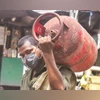 "LPG, CYLINDER")
premium
4 min read Last Updated : Feb 17 2025 | 11:30 PM IST
Listen to This Article
India’s favourite cooking fuel may burn better, as the Narendra Modi government is seriously considering a one-time subsidy for oil-marketing companies (OMCs) in the coming months to offset part of the mounting losses on fuel sales, sources privy to internal discussions said.
The central government, which did not allocate funds for record underrecoveries in this financial year’s Budget presented on February 1, may reimburse a sizeable portion of the estimated Rs 40,000 crore in losses incurred on liquefied petroleum gas (LPG), said two sources who participated in high-level discussions this year.
Market sources privy to the discussions expect the government to make a mid-year provision of Rs 18,000–25,000 crore. Without this, refining sources and equity analysts said that state-run refiners will face financial pressure.
Top government officials, including Union Petroleum and Natural Gas Minister Hardeep Puri, who attended the meetings, were confident about reimbursing OMCs for their losses but could not commit to a specific figure, the sources said. They added that the decision, along with the disbursement method, will be determined by the finance ministry. Puri had expressed optimism about LPG compensation in the Union Budget during a press briefing in Mumbai last month.
“Our estimate is Rs 38,000–40,000 crore for the full year, and these underrecoveries will continue next year at similar levels,” said Prashant Vasisht, senior vice-president at rating agency Icra, a Moody’s affiliate. He also warned of an additional Rs 16,000 crore impact on the refining sector’s earnings before interest, tax, depreciation, and amortisation next financial year if discounts on Russian oil dry up.
Indian Oil Corporation, Bharat Petroleum Corporation (BPCL), and Hindustan Petroleum Corporation are in no position to absorb Rs 80,000 crore in losses over two financial years, analysts said, particularly with committed capital expenditure exceeding Rs 65,000 crore for 2025–26, according to Budget documents.
Underrecoveries totalled just under Rs 29,000 crore in the April–December period, according to company data. In October of 2022–23, New Delhi had provided Rs 22,000 crore after making no initial budgetary provision.
Import dependence
US President Donald Trump’s tariff war with China may push fuel prices higher this year if China imposes import tariffs on US supplies, as it did during the 2018 trade war. That could force its petrochemical plants to compete with India for West Asian supplies.
India relies on imports for 67 per cent of its LPG needs, and its near-total dependence on West Asia has left it vulnerable to Saudi Arabia’s monthly contract prices (CP). Of the 21.4 million tonnes (mt) of propane and butane (blended to make LPG) imported in 2024, the Gulf accounted for 97 per cent. The United Arab Emirates was the largest supplier, followed by Qatar, Kuwait, and Saudi Arabia. All term contracts are benchmarked to Saudi CP.
Nearly all of India’s LPG imports are pegged to Saudi CP prices, exposing more than $20 billion in imports to pricing dictated by a single country. CP for propane and butane rose 7 per cent and 4 per cent in February, respectively, from 2024 averages to $650 per tonne and $635 per tonne.
The government has sought to diversify suppliers. State-run refiner BPCL has signed an annual term contract with Norway’s Equinor to source a combined 550,000 tonnes of propane and butane starting in April — about 10 per cent of its annual LPG imports. Sources told Business Standard that the agreement was signed at a discount to CP and may come in lower than what India pays or Gulf supplies.
The US is a major supplier, but high freight costs are a challenge. However, increasing LPG imports from the US could align with Trump’s push for greater energy purchases. India’s oil ministry expects LPG consumption to grow by 4.8 per cent to 33 mt in FY27, which will further raise import dependence and financial losses due to stagnant domestic production.
Topics : lpg cylinder LPG scheme Cooking gas