However, data shows that in as many as 18 states the latest MGNREGA wages are lower than even the old notified minimum agricultural wages. In fact, they are even lower than the average daily wages paid to agricultural and non-agricultural labourers (males) in FY22.
This could be also because MGNREGS is a distress employment scheme. According to some reports, MGNREGS wages had been delinked from minimum wages back in 2009 and are now aligned to the changes in the Consumer Price Index for Agricultural Labourers (CPI-AL).
But a 2020 paper, ‘Strengthening Wage Policies to Protect Incomes of the Informal and Migrant Workers in India Amidst the Covid-19 Pandemic’ by economists Anoop Satpathy, Xavier Estupiñan and Bikash Kumar Malick said that in case the statutory minimum wages and MGNREGS wages did not meet the basic needs of workers and their families, the wages would have a negligible impact on the standard of living in the informal economy.
They also argued that wage levels, through their redistributive channels, are essential not only for immediate income transfer to the vulnerable informal workers and the returning migrants but also for restoring aggregate demand.
NOTE: Figures in Rs; Wages are daily wages. And for agri and non-agri labourers yearly avg wage rates have been calculated from monthy wage rates; *Separate rates are for Andaman Islands and Nicobar Islands; **As per last available data
*** In Himachal Pradesh wage rates are as per scheduled and non-scheduled areas; #Avg daily wage of agriculture labourers: Men paid in FY22; ##Avg daily wage of non-agriculture labourers: Men paid in FY22 &: Change between MGNREGA wages for FY24 and last notified minimum agriculture wage rates
Source: MGNREGA website, RBI, "Strengthening Wage Policies to Protect Incomes of the Informal and Migrant Workers in India Amidst the Covid-19 Pandemic" (2020) by Anoop Satpathy, Xavier Estupiñan and Bikash Kumar Malick


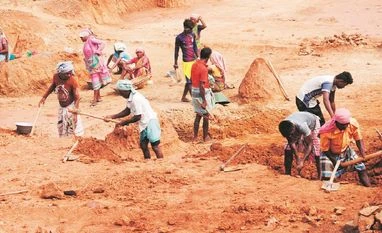 "MGNREGS, labour, daily wages, rural worker, rural employment")