Singh also said that his ministry has sought an increased budget from the Ministry of Finance for conservation activities and promotion of museums.
“We have also requested the ministry of finance to strengthen our financial resources for the development of 50 iconic tourist destinations that were announced in this year’s Budget,” Shekhawat told reporters on the sidelines of the FICCI’s 98th annual general meeting.
On the infrastructure status for the hotel industry, the Union minister said that this has been “a long-standing demand that will unlock capital, expand room inventory, and strengthen our global price competitiveness.”
Infrastructure status has been a long standing demand of the hospitality sector, which says that the move will open doors to loans on lower interest rates and other concessions for the players.
Shekhawat was outlining the government’s vision to transform tourism into a $1 trillion sector by 2047, while emphasising that achieving this ambition requires substantial private investment and reimagined hospitality models to compete with regional peers.
The sector currently contributes 5.2 per cent directly to India’s GDP and supports 84 million livelihoods, according to FICCI President Harsha Vardhan Agarwal, who noted the industry could become a $250 billion opportunity by 2030 with appropriate policy support.
Shekhawat highlighted the “transformation” of India’s connectivity infrastructure over the past decade, with operational airports expanding from fewer than 75 to 127, alongside ten international-standard cruise terminals, 150,000 kilometres of new highways, 38 inland waterways for river cruises, and over 10,000 kilometres of metro lines across 23 Tier-I and II cities.
The rejuvenation of temple corridors, including Kashi, Mahakal, Kedarnath, Puri and Ayodhya, represents “one of the most transformative tourism initiatives in modern India”, he added.


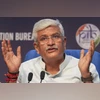 "Gajendra Singh Shekhawat, Gajendra, Shekhawat")