


Bihar after Nitish Kumar: A key test of BJP-JD(U) equations ahead
In his absence, will the BJP become more like the JD(U)? Or will the JD(U) become more like the BJP?
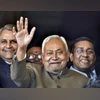 "Nitish Kumar, Nitish")
premium
5 min read Last Updated : Mar 13 2026 | 11:25 PM IST
Listen to This Article
“I have a Rashtriya Swayamsevak background. Nitishji is not from our sangathan (organisation). But he has surpassed many of us when it comes to sacrifice, integrity, and dedication to social justice,” said a Bharatiya Janata Party MLA, a Dalit, from Bihar.
But there are other views.
“We admire Nitishji. But we also want modernisation and development in Bihar. Whenever we would discuss industrialisation and land, he would always hold us back. His observation always was: If you take land away from the farmer, what will he do for a living? If Bihar is among the bottom three states in India in urbanisation, the blame must go to him. It was deeply frustrating,” a former minister in the Bihar government and now a top office-bearer in the Bharatiya Janata Party (BJP) told Business Standard.
Now that Nitish Kumar, in his last days as Bihar chief minister, is out of the state equation and the BJP will be the primary decision-maker in the government as the single-largest party with 89 of the 243 seats in the Assembly, it is worth considering what Bihar could look like in the years to come — and whether Mr Kumar’s development perspective of the state will be shared by the BJP.
There’s no denying the facts. The latest data from the NITI Aayog (2025) and Bihar government (Economic Survey, 2025) shows that as of 2022-23, the working population in Bihar was concentrated in agriculture, forestry, and fishing (49.6 per cent); services (28.9 per cent); and, construction sectors (18.4 per cent). Just 5.7 per cent were employed in manufacturing. The state’s redemption could be its massive infrastructure investment in the past few years: ₹33,000 crore in highway upgrade offered by the central government, ₹1 trillion in ongoing rail capacity projects, and improvement in district roads and more.
The dilemma is: What should Bihar do with all this infrastructure? Should it seek accelerated industrial investment, requiring extensive (and expensive) land acquisition, and ending in only minimal additional employment? Or should it encourage the creation of industrial estates in which small and medium units can be set up, like, say, the Hajipur Industrial Area? After agriculture, micro, small and medium enterprises (MSMEs) generate maximum employment.
Ninety-five per cent of Bihar’s all industrial units and 65 per cent of manufacturing output are from MSMEs. In 2023 [when the Janata Dal (United), or JD(U), again became an ally of the Rashtriya Janata Dal], the Department of Industries in Bihar made a strong appeal to the Centre with a strategic business plan in which it argued that access to credit and market linkages were the two biggest challenges for MSMEs.
The response to the plea for help was below expectations, officials say. The chief minister had the wrong sort of alliance partners. When the partners changed, the BJP’s Nitish Mishra, viewed by the state’s industry as its champion, was made minister. However, he did not figure in the 2025 Nitish Kumar government because the BJP bowed to caste dynamics and opted to excise a Brahmin from Madhubani from its list.
All this suggests that if the BJP is to combine industrialisation and urbanisation in Bihar with social justice, its champions and advocacy leaders have to be from the same social base. For the BJP, this is an existential choice. Its opposition to the state government’s caste census tells its own story.
And then, there’s the other choice, which too is deeply problematic. In 2022, when the BJP and JD(U) were partners, Mr Kumar publicly snubbed the BJP’s call to follow the Yogi Adityanath model, at work in Uttar Pradesh, and get all loudspeakers down from masjids.
“Let us not talk about this nonsense. In Bihar, we do not interfere in the religious practices of any people. Every person in Bihar has the full right to follow their own faith,” he said at a public meeting in Purnea with BJP colleague Shahnawaz Hussain on the stage.
This was not a random act. BJP old-timers recall many occasions when he stood up to the BJP while being its ally. At the same time, he supported the BJP’s Waqf legislation and said absolutely nothing about the Special Intensive Revision (SIR) of electoral rolls. His party contested the 2019 and 2024 Lok Sabha elections in alliance with the BJP and got 6 per cent and 12 per cent, of the Muslim vote, respectively. The data suggests that so long as it has the JD(U) by its side, the BJP can eat its Muslim cake and have it too. No one can say if this will still be the case if Mr Kumar is no longer on the scene.
So, the key question is: In his absence, will the BJP become more like the JD(U)? Or will the JD(U) become more like the BJP? The Opposition is asking itself the same question.
Disclaimer: These are personal views of the writer. They do not necessarily reflect the opinion of www.business-standard.com or the Business Standard newspaper
Topics : Nitish Kumar BS Opinion Bihar BJP