


The paradox of a 'women-friendly' sector
Rural women continue to spend nearly 286 minutes per day on household chores and caregiving - almost seven times more than men
 "Rural India, Rural women")
premium
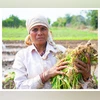
Representative Image (Photo: Shutterstock)
5 min read Last Updated : Sep 01 2026 | 10:05 PM IST
Listen to This Article
India’s livestock sector is widely regarded as one of the most dynamic drivers of rural transformation. The sector now contributes nearly one-third of agricultural gross value added, while India has emerged as the world’s largest milk producer, accounting for almost one-fourth of global milk output. Milk production has increased sharply — from about 147 million tonnes in 2014-15 to more than 239 million tonnes in 2023-24 — alongside rapid expansion in dairy, poultry, and allied value chains.
For millions of smallholders and land-poor households, livestock has become an important source of income diversification, livelihood resilience, and risk management. Because livestock activities are largely home-based and compatible with domestic responsibilities, the sector is also increasingly portrayed as a pathway to women’s economic empowerment.
Yet beneath this success story lies a more complex and less visible reality. Our analysis of nationally representative Time Use Survey data for 2019 and 2024 reveals a striking paradox in India’s livestock transition: Women’s participation in livestock activities is increasing, but the gains from commercialisation remain uneven and often exclusionary. Between 2019 and 2024, women’s participation in livestock activities in rural India increased from 11 per cent to 15 per cent, with especially sharp growth in market-oriented livestock work across several states and agro-ecological regions.
However, this expanding engagement has not been accompanied by any meaningful reduction in unpaid domestic responsibilities. Rural women continue to spend nearly 286 minutes per day on household chores and caregiving — almost seven times more than men. Rather than redistributing labour within households, commercialisation is often adding to women’s existing responsibilities, creating a “double burden” in which market-oriented work is added to unpaid care work.
These findings challenge the common assumption that rising female participation in agriculture automatically signals empowerment. Livestock has long been viewed as a “women-friendly” sector because it enables women to combine productive work with household responsibilities. Women feed animals, collect fodder, clean sheds, process milk, and care for small ruminants, making them central to livestock production systems across rural India.
Yet the structure of livestock value chains remains deeply gendered. While women contribute a substantial share of labour, men continue to dominate higher-value activities such as marketing, asset ownership, access to credit, and engagement with extension systems. Women contribute labour, but men frequently retain control over the income generated through commercialisation.
This is the central contradiction of India’s rural transformation: Women are entering markets without exiting unpaid work. The problem, therefore, is not simply one of labour burden, but also of recognition, control, and access to economic returns. In this context, the growing participation of women in agriculture does not necessarily represent empowerment. In many regions, it reflects what scholars describe as “distress feminisation,” where women absorb additional labour because of male migration, shrinking farm profitability, and limited access to non-farm employment opportunities.
Our analysis also reveals important regional disparities. Women’s participation in livestock is particularly high in arid, rainfed, and hill regions, where livelihood options are limited and livestock often functions as a coping mechanism. States such as Rajasthan, Bihar, Madhya Pradesh, and Jharkhand have witnessed especially sharp increases in women’s involvement in both own-use and market-oriented livestock activities. Yet much of this work remains informal, unpaid, and weakly connected to market power or income control.
Education emerges as another critical factor. Higher educational attainment is strongly associated with lower participation in livestock activities, particularly for women. This suggests that livestock continues to function as a fallback occupation for women with limited access to better employment opportunities. At the same time, livestock remains one of the few sectors where women can participate relatively easily, especially in contexts where mobility constraints and social norms restrict access to non-farm work. The challenge, therefore, is not to reduce women’s participation, but to improve the quality, productivity, and returns from that participation.
Doing so requires moving beyond token references to “women’s empowerment” in agricultural policy. First, women need stronger ownership rights over livestock assets and direct access to institutional credit. Second, extension systems, producer organisations, and dairy cooperatives must become genuinely gender-responsive rather than continuing to treat male farmers as the default participants.
Third, labour-saving investments — including fodder systems, improved water access, and mechanised feeding technologies — are essential to reduce women’s time poverty. Finally, childcare services and rural care infrastructure must become integral components of agricultural and rural development policy.
The Time Use Survey offers a powerful reminder that development cannot be measured solely through rising participation rates or market integration. Who works, for how long, under what conditions, and with what control over returns are equally important questions. India’s livestock revolution will remain incomplete if it continues to rely on invisible and unpaid female labour.
Unless commercialisation is accompanied by redistribution of care responsibilities, improved market access, and greater control over productive assets, women’s expanding role in livestock may deepen existing inequalities rather than transform them. The real question is not whether women are participating more in livestock — they already are. The real question is whether India’s rural transformation is finally prepared to value their time, labour, and agency.
The writer is senior research fellow, International Food Policy Research Institute-South Asia.
The views are personal
Disclaimer: These are personal views of the writer. They do not necessarily reflect the opinion of www.business-standard.com or the Business Standard newspaper
Topics : Rural economy women women empowerment BS Opinion