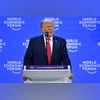
It is possible that the limited deployment of European military personnel in Nuuk, Greenland’s capital, a week ahead of the Davos speech convinced Mr Trump of the North Atlantic Treaty Organization’s (Nato’s) capabilities, which he has frequently derided. It is also possible that the prospect of European nations selling the trillions of dollars they hold in US treasuries and other assets encouraged a de-escalation of rhetoric. But the few details that have emerged of the compromise deal suggest that Europe would be getting the thin end of the wedge. Initial reports suggest that the US could be granted sovereignty over small pockets of Greenland, where it has military bases and could potentially mine for minerals without seeking Denmark’s permission. Given Mr Trump’s instincts, however, the threat of creeping acquisition reminiscent of the Sudeten crisis of 1938 (caused by Adolf Hitler) cannot be ruled out.
In making his case for Greenland, Mr Trump said the territory was a key strategic link between the US, Russia, and China and disingenuously argued that the US needed it for strategic national and international security. He is keen to build a missile defence system called the Golden Dome, for which he says Greenland is critical. But the US already has the Pituffik airbase in northern Greenland under an agreement with Denmark, and under the North American Aerospace Defense Command (Norad) with Canada, it jointly defends threats to the homeland in the Arctic. Left unsaid is control of Greenland’s enormous untapped mineral wealth, especially rare earths. With China controlling 70 per cent of the mining of these minerals, which power the world’s electronics, and 90 per cent of its processing, the US is seeking sources that will offer strategic advantages in technology, energy, and security to stay ahead of the game. Chinese companies currently have mining projects in Greenland under the “Polar Silk Road” umbrella, which nevertheless remains constrained by Denmark and the US.
However explicable the US President’s motives for resource security, wielding the blunt instrument of invasion as he has done in Venezuela, or punitive tariffs, with which he has threatened his Nato allies, marked a brazen abandonment of the rules-based global order by the nation that had championed its creation after World War II. In that sense, Europe’s choice of sturdy pushback by suspending its trade deal with the US offers a reassurance well beyond the narrow bounds of transatlantic relations. Whether in eastern Europe, the South China Sea littoral, Taiwan, the mountain fastnesses of Ladakh, and the forests of Arunachal Pradesh, no country will be safe from ambitions of great powers if appeasement becomes the currency of negotiation over sovereignty.


 "Donald Trump, Trump")

