Relations between the two countries have been deepening over the years. Bilateral trade in 2024 stood at more than $50 billion, and Germany is India’s biggest trading partner in the EU, accounting for over 25 per cent of its trade with the bloc. The signing of the India-EU FTA will likely give a significant boost to trade between the two countries. However, the relations are much deeper than what the headline trade numbers suggest. For instance, last year marked 25 years of the India-Germany Strategic Partnership. In the area of defence, Germany intends to participate in the naval exercise MILAN and an air-combat exercise in September. Both countries intend to develop a road map on defence industrial cooperation to enable long-term collaboration among industries, including a technology partnership. The idea is to co-develop defence platforms and equipment. Further, the two countries would collaborate on technology, including the semiconductor value chain. Both countries are also cooperating on green and sustainable-development goals.
Additionally, Mr Modi, under the New Education Policy, has invited leading German universities to start campuses in India. Both countries intend to increase people-to-people contact. In this regard, Mr Merz announced a visa-free transit facility for Indians transiting through Germany. Strengthening relations between the two countries, or more broadly between India and the EU, has gained greater significance with fast-changing geopolitical conditions. Such partnerships will be critical if a rule-based global order is to be protected in some form. It is worth noting that ties between the EU and the United States (US) have strained over the past year. It is now clear to most countries that the US cannot be trusted for partnerships in trade or strategic areas. American President Donald Trump believes US allies have not been fair to it. The EU has signed a one-sided trade deal with the US, and members of the North Atlantic Treaty Organization have been increasing defence expenditure.
The US has not been fair to India either. Aside from the so-called reciprocal tariff of 25 per cent, it imposed an additional 25 per cent tariff on India for importing Russian oil. Months of negotiations have not yielded a trade agreement yet. The new US ambassador to India, Sergio Gor, made all the right noises after assuming office this week. However, it remains to be seen how quickly India and the US can reach a trade deal. Thus, in the given context, it is vital for both India and the EU to quickly conclude the FTA, which will help strengthen the partnership and provide some level of stability and predictability. This might require greater flexibility on both sides, including in areas such as the EU’s carbon-border adjustment mechanism.


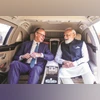 "German Chancellor Friedrich Merz conveyed ‘strong support' to PM Narendra Modi for the India-EU FTA, likely to be signed later this month")

