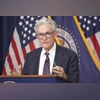
Although US President Donald Trump has claimed he is unaware of this, it is no secret that he wants to take control of the Fed. Mr Trump has made several statements over time against the Fed and Mr Powell for not fulfilling his wish of substantially reducing interest rates. He had also contemplated the possibility of removing Mr Powell, but could not proceed because of legal hurdles. Besides, he tried to remove another Fed governor, but she remains in her position, and the case is now before the Supreme Court. Mr Trump has also nominated the chairman of his Council of Economic Advisers to the Fed’s Board of Governors, which is unusual and has raised questions about the central bank’s independence. The idea clearly was to influence the Fed’s decisions.
Mr Trump will likely be unable to do much damage as long as Mr Powell is in office. However, his term ends in May, and what happened this week is a clear signal for the new chairperson. No announcement has been made in this context yet, but there are no prizes for guessing that someone willing to toe the President’s line will be nominated. Although the processes of the central bank may not allow the new chairperson to immediately do what Mr Trump wants, things could begin to change over time, extending beyond policy interest rates to possibly the way banks are regulated. An attack on the Fed’s independence is a real risk not only for the US but for the whole world. The US has the most liquid and deepest financial markets, with the dollar by far being the most preferred currency for international transactions and reserve holdings.
The dollar’s position in the international market not only reflects the size of the US economy but also the strength of its institutions, particularly the central bank. If the Fed’s position is compromised, it could lead to enormous volatility in global financial markets. In fact, like most of Mr Trump’s policy choices, his expectations, even in this case, are confusing and contradictory. He threatens anyone looking for an alternative to the dollar, but is doing exactly what will force other countries to move away from it. Internally, for the US economy, attacks on the Fed’s independence could de-anchor inflation expectations with longer-term consequences. There is an inherent conflict of interest in governments having a say in monetary policy. For a country like India, undermining the Fed and resultant global financial-market volatility will only complicate external financial management. This seems like a critical year in the history of central banking. All eyes are on the Fed.


 "Jerome Powell")