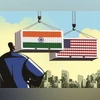
Although it is a big relief that both sides have agreed to a deal, it was not immediately clear what made Mr Trump change his mind. The government said that the interests of sensitive sectors had been protected, though the joint statement was awaited at the time of going to press. To be fair, the Indian side was constantly working with the US administration to arrive at a deal. In his social media post on Monday, Mr Trump said that India had agreed to buy more American goods, in addition to $500 billion of US energy, technology, coal, and other items. He also noted that India had agreed to stop buying oil from Russia, which would help end the Ukraine War. Further, India would move forward to reduce tariff and non-tariff barriers on imports from the US to zero. Even though more clarity is needed on this, several points are worth making here. As India faced much higher tariffs in the US, the government and exporters aggressively pushed for diversification into other markets. The government also showed more openness in dealing with other trade partners, which helped conclude trade negotiations with the European Union (EU), for example.
A renewed reform push was also visible on the domestic front. It is important that the process continues and the scope of reforms is expanded. India needs to prepare to become more relevant in European markets and take full advantage of the India-EU free-trade agreement, along with the trade deal with the US. The deal with the US, aside from helping India regain market share, particularly in labour-intensive sectors, will also provide relief on the capital account. The uncertainty on trade was affecting capital flows. Foreign portfolio investors (FPIs), for example, sold stocks worth about $19 billion in 2025, and the selling pressure is continuing this year. FPI selling had put significant pressure on the rupee. Since India now has an agreement with the US, the expectation is that flows will now reverse. It should also help attract foreign direct investment. India would again be considered by large global corporations looking to diversify away from China.
Although India’s economic outlook has improved significantly after the US deal, policy managers must keep in mind that the current American administration is inherently impulsive and the broader global uncertainty — both economic and geopolitical — will persist. The imposition of reciprocal tariffs on trading partners, for instance, had no sound economic basis. Even in areas other than trade and economic policy, it is now clear that the US has a much narrower worldview. Thus, while India must capitalise on the trade deal, it should continue to diversify exports, improve domestic capabilities, and build policy buffers.


 "US India Trade")