Sunday, September 27, 2026 | 11:05 PM ISTहिंदी में पढें
Business Standard
Notification Icon
userprofile IconSearch

The art of 'diplotainment'

The Trump-Xi summit yielded few substantive gains
US-China relations, G2 world order, Donald Trump Xi Jinping summit, global power balance, US China rivalry, multipolar world, geopolitics 2025, global economy 2025, China economic power, US dominance decline, India global role, post Ukraine war geopo
premium

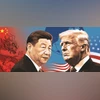
All in all, the fact that the Trump-Xi summit took place is being seen as a signal that the two largest economies plan to remain engaged at the very least (Illustration: Ajaya Mohanty)

Business Standard Editorial Comment Mumbai

Listen to This Article

The much-anticipated summit between United States (US) President Donald Trump and his Chinese counterpart, Xi Jinping, displayed more pomp and circumstance than substantive progress. If anything, the fact that the two leaders of the world’s most powerful countries met at all is being portrayed as an achievement. But the event, which critics described as “diplotainment”, did not resolve deep differences over trade, artificial intelligence (AI), rare earths, technology controls and transfer, Taiwan, and Iran. There was no joint statement after the three-day visit — the first visit by a Chinese President to the White House in a decade — nor a joint press conference. In an unusual diplomatic gesture, Mr Trump chose to break protocol and travelled to Maryland to meet Mr Xi at the Andrews Air Force Base. The White House also chose to highlight the personal tour Mr Trump gave Mr Xi of the new helipad on the White House South Lawn. A dinner in Washington featuring the nation’s power elite, specifically the “tech bros” — Apple’s Tim Cook, Amazon’s Jeff Bezos, Alphabet’s Sundar Pichai, OpenAI’s Sam Altman, Tesla’s Elon Musk and Nvidia’s Jensen Huang — appeared to be another highlight. Beyond that, the key element of the visit was the status quo. 
The two countries agreed to extend the truce that ended last year’s trade war until January 10; it was due to expire in November. But on the closely followed issue of AI development, there was no progress. Mr Trump, who chose to coin a term for AI — super intelligence — merely agreed that developments in the field should always remain under human control. On Taiwan, where a $14 billion US arms package has been in abeyance since the two leaders met in May, the Chinese readout of the meet said Mr Xi urged Mr Trump to “maintain” US opposition to the island-nation’s independence and handle the question with “prudence”. There was no response to this in any White House statement. In May, Mr Trump had said withholding the package was a “very good negotiating chip”, a statement that has alarmed Indo-Pacific allies ever since. On China’s relations with Iran, the other major point of friction, there were no announced results after the summit. 
All in all, the fact that the Trump-Xi summit took place is being seen as a signal that the two largest economies plan to remain engaged at the very least. Indeed, the fact that they will remain engaged is also good news for a world already struggling with the consequences of a US-Israel war against Iran. With an agreement on the Strait of Hormuz, through which more than a fifth of the world’s oil and gas travels, still elusive, the last thing the world needs at this stage is a tit-for-tat action on trade and the freezing of global supply chains, as happened last year. The two will meet again at least twice later this year — Mr Trump said he would meet Mr Xi in Beijing in November and in Florida for the G20 meet. By then, the mid-term elections will have clarified Mr Trump’s powers in his remaining years in the presidency. So how far these meetings will yield more substantive agreement on any of the issues that continue to strain Sino-US relations remains an open question.