


'Enablers of economic boom': Tamil Nadu govt bets on welfare schemes
At the Business Standard Tamil Nadu Round Table 2025, Industries Minister T R B Rajaa explained the scheme's purpose and the role the State Planning Commission (SPC) had played in its implementation
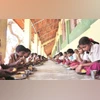 "School students eat midday meals in Ayothiapattinam town in Salem district. | Photo: TN government website")
premium
School students eat midday meals in Ayothiapattinam town in Salem district. | Photo: TN government website
5 min read Last Updated : Mar 25 2025 | 6:20 AM IST
Listen to This Article
The Justice Party, which laid the foundation for the Dravidian Movement, in 1920, introduced midday meals in a school at Thousand Lights in Chennai. Tamil Nadu formalised the experimental scheme in 1957, years after a Supreme Court order led to its mandatory implementation by all states in 2002.
Tamil Nadu does well in social sector parameters: a result of the Dravidian movement’s ideology of social justice and public welfare. The Chief Minister’s Breakfast Scheme, which was introduced by the M K Stalin government in September 2022, has improved student attendance by 20 per cent in most schools in the state, according to studies.
At the Business Standard Tamil Nadu Round Table 2025, Industries Minister T R B Rajaa explained the scheme’s purpose and the role the State Planning Commission (SPC) had played in its implementation. He was speaking at a session organised in association with the SPC and Guidance Tamil Nadu, the state’s investment promotion agency.
“The welfare schemes are enablers for economic activity, local economic boom,” said Rajaa, responding to critics who say such programmes are ‘freebies’. J Jeyaranjan, vice-chairman of the SPC, played a key role in enabling the scheme. Jeyaranjan was a member of the team that wrote the election manifesto of Dravida Munnetra Kazhagam, which governs Tamil Nadu.
“You call it the breakfast scheme but look at how Tamil Nadu views it. The Chief Minister didn’t just announce the breakfast scheme overnight. He gave it to the SPC,” Rajaa said. Following this, a team from the SPC, including nutritionists, modern medicine doctors and traditional Siddha medicine doctors, identified the need for iron in children. After this, the National Institute of Food Technology, Entrepreneurship and Management in Thanjavur was roped in, and plans were made to supply Moringa extract, which is high in iron.”
“Then, after several discussions, the Chief Minister said we want to give students proper food. If you go to any of the schools for morning breakfast, it's just proper, amazing, good food,” Rajaa said. The menu includes rava upma, pongal, semiya upma and kesari; it provides millets at least two days a week.
A scheme called Kalaignar Magalir Urimai Thittam provides ₹1,000 as a rights grant every month to more than 10.6 million women heads of families. “That woman who we used to call a housewife, right? We see her as the woman who's built the nation, and this ₹1,000 that the Tamil Nadu government gives to every single woman every single month is not just about enabling her financially — it's about saying thank you. So a freebie is not a freebie, especially to my friends in other states. This is not a freebie. This is about saying thank you," Rajaa added. Welfare schemes empower women in the state, he said.
“Around 43 per cent of all the women working in India are from Tamil Nadu, and we are extremely proud of that. At the same time, it gives me a bit of sadness too because we know then that if just one state is doing 43 per cent, the rest of India is not doing much. It means the women in the rest of India are not being given the opportunity. They are not told that you can be someone, you can be that one soul that is adding value to India, that is propelling India.”
Tamil Nadu's expenditure on the social sector (both revenue and capital) increased from ₹79,859 crore in 2019-20 to ₹1.15 trillion in 2023-24, marking a 1.46-fold rise. In that period, overall expenditure on social services grew 8.81 per cent, health by 10.26 per cent, and education and related areas by 7.22 per cent.
“Tamil Nadu's economic growth is enviable for any state in India, while its social welfare programs serve as a model for others to follow. Growth with social justice is one of its kind development process. This development process has matured over a century in Tamil Nadu and continues to yield great results, with more expected in the future," said Jeyaranjan in the state's first economic survey released earlier this month.
A scheme called Pudhumai Penn provides ₹1,000 monthly to girls of Classes 6 to 12 in government schools, enabling over 220,000 students to prepare for higher education. During the coronavirus pandemic, a scheme called Makkalai Thedi Maruthuvam offered door-to-door medical screening and drug delivery.
“This comes due to our innate ability, our talent, and the humongous talent pool that the Dravidian model of governance has built — not over years, not over decades, it's almost a century now. It's a way of life for the Tamil people. We've prioritised education first, choosing it over anything else, and that decision has paid off, making Tamil Nadu what it is today,” Rajaa summed up.
Topics : bs events BS Special Tamil Nadu