


Dave Franco-starrer digitally altered in China, gay couple made straight
A same-sex wedding scene in the film 'Together' was digitally altered to show a heterosexual couple. Chinese viewers realised the change only after comparison screenshots spread online
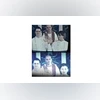 "Dave Franco China AI Together")
Dave Franco's Together released in China with same-sex wedding digitally changed
Listen to This Article
An Australian horror film featuring a same-sex wedding was reportedly digitally altered for release in mainland China, with a gay couple transformed into a heterosexual one, according to a report by The Guardian.
Same-sex scene altered
The critically acclaimed film ‘Together’, starring Dave Franco and Alison Brie, was released in selected cinemas in China on September 12. The film follows the story of a couple whose strained relationship leads them to move to the countryside, where they encounter mysterious and grotesque changes to their bodies.
In one scene showing the wedding of two men, the face of one groom was altered to appear female. Chinese cinemagoers became aware of the change only after side-by-side screenshots circulated on social media.
China’s film censorship
Also Read

 "china Flag, China")
 "semiconductor, chips")
 "Typhoon Ragasa, Typhoon, Ragasa, Super Typhoon Ragasa")
 "Anil Chauhan, Anil, CDS")
This is not the first time western films have been altered for release in China. All films must be approved by the country’s censorship authorities before distribution on the mainland.
Films deemed unsuitable are either banned or edited to remove content objected to by the Chinese government. Imported titles often lose scenes involving themes considered sensitive or sexually explicit. However, the use of technology to digitally alter scenes, rather than simply cut them, is relatively new. Some viewers argued that such edits made censorship harder to detect.
Homosexuality in China
Homosexuality was decriminalised in China in 1997, and in 2001 the Chinese Society of Psychiatry removed it from its list of mental disorders. Yet space for lesbian, gay, bisexual, and transgender (LGBT) advocacy has shrunk in recent years, alongside broader crackdowns on civil rights movements and online dissent.
Homosexuality remains widely stigmatised, with nuclear, heterosexual relationships promoted as the societal ideal. The government has long maintained a stance of “neither supporting nor opposing” homosexuality. In 2019, the National People’s Congress acknowledged that legalising same-sex marriage was among the top requests from citizens.
China’s regulatory wall
For years, Beijing has maintained a regulatory wall to curb foreign films, imposing an annual quota of only 34 international titles. American films are subject to import limits as well as seasonal bans on screenings during national holiday periods. Currently, US films account for only 5 per cent of China’s box office.
Films banned in China
Kundun (1997): Banned for depicting China negatively in relation to Tibet’s annexation by the People’s Republic of China. Authorities objected to the positive portrayal of the Dalai Lama, whom Beijing regards as a separatist threat.
Christopher Robin (2018): No official reason was given for its rejection, but images of teddy bear character Winnie-the-Pooh had already been censored in 2017 after social media users compared the character to President Xi Jinping, linking it with political resistance.
Noah (2014): The movie was blocked for its depiction of prophets, which was considered inappropriate for release.
More From This Section
 "H-1B Visa")
 "US-India, US-India flag, US India flag")
 "White House")
 "Jimmy Kimmel")
 "Nepal Protest")
Don't miss the most important news and views of the day. Get them on our Telegram channel
First Published: Sep 25 2025 | 11:43 AM IST