


Why Sunita Williams may have returned taller from space after 288-day stay
From puffy face, fragile skin, to muscle and bone loss - what happens to the human body in space? Here's all we know
 "Nasa, Sunita Williams, SpaceX")
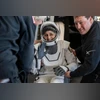
Nasa astronaut Sunita Williams is helped out of a SpaceX Dragon spacecraft onboard the recovery ship after she, Nasa astronaut Nick Hague, and Butch Wilmore, and Roscosmos cosmonaut Aleksandr Gorbunov landed in the water off the coast of Tallahassee,
Listen to This Article
After spending 288 days in space, National Aeronautics and Space Administration (Nasa) astronaut Sunita Williams may have returned to Earth taller than before, a phenomenon commonly observed among astronauts after extended stays in microgravity.
Williams, along with fellow astronaut Barry 'Butch' Wilmore and Roscosmos cosmonaut Aleksandr Gorbunov, splashed down off the Florida coast aboard a SpaceX Dragon capsule after an unexpectedly long mission on the International Space Station (ISS). Originally intended to last only eight days, their mission was extended by nearly nine months due to a malfunction in the thrusters of their Boeing Starliner Calypso spacecraft. The delay has sparked global discussions on astronaut health, space exploration risks, and implications surrounding Nasa’s reliance on commercial spacecraft.
On the health front, Nasa has been doing research for more than 50 years, under its human research programme (HRP), on what happens to the human body in space. Findings from this are used to design procedures, devices, and strategies to keep astronauts safe and healthy throughout their missions.
Here's what we know about the impact of different gravity fields and space radiation, along with the impact it can have on the human body and what steps will be taken to help the returned astronauts readjust to Earth.
Also Read

 "Nasa, Sunita Williams, SpaceX")
 "Narendra Modi, Sunita Williams")
 "Sunita Williams,Sunita,astronaut")
 "Nasa, Sunita Williams, SpaceX")
Why do astronauts grow taller in space?
In the microgravity environment of space, the spinal column expands due to the absence of Earth's gravitational force compressing it. The spaces between vertebrae widen, leading to astronauts becoming up to two inches (5 cm) taller during their time in orbit. However, this effect is temporary and upon returning to Earth, gravity gradually compresses the spine back to its normal length over a few weeks. ALSO READ | How much extra pay will Sunita Williams & Butch Wilmore get for the delay?
What happens to human body in space?
While an increase in height may seem like a minor effect, long-term exposure to microgravity takes a serious toll on the human body. Some of the major physiological changes astronauts experience include:
Muscle and bone loss: Without the need to support body weight, astronauts experience rapid muscle atrophy and bone weakening, losing 1 per cent of bone mass per month, which may be equivalent to a year of ageing on Earth.
Circulatory system changes: Blood circulation slows down, red blood cell production decreases, and astronauts may develop cardiac arrhythmias (irregular heartbeats).
Fluid shifts: Microgravity causes bodily fluids to move upward toward the head, causing puffy faces and thinner legs while also contributing to vision problems.
Radiation exposure: Despite Earth’s magnetosphere offering partial protection, astronauts receive over 10 times the radiation exposure they would on Earth, increasing their risk of cancer and cognitive decline.
Weakened immune system: The immune system becomes compromised, making astronauts more susceptible to infections.
Frail skin: The skin thins, tears easily, and heals more slowly, posing additional health risks. "Once the astronaut returns to Earth, they are immediately forced to readjust again, back to Earth's gravity, and can experience issues standing, stabilising their gaze, walking and turning. For their safety, returning astronauts are often placed in a chair immediately upon return to Earth," the Houston-based Baylor College of Medicine said in a note on body changes in space.
Space travellers can also experience a condition called "baby feet" - astronauts lose part of the skin on the soles, making them soft like that of a baby.
Recovery and rehabilitation
Adjusting to gravity again after months in space is a physically demanding process. Williams and her crewmates will now undergo a 45-day rehabilitation programme under the guidance of astronaut strength, conditioning, and rehabilitation (ASCR) specialists.
Sunita William back on Earth
Sunita Williams and her team undocked from the ISS before completing a 17-hour journey back to Earth. The SpaceX Dragon capsule splashed down at 3:27 am IST, and recovery teams swiftly extracted the astronauts for immediate medical evaluations.
Crew-10 has now replaced Sunita Williams’ team aboard the ISS. Crew-11 is already preparing for launch in May.
More From This Section
 "Morgan Stanley")
 "Donald Trump")
 "Tesla")
 "global stocks")
 "Donald Trump, Trump")
Don't miss the most important news and views of the day. Get them on our Telegram channel
First Published: Mar 19 2025 | 9:28 AM IST