The sun protection segment is one of the fastest growing personal care sectors. Despite a sluggish and unsettled economic environment, consumers are willing to invest in sun protection. Educated consumers are becoming more demanding; Consumers demand products that give excellent protection, are fun-to-use, and of course at no extra cost. Moreover, chances for persistent and crisis-resistant growth have led to increased competition as more players are looking for a slice of the cake.
SPF is not the answer Gone are the days when it was enough to create a safe product that meets simple SPF requirements. Modern sunscreen products must also pay attention to cosmetic properties to convince consumers to buy and use them regularly. Current strategies aim to maximise efficacy or optimise the delivery system of existing filters to increase formulation flexibility. The development of new and really innovative filters is hampered by substantial regulatory hurdles.
In the EU, SPF claims are limited to a few numbers (eg, 20, 25, 30, 50+), and UVA protection is judged on simple pass/fail criteria. The finalised FDA Sunscreen Monograph presumably will further restrict sun protection claims. It is, therefore, becoming increasingly difficult for manufacturers to differentiate their products based only on SPF and UVA claims.
Manufacturers have responded to these new realities by developing multidimensional products. The new generation of products combines effective sun protection with skin care features, such as hydration, nourishment, or radical scavenging.
Cosmetic actives add benefits UV filters are obviously the most important ingredients in sun protection products as they prevent the penetration of UV-light into the skin. They thus, build the first line of defense. Cosmetic actives, which provide a valuable second line of defense by providing biological protection, pave the way for new performance and marketing claims. Given below are two examples of ‘Actives Ideas’.
Radicare: Protection against free radicals and ROS Figure 1: Radicare reduces cutaneous ROS levels in vivo
Degenerative processes related to aging are mainly a consequence of oxidative stress associated with free radicals and reactive oxygen species (ROS). The skin is constantly exposed to harmful ROS that come from the environment or the body’s metabolism. ROS are highly reactive molecules that oxidise all sorts of cellular components, leading to DNA, lipid and protein damage and provoking a series of toxic effects. To defend itself against ROS damage, the skin’s antioxidant defense system normally uses antioxidant defense enzymes and non-enzymatic small-molecule antioxidants.
Upon excessive UVA exposure, excessive ROS can quickly overload the defense system. In particular, photo-unstable filters may behave as exogenous UVA sensitisers and contribute to ROS overload since ROS-inducing intermediates are produced during the photolysis of photo-unstable filters. Moreover, the concomitant decrease of UV protection further favours ROS burst. The uncontrolled distribution of ROS accelerates skin aging and induces consequences ranging from the formation of erythemas, edemas, wrinkles, photoaging, and ultimately skin cancer.
UV filters never provide 100% protection. Thus, strengthening of the body’s antioxidant defense system by means of cosmetic actives helps sunscreens to decrease the risk of skin cancer and photo-aging. This second line of defense neutralises ROS that emerged in spite of UV filters intended to block ROS formation. Plant extracts are especially effective in this demanding task.
One such example is Radicare - a powerful combination of the natural radical scavenger rosmarinic acid from lemon balm and the flavonoid rutin, with the valuable trace elements (Mn, Zn, Se) from barley. The non-enzymatic antioxidants rosmarinic acid and rutin are extremely efficient radical scavengers and interrupt the destructive chain reactions. Radicals are stopped before they cause damage. Figure 1 shows excellent protection offered by Radicare against. UV-irradiation-induced cutaneous peroxides were more than 66% less than untreated control or placebo. The effectiveness for removing peroxides from skin exposed to UV irradiation was calculated as 261%. This means that levels of peroxides in the skin were reduced to levels even lower than those in unexposed skin. Thus, cosmetic actives help to reduce the risk of UV(A)-induced ROS damage.
Celligent: Cell & DNA protection / stem-cell protection Figure 2 (Upper panel): UVA and UVB radiation cause DNA damage indirectly and directly, respectively
Genetic information is stored on DNA as sequence of nucleotides. Changes in the nucleotide sequence or DNA mutations alter the information and lead to faulty proteins, which can adversely affect cell functions or, even worse, eventually induce skin cancer.
Mutations result from many factors, but an important source is exposure to both kinds of UV light. UVA wavelengths are thought to mutate DNA indirectly by causing the formation of ROS. UVB, in contrast, is believed to interact directly with DNA to initiate another common form of DNA damage called thymine-thymine dimers. If cells fail to repair the DNA, they will not survive.
To prevent this damage, UV filters are increasingly being combined with innovative anti-aging ingredients that protect the skin’s DNA from light-induced damage and activate the cells’ repair mechanisms.
In Celligent, the combination of ethyl ferulate and carnosolic acid from rosemary combats ROS and thereby counteracts indirect DNA damage and mutations. Uridine monophosphate (UMP) is a biochemical building block that cells use to make nucleotides. Thus, this formulation supports cellular DNA repair as it accelerates the supply of urgently required nucleotides (refer Figure 2_Upper panel).
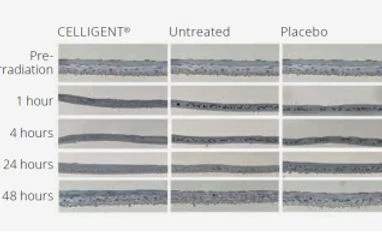
Figure 2 (Lower panel): Active DNA protection upon solar irradiation
In fact, DNA damage (such as thymine-thymine dimers) was prevented when cells were treated with Celligent before being exposed to UV irradiation (refer Figure 2_Lower panel). Cells were exposed to a dose of 1500 mJ/cm
2, which corresponds roughly to the UV stress of 3 hours of midday sun. We hypothesised that less DNA damage and quicker DNA repair translates to less red skin redness upon exposure to the sun. Indeed, Celligent accelerated the regeneration of UV-stressed skin. After just one day, the regeneration process was twice as advanced as that in placebo-treated skin.
The same concept applies to protecting stem cells. Stem cells are crucial role for skin rejuvenation, and protecting them from daily stresses (such as UV light) slows stem-cell aging and extends skin rejuvenation further into old age. Celligent protected epidermal stem and progenitor cells against sunlight.
Conclusion Gone are the days when sun protection meant just preventing sunburn. The boundaries between sun protection and skin care are becoming blurred as the perception of beauty and youth is more and more associated with sun protection. Preventing sunburn will remain the number one priority, but anti-ageing and skin-care benefits will become more and more important. Manufacturers need to look beyond SPF and UVA to create multifunctional products that will attract consumers with improved convenience and skin feel.
Cosmetic actives will be increasingly important for enhancement of sun care products. As a biological second line of defense, they prevent, reduce or repair detrimental effects from UV overexposure, such as oxidative stress, DNA-damage, spot formation, or erythema. Sun-protection strategies that complement other attractive features, such as convenience and skin feel, will introduce opportunities for exciting new marketing concepts and claims that will help to differentiate these products from the rest of the field.
____________________________________________________________________________________________________
Stefan Banziger is the manager development cosmetic actives at Rahn AG
Arihant Innochem Pvt Ltd, a leading distribution house based in Mumbai, is the sole distributor of the Rahn AG in India

 "Cosmetic actives: A helping hand for sun care products")


 Connect with us on WhatsApp