The company uses a new technology, which provides flexibility in raw material procurement, for manufacturing C4 chemicals at the site in Marl Chemical Park
Evonik Industries has commenced new manufacturing plants for C4-based products in the Marl Chemical Park, Germany. This expansion of production in Marl is part of a capacity expansion throughout Europe for C4-based products, in which Evonik has invested a three-digit million Euro amount in total.
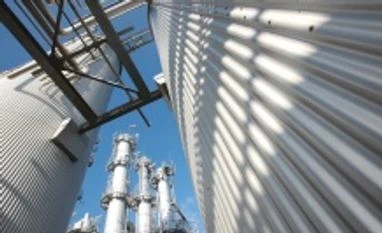
At the heart of the new plants at Evonik’s largest site is the widely visible 90-meter column, the highest within the specialty chemicals company. This is a symbol of a new technology that, for the first time anywhere in the world, utilises special material streams from refineries for production of C4 chemicals. These streams are supplied by the neighbouring BP refinery in Gelsenkirchen.
Evonik is one of the leading global suppliers of C4-based products such as butadiene, MTBE, isobutene, 1-butene, and INA (isononanol) as well as 2-PH (2-propylheptanol) and DINP (diisononyl phthalate).
Klaus Engel, chairman of the executive board of Evonik, said, “With the expansion of our C4 capacities we are sustainably strengthening our market position. What’s more, the new technology for raw material supply for the Marl plant and our excellent collaboration with BP demonstrate yet again the innovative strength of companies in the Ruhr district and their readiness to collaborate. We are confident, therefore, that there will continue to be a strong industrial base in the region.”
In addition to the expansion in Marl, Evonik has also invested in the C4 activities in Antwerp, Belgium, where the plants in question went on stream in the second quarter of 2015. The new production facilities have resulted in capacity expansion for the plasticiser alcohol isononanol in Marl, butadiene in Antwerp, and the fuel additive MTBE in both Marl and Antwerp.
Johann-Caspar Gammelin, chairman of the Board of Management of Evonik Performance Materials GmbH, says: “Our investments are supporting the growth plans of our customers in Europe and worldwide. Market analyses show that global demand for these products is growing by up to 5 percent annually.”
The Marl plant also marks a technological milestone for Evonik. Thanks to an entirely new process worldwide, FCC-C4 material streams can be used for production of a wider range of chemicals. “The new technology significantly expands our raw-material base. It gives us access to raw-material streams that have so far not been used for downstream chemical processing,” explained Gammelin. The steam or naphtha cracker has so far been the major source for extraction of basic petrochemicals. However, there are significantly more FCC crackers than steam crackers worldwide.
FCC stands for fluid catalytic cracking. With the help of this process, refineries transform heavy crude oil components in fuel components. Fluid catalytic cracking produces a C4 material stream that, besides the components that can be used for chemical processing (olefins), contains further accompanying substances. The industry has therefore so far not used this FCCC4 material stream.
By developing its own new technologies and combining these with others procured externally, Evonik has now succeeded in utilising this material stream from the refinery. The main challenge here lay in separating any unwanted accompanying substances from the FCC-C4 stream. The new technology incorporates various chemical reactions and absorption techniques that allow an efficient yet flexible process. The 90-meter column removes the saturated compounds (butanes), which are of less interest to Evonik, from the FCC-C4 material stream, so that the more valuable unsaturated C4 compounds (butenes) can be further processed to specialty chemicals.
Innovation and collaboration in the Ruhr district Evonik draws the FCC-C4 material stream by pipeline from the refinery in Gelsenkirchen, about 15 km from the Marl site. Because the residual butanes are a valuable raw material for the Scholven refinery, Evonik returns these by pipeline to Gelsenkirchen where it is used as a raw material for the olefin plant. “The project that has now been implemented emphasises the significance of mineral oil processing for the supply chains of the chemical industry. It is a good example for a cross-company cooperation that strengthens competitiveness,” says Frederic Baudry, member of the executive board of BP Europa SE and responsible for the petrochemical business of the company.

 "Evonik opens facility for C4 chemicals in Germany")


 Connect with us on WhatsApp