5 min read Last Updated : Mar 02 2023 | 10:18 PM IST
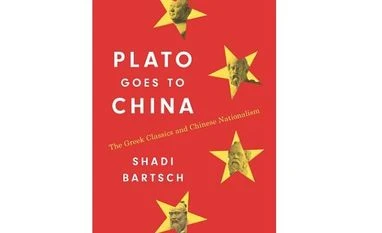
Plato Goes to China: The Greek Classics and Chinese Nationalism
Author: Shadi Bartsch
Publisher: Princeton University Press
Pages: 304
Price: $33
The book Plato Goes to China: The Greek Classics and Chinese Nationalism is a timely and much-needed contribution to the literature on China and provides a fresh outlook to understanding the rise of that country. With its unprecedented rise, China is becoming the challenger to existing norms and discourses. Beijing is also increasingly proactive in changing the international discourse to align with its preferences and comfort zones. The debate between democracy and one-party authoritarianism is at the core of these debates.
Another major idea is the rise of Chinese nationalism, which is largely state-supported. Beijing pushes the narrative that a new lens is required to view norms and ideas from a Chinese perspective. These Chinese characteristics have slowly but successfully crept into the economic as well as the military discourses. Thus, the reinterpretation of the ancient Greek and Chinese classics could be not far behind.
It would not be wrong to argue that the tussle between the West and China has moved beyond economic and military conflicts. It is moving into the realms of ideas and, thus, Chinese thinkers and scholars are ready to interpret the ancient Greek classics and the Confucian classics with the aim of supporting and aiding the government of Communist Party of China (CPC) in propagating and legitimising its narrative. The major aim is to underscore the superiority of Chinese ancient thought when compared to the Greek classics. “Plato and Confucius, then, will lead us forward in a new (China-dominated) world order. But of the two, Confucius is still shown to be superior in his thought,” Shadi Bartsch writes.
The book juxtaposes the changes in the Chinese domestic political scenarios and beliefs with the transformation of Chinese scholars’ interpretation of the Greek classics and Confucianism. It shows how with every economic and social transformation within China there is a reinterpretation and almost reinvention of the ancient texts to logically support its domestic political narratives. The ancient Greek texts have been on a roller-coaster ride from the 1911 Revolution, the May 4th Movement, the establishment of the People’s Republic of China, reforms and opening up under Deng Xiaoping, the 1989 Tiananmen Square Protests, and now the rise of Xi Jinping.
The question of legitimacy is also at the core of the development of such narratives. With Deng’s reforms starting in 1978, China has surged ahead economically. Economic growth has had a major impact on Chinese society as well as the CPC. Today, it is generally argued that economic growth provides the CPC legitimacy to continue the authoritarian nature of its rule. Thus, the leadership, especially Xi Jinping, is looking for stronger logic of legitimacy. “And if Plato has been put to use for this Chinese moment, we should justly point out that so has Confucius, his own teachings harmonized into what the CCP needs,” Dr Bartsch writes.
The intensification of control under Xi Jinping today is being portrayed as the Chinese way — or, rather, the correct way. The narrative being built up is how the current form of Chinese government is better and more people-friendly when compared to Western democracy. The book takes the reader on an interesting ride through how Chinese scholars have been interpreting and reinterpreting the ideas of Socrates, Plato and Aristotle’s ideas. From a discussion on the word Republic, Philosopher Kings, the Noble Lie, Kalipollis, and so on, scholars also debate ideas such as egalitarianism, rationality, meritocracy etc. There is a major rush to prove that the Chinese ancient thinkers are more relevant and also more egalitarian “… especially in the context of Xi Jinping’s new nationalism, Confucian texts are now seen as the bearers of a better alternative than Western philosophy, regardless if it is all a footnote to Plato”. The book further argues, “From the Chinese perspective, Western rationality is geared to economics, efficiency, and profit, whereas eastern rationality has the ethical life as its goal.”
Reading Xi Jinping’s speeches one gets the idea that Confucius is back and central to the understanding of Chinese domestic politics. The very CPC that was against the hierarchical society promoted by Confucius is now looking at him for legitimacy. Every action of the CPC under Xi Jinping is finding new ideological justification in the ancient Chinese texts. Such efforts are also necessary to argue that the CPC is rooted in Chinese history and is, in fact, a continuation of the Chinese historical and unique narrative. It is not based on any foreign ideas and only draws its legitimacy from indigenous Chinese thinkers and theories. The major goal of this is to provide a very Chinese justification for Xi Jinping’s actions and also promote the idea that Chinese people and Chinese values are inherently different from other people. This, thus, helps the CPC argue that the liberal democracy does not fit in with the Chinese people. Anyone keen to understand the process of discourse building in Chinese domestic politics should read this book.
The reviewer is assistant professor, O P Jindal Global University