The situation is so dire says an old Bollywood hand that in the past six months, barely 4-5 out of approximately 30 Bollywood releases have recovered the cost for producers. Neither the star power of Salman Khan nor the marketing flourish demonstrated by a slew of actors has worked. And the most successful movies of the year have been indie hits made at piffling budgets. As Bollywood struggles to find a formula that can crack open the box office, studios and small producers say it is time to turn the gaze away from big stars, towards the stories.
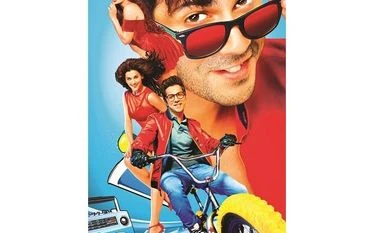
Varun Dhawan starrer Judwaa 2, released last week
The allure of big names is fading, despite stars putting their muscle behind, in front and off the camera. The state of Bollywood today has been a long time coming, a senior studio hand said. “We kept saying content is king because it was fashionable, but the truth is, we did not believe it. Only in the past two-three years has it hit home,” he adds.
The proof is in the numbers. As recently as 2013, big names meant moolah. Consider Chennai Express, the Shah Rukh Khan and Deepika Padukone starrer that cost close to Rs 100 crore and released on Eid that year. The film received lukewarm reviews from critics and the word-of-mouth was mixed; however it went on to become only the second movie in Bollywood to breach the Rs 200-crore-mark (net after tax) after Aamir Khan’s 3 Idiots. It was a big budget film that banked on the star power of its lead actors and scored. Cut to the present, big budget hits are a rarity and the only big star bucking the trend is Akshay Kumar. His Toilet-ek prem katha cost Rs 30 crore and collected Rs 135 crore. It helps that Kumar’s films are made with tight budgets. Newton could go on to become one of the big hits of the year, it was made for around Rs 14 crore and has collected Rs 11.8 crore in a week.
“The bankability of most A-listers is definitely under fire,” says Komal Nahta, trade analyst and publisher of Film Information. The writing was clearly up on the wall by 2016 when a few big bets went wrong. Fan (April 2016) for instance floundered even though Shah Rukh Khan was in a double role. A similar fate awaited films with actors like Ajay Devgn, Ranbir Kapoor and even Salman Khan.
Nahta says that Bollywood has been blind to the signs. “The audience wants good content. Gone are the days when fans would flock the theatres just to see their favourite superstar on screen. People demand better and if it is not delivered, no matter who is in the film, the audience will reject (the movie),” he adds.
Stars, however voluminous their fan following, do not draw in the crowds into the theatres or on TV. The fate of the movie depends on the story, the marketing journey and production budgets.
Stars have to keep themselves trendy and “Akshay Kumar is a prime example of remaining relevant. He has always shown excellent work ethic and has not shied away from experimenting. Today, there is more confidence in his films,” says a trade analyst. It helps that he charges only a part of the fee upfront and the rest is a share of revenue or profit. Studios say that the biggest component of their budget is talent cost and now with the pull of A-listers fading, they are looking at revenue sharing formula very closely.
Studios like Viacom18 and Fox Star Studios are also trying to find a balance between tent-pole big budget films and small to medium budget projects. While Viacom18 Motion Pictures is distributing one of this year’s most expensive films Padmavati (December 1 release), it has also made Toilet Ek Prem Katha. Similarly, Fox Star Studios made the small budget Phillauri this year, but also distributed Ae Dil Hai Mushkil last year. For the studios furiously hedging their bets between big and small films, the time is not far when the scales could tilt entirely in favour of the latter.
Fading lights
Big stars are failing to light up the small screen too. Neeraj Vyas, head (Hindi movies and music cluster of channels) at Sony Pictures Network (SPN) says, “Newer films have not clicked as we hoped. The audience will not spend time if it does not like the content. Also the music doesn’t have the same hook as it did earlier. Music used to be a big pull and with that missing, viewership has been impacted.”
The poor show is forcing many networks to rethink the amount paid out to Bollywood producers and studios as acquisition rights. “We have not recovered our money from some new films even after five or eight screenings and that is worrisome,” says an executive with a Hindi movie channel.
The acquisition rates for films had reached stratospheric levels, with some titles reportedly sold for Rs 40-60 crores just a year back. However, Vyas sees a correction on the horizon, sooner than expected.
Anuj Poddar, head of rural business, Viacom18 says, “The biggest learning for channels is that box office success and star value doesn’t determine TV ratings. The challenge is to stop the viewer from flipping channels and acquire films that have repeat viewership appeal.”