Cheering madrasas

Madrasas, according to Ms Borker, changed the lives of Muslim girls. Otherwise, they may have been still stuck at home, changing nappies
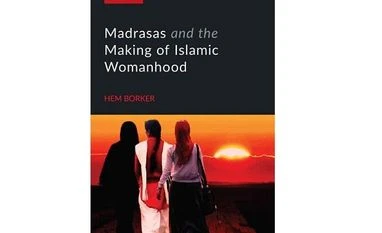
Madrasas and the Making of Islamic Womanhood
Hasan Suroor
Last Updated : Jan 01 2019 | 10:32 PM IST
A madrasa is a quintessentially Islamic institution which, like Islam, doesn’t recognise the notion of separate religious and secular spaces and regards dini (religious or spiritual) and duniyavi (worldly/material) as two sides of the same coin — a  non-negotiable package, take it or leave it. A worldview that makes madrasas look antediluvian — and the education they impart irrelevant to the needs and temper of a secular age.

Many would say they don’t just “look” antediluvian; they’re antediluvian and no amount of pretend-modernisation by bringing in computers and introducing a smattering of English can change their inherently insular and exclusivist outlook.

This book, however, has a more nuanced take, arguing that for all their flaws they offer a route to educational mobility for Muslim girls from conservative and lower middle class families, particularly from rural areas. The study is confined to only girls’ madrasas that train women in Islamic studies, a comparatively recent phenomenon.

Hem Borker, a Delhi-based academic, makes a brave attempt to establish their relevance, but in the end, the image one is left with is of an institution that, at its heart, is fundamentally obscurantist with a culture of exclusion and phoney piety. The book is based on research she did for her DPhil from Oxford University, for which she spent some time at one of India’s leading women’s madrasas — Madrasa Jamiatul Mominat near Jamia Millia in Delhi. She argues that many girls from conservative families find madrassas empowering and a potential stepping stone to mainstream higher education, and a career. She cites instances of girls she met who successfully followed this route. Madrasas, according to her, changed their lives. Otherwise, they may have been still stuck at home, changing nappies.

But her case studies seem more like exceptions. Besides, what they’re ultimately able to achieve is down entirely to their own aspirations and determination to fulfil them. The role of madrasas is only incidental. An extract Borker reproduces from a brochure of a girls’ madrasa in Moradabad is revealing for the madrasas’ vision of an ideal educated Muslim woman. 

It reads:  “A ...girl will serve her husband and keep him happy by taking care of his various needs within the Shariyah. With her technical and academic knowledge she can also help her husband with work, business and family. As a mother, [the] girl will be able to provide proper upbringing to her children and provide them with good morals, religious and modern education. She will be able to build a sound character in her children.”

Even Ms Borker appears to cringe while describing the level of segregation and the misogyny she encountered in madrasas starting with the “obstacles” she herself faced getting access to them as a “single Hindu researcher studying abroad”. 

“My eventual success in securing access to Madrasa Jamiatul Mominat was in many ways the result of a combination of persistence, flexibility, and luck.” 

Even then, she was allowed restricted access, forced to cover her head and (like the students) prohibited from using mobile phone, laptop, camera or tape recorder. The madrasa’s dress code required girls to cover themselves from head to toe all the time so that no part of their body, including even a strand of hair, was exposed.

“This dress code is strictly enforced as a means of training the girls to follow the practice of purdah outside the madrasa. In fact, girls are taught that a proper dress code is one of the most important markers that communicates the modesty and chastity of an Alima (a learned woman) to an outsider.”

She found girls living isolated lives behind multiple layers of security, totally cut off from the outside world. From the photos in the book, the madrasa looks more like a high-security prison than an educational institution. Girls are taught to use computers, but Internet use is banned — as are all “means of entertainment” such as seeing movies or going out for meals. 

“The madrasa environment was very different from anything that I had been exposed to in the course of my own education or professional experience as a social worker in educational settings,” Ms Borker writes.

Though she had worked with minority communities before she had “never engaged with an institution that is so Muslim, not just in terms of the student and staff composition, but also in its cultural norms, behavioural practices and ethos. ...zealously fenced, with multiple levels of security, which can be quite unwelcoming and intimidating”.

Madrasas’ idea of a pious Muslim woman’s “appropriate behaviour” is to strip her of any semblance of personal freedom. Curious about the outside world, girls Ms Borker interacted with would ask her: “Do you wear cut sleeves, make-up, do girls and boys live in the same place, do you sit next to boys, do you have male teachers?”

At a time when anything to do with Muslims and Islam is under scrutiny, it’s refreshing to come across a sympathetic viewpoint, and I wish I could share Ms Borker’s enthusiasm for madrasas. Alas, I find myself struggling.
Madrasas and the Making of Islamic Womanhood 

Hem Borker 

Oxford University Press 

326 pages; Rs 1,195

One subscription. Two world-class reads.

Already subscribed? Log in

Subscribe to read the full story →
*Subscribe to Business Standard digital and get complimentary access to The New York Times

Smart Quarterly

₹900

3 Months

₹300/Month

SAVE 25%

Smart Essential

₹2,700

1 Year

₹225/Month

SAVE 46%
*Complimentary New York Times access for the 2nd year will be given after 12 months

Super Saver

₹3,900

2 Years

₹162/Month

Subscribe

Renews automatically, cancel anytime

Here’s what’s included in our digital subscription plans

Exclusive premium stories online

  • Over 30 premium stories daily, handpicked by our editors

Complimentary Access to The New York Times

  • News, Games, Cooking, Audio, Wirecutter & The Athletic

Business Standard Epaper

  • Digital replica of our daily newspaper — with options to read, save, and share

Curated Newsletters

  • Insights on markets, finance, politics, tech, and more delivered to your inbox

Market Analysis & Investment Insights

  • In-depth market analysis & insights with access to The Smart Investor

Archives

  • Repository of articles and publications dating back to 1997

Ad-free Reading

  • Uninterrupted reading experience with no advertisements

Seamless Access Across All Devices

  • Access Business Standard across devices — mobile, tablet, or PC, via web or app

Next Story



